

Shift Work Sleep Problems: Solutions
If you work nights, early mornings, or rotating shifts, your sleep usually gets worse for one simple reason: your work hours fight your body clock.
I’d boil the fix down to this: control light, protect a fixed sleep window, and keep caffeine and schedule changes in check. For most shift workers, the biggest problems are short daytime sleep, trouble falling asleep after work, and heavy sleepiness during the shift.
Here’s the short version:
- Use bright light when you need to stay awake, mainly near the start of a night shift
- Block morning light after work if you need to sleep soon after
- Protect a 7–9 hour sleep window and keep part of it steady, even on days off
- Shift bedtime and wake time by 15–20 minutes a day instead of making a big one-day change
- Keep your room cool, dark, and quiet
- Cut caffeine several hours before sleep
- Track sleep for at least 3 days to spot patterns
- Talk to a doctor if you have near-miss driving, heavy daytime sleepiness, headaches, dry mouth, or poor focus
A few facts help explain why this matters. Adults usually need 7–9 hours of sleep. And after a night shift, daylight pushes the brain toward wakefulness, which is one reason daytime sleep is often short and broken.
| Problem | What usually helps |
|---|---|
| Short daytime sleep | Protect a fixed sleep window, keep the room dark and quiet |
| Can’t fall asleep after shift | Block light on the way home, wind down fast, keep the bedroom cool |
| Sleepy during night shift | Use bright light early in the shift, keep timing steady |
| Sleep schedule keeps drifting | Move sleep time by 15–20 minutes per day, keep one anchor sleep block |
If I had to give one bottom-line takeaway, it would be this: small, repeatable schedule changes work better than trying to “reset” everything at once.
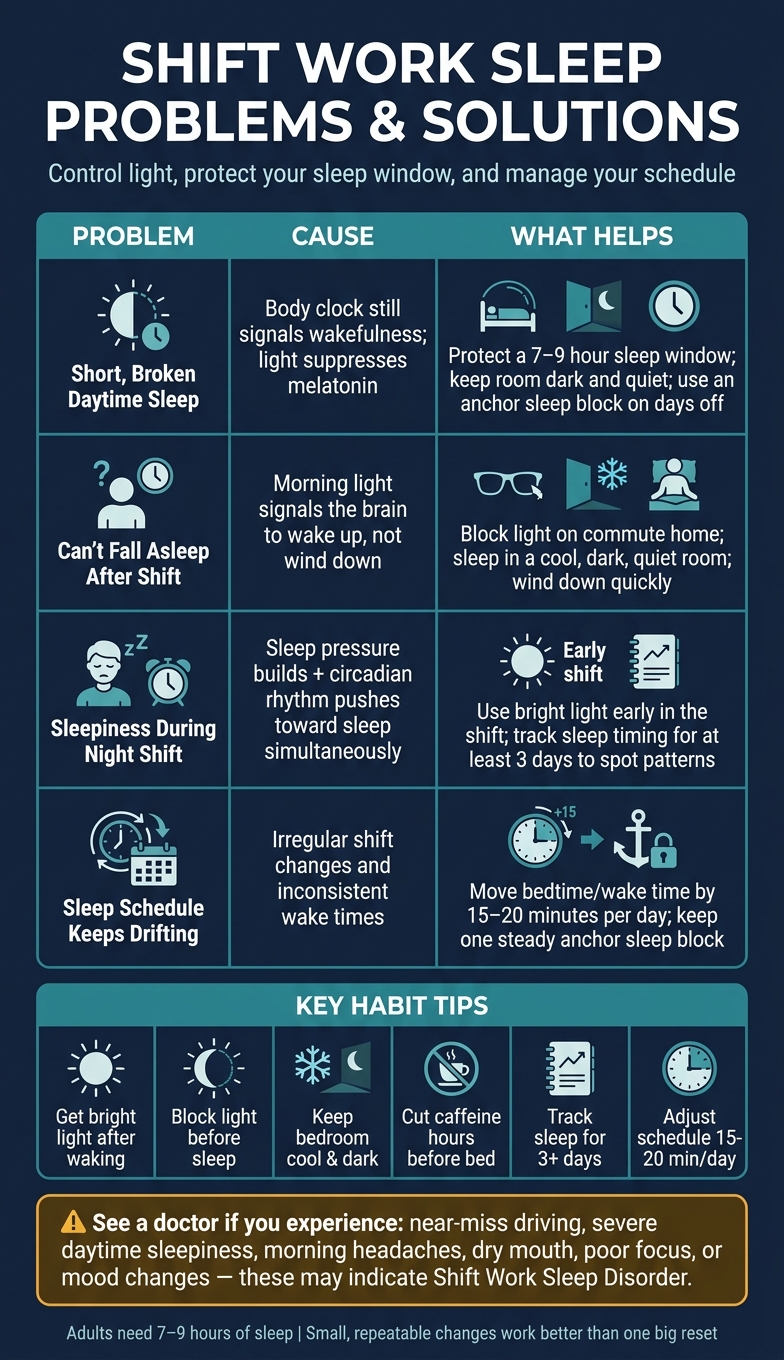
Shift Work Sleep Problems & Solutions: Quick Reference Guide
How to Survive Night Shifts from a Sleep Expert | Management of Shift Work Sleep Disorder
sbb-itb-5106bd1
Common Shift Work Sleep Problems and Natural Solutions
Shift work tends to create the same three sleep issues over and over: short daytime sleep, trouble falling asleep after work, and fatigue during night shifts. The fixes here focus on the three levers that matter most: how long you sleep, how fast you fall asleep, and how alert you stay on the job.
Problem: Short, Broken Daytime Sleep
Daytime sleep often gets chopped up because your body still thinks it should be awake. On top of that, light can suppress melatonin, which makes it harder to stay asleep during the day.
Try to protect a 7–9 hour sleep window every day. If you have days off, keep part of that sleep period at the same time each day. That steady piece acts as an anchor sleep block, which can make your overall schedule less chaotic.
Problem: Trouble Falling Asleep After a Shift
After a night shift, your trip home matters more than most people think. Morning light can tell your brain it's time to wake up, not wind down.
Block morning light on the commute home, then sleep in a cool, dark, quiet room.
Problem: Sleepiness and Fatigue During Night Shifts
Overnight fatigue usually comes from two things at once: sleep pressure building up and your circadian rhythm pushing you toward sleep. It's a double hit.
Use bright light early in the shift to help support alertness. If your schedule rotates, track your sleep timing for at least 3 days. That can help you spot where your timing starts to fall apart.
These same timing rules are a lot easier to stick with when your sleep plan matches your roster.
Science-Based Ways to Reset Your Sleep Schedule
Shift workers can reset sleep timing by managing light, darkness, and wake times. The fastest changes usually come from light control and a more stable sleep window.
Use Light and Darkness at the Right Times
Light tells your body it’s time to be awake. Darkness tells it it’s time to wind down. So the goal is simple: get bright light soon after waking, then dim lights and screens before bed.
Morning light can also help reset your circadian rhythm and improve focus.
Build a Stable Sleep Plan Around Your Work Roster
If your schedule is about to change, don’t force a hard switch overnight. Instead, move your bedtime and wake time by 15 to 20 minutes per day before the change. That gives your circadian rhythm time to adjust.
On days off, keep your wake-up time as steady as you can to limit drift. That makes it easier to get back to your work schedule. It also helps to protect recovery sleep, because lost sleep can make the next shift feel a lot harder. Balancing sleep quality and duration is essential for long-term health.
Once your timing starts to settle, your day-to-day habits help hold that progress in place.
Natural Ingredients That May Support Sleep Timing and Quality
RST Sleep is a natural, non-habit-forming supplement made for night-shift workers and people with irregular schedules. It includes glycine, phosphatidylserine, magnolia bark, extended-release melatonin, and apigenin.
These timing tools tend to work best when you pair them with daily habits that protect sleep.
Daily Habits and Work Schedule Changes That Protect Sleep
Once light timing and sleep windows are set, day-to-day habits and roster rules help hold those gains in place.
Core Habits That Improve Sleep Quality
Small habits, done over and over, can make a clear difference for shift workers. Keep your sleep space cool, dark, and quiet when you sleep during the day. That setup helps melatonin and supports your body clock.
It also helps to keep a sleep-wake log. You may think your schedule is the whole problem, but the log can show patterns you’d otherwise miss, like a certain shift change wrecking sleep for two days after. It’s a simple way to see how your roster affects sleep.
Shift Length, Recovery Time, and Safer Scheduling
Daily routines matter, but shift design can either help those routines stick or tear them apart.
Night and rotating shifts can lead to insomnia and excessive daytime sleepiness because they disrupt the sleep-wake cycle. That’s the hard part of shift work: even when you do a lot right, the schedule itself can still push against your body.
Use recovery days to recover sleep, not to stay awake longer than usual. In plain English, don’t turn a recovery day into a catch-up day for errands, social plans, and extra screen time. That can push circadian alignment even farther off between shifts.
When Sleep Problems Need a Doctor's Attention
If symptoms keep showing up after these changes, the issue may be more than a schedule mismatch.
See a doctor if sleep problems continue after schedule changes, or if they lead to severe daytime sleepiness, near-miss driving, poor focus, morning headaches, dry mouth, or mood changes. Those signs can point to shift work sleep disorder or another circadian rhythm disorder. Sleep apnea or another sleep-related breathing disorder may also be part of the picture.
Conclusion: A Practical Plan for Better Sleep on Shift Work
Shift work throws your body clock off balance. But the main sleep issues often get better when you control light, stick to a steady sleep schedule, and make your room dark enough to sleep better after working nights.
What matters most is consistency, not perfection. Even small changes in your schedule can hurt alertness and sleep quality. So when you need to move from one shift pattern to another, it's smarter to adjust in small steps - about 15–20 minutes at a time - instead of trying to change everything at once.
The Most Important Changes to Start With
Start with timing first. Then build the rest of your habits around that.
Keep a fixed sleep and wake time, even on weekends or days off, to help steady your body clock. Make your bedroom as dark as possible during daytime sleep. Use light on purpose too: get natural light soon after waking, and cut back on screens close to bedtime. Also, stop caffeine several hours before sleep so it doesn't make it harder to fall asleep.
A sleep diary can help you spot patterns in your schedule and rest. If these changes don't help and sleep problems continue, talk to a doctor.
Small changes you can repeat will do more for you than the occasional big reset.
FAQs
How long does it take to adjust to a new shift?
A new shift can change your body fast. Research suggests your body rhythms and blood protein patterns may start to shift within just a few days after your sleep and wake schedule changes.
That sounds simple on paper. In real life, it can throw off your body clock and metabolism in a hurry.
A little support during that adjustment period can help. RST Sleep is made for night shift workers and people with irregular schedules to promote relaxation and support healthy sleep cycles.
What kind of bright light works best during night shifts?
Bright light can help improve alertness during night shifts. It has an energizing effect, which makes it a useful way to manage fatigue while working overnight.
Using bright light during scheduled breaks at work may also help support alertness and performance across the shift.
How do I know if my sleep problem is more than shift work?
It’s not always easy to separate shift work fatigue from a deeper sleep problem. Some warning signs stand out: sleep attacks during everyday activities, drowsiness that gets in the way of normal life, or creepy, crawling feelings in your arms or legs paired with a strong urge to move.
If your symptoms seem like more than the usual adjustment to shift work, see a sleep medicine specialist. They may use polysomnography or actigraphy to look for conditions like sleep apnea, narcolepsy, or restless legs syndrome.