

How Relaxation Improves Sleep for Shift Workers
My advice: start with one relaxation technique during a 10–20-minute wind-down after your shift. It can help you settle down, but it won’t reset your body clock.
Here’s the plan I suggest:
- Choose one: gentle breathing, muscle relaxation, or a short list of work worries and next steps.
- Protect sleep: aim for at least 7 hours per 24 hours, keep your bedroom dark, quiet, and cool, and fit your routine to your shift.
- Check supplements first: RST Sleep is optional, not a replacement for sleep or schedule changes. Review its label with a clinician or pharmacist; ingredient studies don’t prove the finished product works.
- Track patterns for 1–2 weeks: note sleep times, caffeine, and alertness. Seek care if sleep problems continue.
Safety comes first: <u>don’t drive or keep working when you can’t stay alert</u>, and never take a sleep supplement before driving or using machinery.
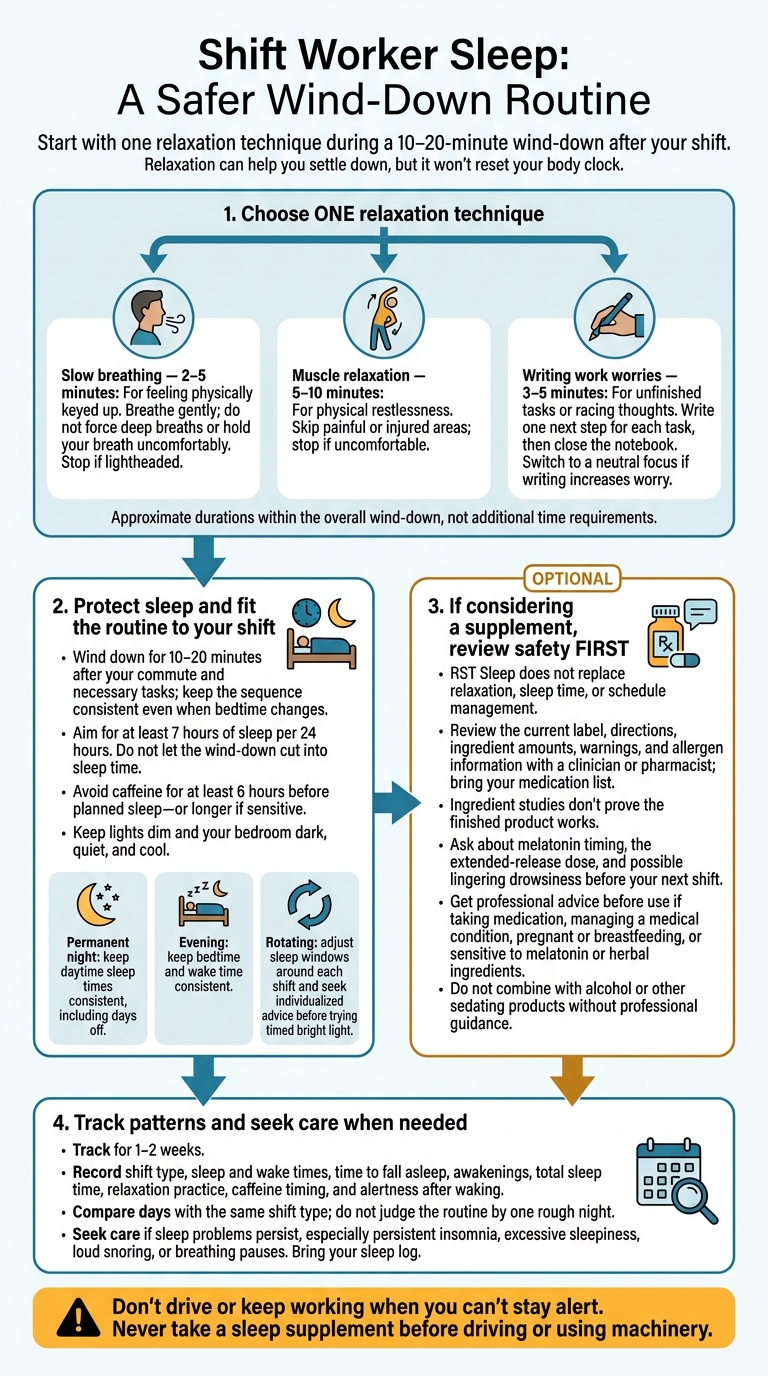
Shift Worker Sleep: A Safer Wind-Down Routine
Mind Still Racing After Work? | Shift Worker Sleep Talk-Down | 9 Hours, Dark Screen, Body Off Duty
sbb-itb-5106bd1
Step 1: Choose 1 Relaxation Technique
Pick one technique based on what keeps you from settling down: tension, restlessness, or racing thoughts. Stick with it for several shifts and track whether you feel calmer afterward.
The table below can help you choose.
| Technique | Best use case | Approximate duration | Limitations for shift workers |
|---|---|---|---|
| Slow breathing | Feeling physically keyed up | 2–5 minutes | Forced breaths or breath-holding can cause lightheadedness. |
| Muscle relaxation | Physical restlessness after a demanding shift | 5–10 minutes | Skip painful or injured areas. |
| Writing work worries | Unfinished tasks or worries occupying your mind | 3–5 minutes | Dwelling on worries may increase alertness. |
Try Slow Breathing for 2–5 Minutes
Sit or lie comfortably and breathe gently. If it feels comfortable, let each exhale last slightly longer than the inhale. Don’t force deep breaths or hold your breath uncomfortably. If you feel lightheaded, stop and return to normal breathing.
Relax Your Muscles for 5–10 Minutes
Work from your feet to your face, tensing and releasing each muscle group. Skip painful or injured areas, and stop if you feel discomfort. If tensing feels uncomfortable, relax each muscle without tightening it first.
Write Down Work Thoughts Before Sleep
Briefly jot down unfinished tasks in a notebook, with one next step for each. Then close the notebook and turn your attention to your breath or a neutral image. If writing makes you more worried, stop and switch to a neutral focus.
Fit your chosen method into your post-shift wind-down.
Step 2: Fit Your Routine to Your Shift
Choose one technique and make it part of your post-shift wind-down. Keep the sequence the same, even when bedtime changes, so your body starts connecting it with sleep. Shift work can make sleep timing harder, so protect at least 7 hours of sleep per 24 hours. Your wind-down shouldn't cut into that time.
Wind Down for 10–20 Minutes
Avoid caffeine for at least 6 hours before planned sleep - or longer if you're sensitive to it. Limit bright light on your commute home.
Once you're home and have finished necessary tasks, spend 10–20 minutes taking a warm shower, reading, or practicing your chosen technique. Keep the lights dim, and avoid stimulating screens or messages.
Then head to a sleep space set up for daytime rest.
Keep Your Bedroom Dark, Quiet, and Cool
Use blackout curtains or an eye mask to block light during daytime sleep. Add earplugs if needed. Keep the room comfortably cool, and agree on protected sleep hours with your household.
Plan for Night, Evening, and Rotating Shifts
Keep your relaxation step the same, but adjust light exposure and sleep timing to fit your shift. The table below shows how. For rotating shifts, get individualized guidance before trying timed bright light so it fits your work hours and planned sleep periods.
| Shift type | Light exposure | Wind-down timing | Sleep-schedule adjustments |
|---|---|---|---|
| Permanent night | Reduce bright light at home after work and darken the bedroom. | Allow 10–20 minutes after your commute and necessary tasks. | Keep daytime sleep times consistent, including on days off. |
| Evening | Dim indoor lights and limit bright screens after you get home. | Wind down for 10–20 minutes after necessary tasks. | Keep bedtime and wake time consistent. |
| Rotating | Limit bright light before sleep; get individualized advice about timed bright light. | Repeat the same 10–20-minute sequence before each planned sleep period. | Adjust sleep windows around each shift and protect total sleep time. |
For 1–2 weeks, record your sleep and wake times, relaxation practice, caffeine timing, and how alert you feel after waking. Use these notes to track what helps.
Step 3: Review Sleep Supplements Before Use
If relaxation alone isn’t enough, take a close look at any supplement before adding it to your routine.
RST Sleep is an optional dietary supplement for shift workers. It does not replace relaxation, sleep time, or schedule management.
Review RST Sleep Ingredients and Claims
RST Sleep contains glycine, phosphatidylserine, magnolia bark, extended-release melatonin, and apigenin. Research on these ingredients does not prove that the finished product improves sleep.
Check the current label. Manufacturer claims don’t mean a product has no allergens or side effects. The label provides the actual dose, warnings, and timing instructions.
Check the Label and Discuss Safe Use
Before use, review the current directions, ingredient amounts, and allergen information. Never take a sleep supplement before commuting, driving, or operating machinery. Allow for possible lingering drowsiness before your next shift.
Bring the label and your medication list to a clinician or pharmacist. Ask about melatonin timing and the extended-release melatonin dose. Get advice before starting if you take medication, have a medical condition, are pregnant or breastfeeding, or are sensitive to melatonin or herbal ingredients.
Don’t combine it with alcohol or other sedating products without professional guidance. Keep your relaxation routine in place, and use the label and your sleep log to assess whether it helps.
Conclusion: Repeat Your Routine and Track Your Sleep
Use the same relaxation technique before bed to help you settle down and sleep better after working nights. If you take a sleep supplement, follow the label. Check with a healthcare professional if you have a medical condition, take other medications, or are sensitive to melatonin.
Track your sleep for at least one week. Record your shift, bedtime, how long it takes to fall asleep, awakenings, total sleep time, and alertness after waking. Compare days with the same shift type to spot patterns instead of judging your sleep by one rough night.
If poor sleep continues despite your routine, seek medical care - especially if you have persistent insomnia, excessive sleepiness, loud snoring, or breathing pauses. Bring your sleep log and ask whether shift work sleep disorder could be involved.
Treat dangerous sleepiness as a safety emergency: don’t drive or keep working when you can’t stay alert.
FAQs
What if relaxation doesn’t help me fall asleep?
Take 2 RST Sleep capsules 30–45 minutes before you plan to sleep, even if your schedule has changed. RST Sleep is designed to calm a racing mind and help with circadian rhythm disruption caused by night shifts and irregular hours.
If the results still fall short, you can request a refund within 30 days of delivery for purchases made directly through the website.
Can I use relaxation before a between-shift nap?
Yes. Relaxation techniques before a nap can calm a racing mind and help you settle into rest. For shift workers, they can soothe the mind and body when work schedules clash with the internal body clock.
You may also consider RST Sleep, a natural supplement designed for night shift workers and people with irregular schedules. It’s intended to promote relaxation and support healthy sleep cycles without heavy sedatives.
How can I tell if RST Sleep helps?
Pay attention to how you feel when you wake up and throughout the day. Users often report feeling more rested, having more energy, and finding it easier to manage their schedules. You may also find it easier to wind down, toss and turn less, and get more consistent, restorative rest.
Not satisfied? You can request a refund within 30 days of delivery. Contact the team with your order number.