

Prebiotics for Better Sleep and Gut Health
If you work nights, the simplest first step is this: eat more prebiotic fiber, time it earlier in your shift, and keep your sleep routine steady. That won’t fix every sleep problem, but it can help support your gut and may make sleep a bit easier over time.
Here’s the short version:
- U.S. adults get only 15–17 grams of fiber a day, far below the 25–38 grams often advised.
- Prebiotics feed gut bacteria, which then make compounds like butyrate that help support the gut lining and keep inflammation in check.
- The gut link to sleep looks indirect, not direct. So I’d treat prebiotics as part of a sleep plan, not a stand-alone fix.
- For night shift workers, meal timing matters: eat your bigger fiber-rich meal before work, then keep overnight meals smaller.
- Start slow with foods like oats, bananas, apples, beans, lentils, onions, garlic, leeks, barley, and asparagus.
- If you have IBS, IBD, cramping, bloating, or bowel changes, talk with a clinician before adding much more fiber.
- If sleep trouble sticks around, or you might have insomnia or sleep apnea, food alone is not enough.
What I’d focus on first:
- Add prebiotic foods slowly
- Shift heavier meals earlier
- Cut caffeine late in the shift
- Block light after work
- Keep the same sleep window when you can
- Use supplements only after those basics are in place
This article comes down to one idea: a calmer gut can support a calmer path to sleep, especially when your work hours push your body clock off schedule.
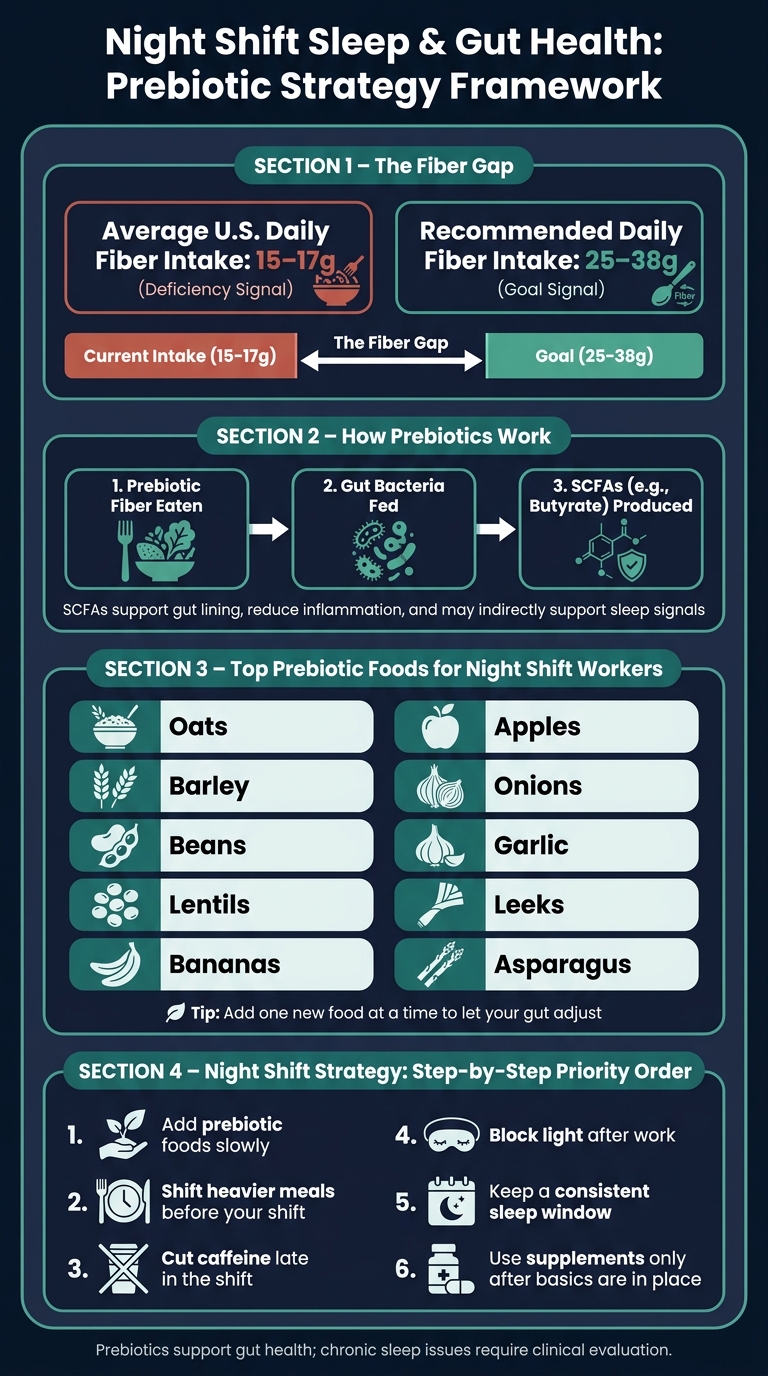
Night Shift Sleep & Gut Health: Prebiotic Strategy Framework
How Gut Health Impacts Sleep
sbb-itb-5106bd1
How Prebiotics Support Gut Health and May Improve Sleep
Prebiotics are fibers your body doesn’t digest. Instead, they feed helpful gut bacteria.
What Prebiotics Are and How They Work in the Gut
Prebiotics like inulin, FOS, GOS, and resistant starch help gut bacteria produce short-chain fatty acids, or SCFAs. One of the main ones is butyrate.
These compounds help support the gut barrier and may help regulate inflammation. Put simply, prebiotics don’t work by acting on your body directly. They work by feeding the microbes that then produce compounds your body can use.
How the Gut-Sleep Connection May Work
Night shift work can keep the body more alert at night. That can make sleep feel like an uphill battle.
This is where the gut-brain link comes in. By supporting the microbiome, prebiotics may help strengthen the signals between the gut and brain that play a role in sleep. It’s not magic, and it’s not instant. But the idea is straightforward: a healthier gut may help support better sleep patterns, especially when your schedule is working against you.
What Current Research Shows
Right now, the strongest research is on gut health. The clearest findings point to growth in helpful bacteria, more SCFA production, and support for the gut barrier.
The sleep side is less settled. Any sleep effects seem to be indirect, and the research is still taking shape. For night shift workers, that makes food timing and prebiotic choices the next practical move.
Prebiotic Strategies That Work for Night Shift Schedules
The most useful prebiotic move on night shift is simple: line up your fiber intake with your work hours.
Prebiotic-Rich Foods That Fit a night shift routine
A lot of prebiotic foods are easy to pack, reheat, and eat on an overnight schedule. Good options include oats, barley, beans, lentils, bananas, apples, onions, garlic, leeks, and asparagus.
Go slow when adding fiber so your gut has time to adjust.
And timing matters just as much as food choice. You can eat all the right things, but if your meals are out of sync with your shift, your stomach may let you know.
Meal Timing to Reduce Digestive Discomfort
Try eating your biggest prebiotic meal before your shift starts. While you're working overnight, keep meals lighter and stick with small prebiotic snacks. It's also smart to avoid heavy meals between midnight and the early morning hours, since that can lower the risk of acid reflux.
That one change can make a big difference. If your stomach feels calmer after work, falling asleep may feel a lot easier.
Simple Meal and Snack Ideas for Overnight Workers
These timing ideas are pretty easy to put into practice. A pre-shift meal could be a grain bowl with brown rice and roasted asparagus, or a bowl of oatmeal with banana slices.
During the shift, keep it small. Good choices include:
- Oatmeal
- A banana
- Apple slices
Using Prebiotics as Part of a Broader Sleep Plan
Prebiotics tend to work best when they’re part of a sleep routine that also supports circadian alignment. Once you’ve dialed in prebiotic foods and meal timing, the next step is simple: protect your sleep window.
Habits That Affect Both Gut Health and Sleep
Night shift work can keep the body stuck in a more alert state, even when you’re trying to rest. And that matters for more than sleep. Digestion also works better when the body is calm. Put plainly, the same conditions that help your gut settle can also make sleep easier.
Cutting caffeine toward the end of your shift can lower arousal and make it easier to wind down. It also gives digestion room to slow down on its own. Managing light exposure after work - with blackout curtains or a sleep mask - helps protect your daytime sleep window and supports melatonin production. Keeping a consistent sleep and wake schedule, even on days off, can reduce circadian drift and help steady gut rhythms over time. A short wind-down routine may also help reduce sleep disruption.
Those habits pull in the same direction for gut balance and sleep timing.
When a Supplement Like RST Sleep May Help
If sleep is still hard after improving diet and timing, RST Sleep may help as a targeted add-on for night shift workers. It includes glycine, phosphatidylserine, magnolia bark, apigenin, and extended-release melatonin.
A Simple Framework for Combining These Strategies
Use the same order each day:
- Start with food timing
- Then control light and caffeine
- Use supplements only when needed
Before increasing fiber further, learn how to do it safely and when to check in with a clinician.
Safety, Limits, and Key Takeaways
How to Increase Fiber Safely and When to See a Clinician
Once your meal timing is in place, the next move is simple: add prebiotic fiber slowly and pay attention to how your body reacts.
Start small. Add one new prebiotic food at a time instead of changing everything at once. That makes it much easier to spot what works well for you and what doesn’t.
If you have IBS or IBD, talk with a clinician before adding fibers that ferment easily. And if you’re dealing with persistent cramping, bloating, or irregular bowel habits, get it checked out. Don’t try to fix an ongoing gut issue on your own.
Prebiotics may help support gut health, but lasting sleep problems are a different matter. Chronic insomnia may involve a smaller-than-normal drop in heart rate at sleep onset and should be checked by a clinician. Obstructive sleep apnea (OSA) is marked by repeated pauses in breathing and higher stress-system activity.
Key Points to Remember
Use this quick wrap-up to match the approach to your symptoms and schedule.
- Increase prebiotic fiber gradually, watch your symptoms, and talk with a clinician if you have IBS, IBD, or ongoing digestive issues before making major changes.
- Prebiotics may help support gut health and may indirectly help sleep, but chronic insomnia or suspected OSA needs clinical evaluation, not self-treatment.
- If diet and meal timing aren’t enough, RST Sleep can be an add-on for sleep support. But supplements should come after food choices and steady habits, not before.
FAQs
How long do prebiotics take to help?
The available information does not say how long prebiotics take to improve gut health or sleep.
For general sleep support, RST Sleep is a natural supplement made for night shift workers and people with irregular schedules. It includes ingredients backed by science that help promote relaxation, improve sleep quality, and support healthy sleep cycles.
Can prebiotics make bloating worse at first?
Yes. More bloating or gas is common when you first start taking prebiotics. That happens because your gut microbiome ferments these fibers, which can lead to extra gas for a while as your digestive system adjusts.
In most cases, this doesn’t last. It often gets better as your body gets used to it. If you work night shifts or have an irregular schedule, supporting gut health may still help support a balanced microbiome, which can be linked to better sleep.
What if I work rotating shifts?
Working rotating shifts can throw off your circadian rhythm. Put simply, your sleep-wake schedule falls out of sync with the body’s natural day-night cycle. And when that happens, staying asleep can feel like an uphill battle.
For people with irregular schedules, RST Sleep offers a natural, non-habit-forming supplement that’s made to support relaxation, help improve sleep quality, and support healthy sleep cycles.