

Melatonin Timing Tips for Shift Workers
If you're a shift worker struggling with sleep, timing your melatonin intake is key. Melatonin works best when taken 30–60 minutes before your planned sleep time, helping reset your body clock and improve sleep quality. Here's a quick breakdown of how to use melatonin effectively:
- Extended-release melatonin is better for staying asleep, while immediate-release helps you fall asleep faster.
- Dosage: Start with 1–2 mg and adjust gradually (up to 5 mg if needed).
- Timing: Take it on an empty stomach for optimal absorption. Avoid taking it within 6–8 hours of your shift to prevent drowsiness at work.
-
Shift-specific tips:
- Night shifts: Take 1–3 mg before daytime sleep.
- Rotating shifts: Use 0.5–2 mg before any sleep period.
- Early shifts: Take 0.5–1 mg about 4–6 hours before bedtime.
Pair melatonin with a sleep schedule checklist and habits like reducing light exposure, avoiding caffeine, and creating a calming pre-sleep routine. If sleep issues persist after consistent use for 7–10 days, consult a doctor as other conditions may be at play.
How to Defeat Jet Lag, Shift Work & Sleeplessness | Huberman Lab Essentials
sbb-itb-5106bd1
What You Need to Know About Extended Release Melatonin
If you're a shift worker looking for a natural, non-habit-forming way to improve your sleep, understanding extended release melatonin could be a game-changer.
What Is Extended Release Melatonin?
Extended release (ER) melatonin, also called sustained-release or continuous-release, is designed to release melatonin into your system gradually over several hours. In contrast, immediate-release (IR) melatonin works quickly, peaking within 30–60 minutes and wearing off after about 3–4 hours. ER melatonin, however, maintains a steady release, keeping melatonin levels elevated for 6–8 hours.
The difference lies in their purpose: IR melatonin helps you fall asleep, while ER melatonin helps you stay asleep. For those who struggle with waking up too soon, ER melatonin can be a better option.
"Extended-release (ER) delivers a slower, sustained level that maintains therapeutic concentrations through the second half of the night." - Brian Steinblock
One important note: do not crush or chew ER tablets. Doing so will ruin the gradual release mechanism and turn the dose into an immediate-release form.
Why Shift Workers Do Better with Extended Release Melatonin
Shift workers face a unique challenge - trying to sleep when their body's internal clock is wired to stay awake. Working night shifts and sleeping during the day means fighting against your circadian rhythm, which is naturally aligned with daylight. This often leads to fragmented or shortened sleep, leaving you tired and unrested.
ER melatonin can help bridge this gap. A 2024 study found that the elimination half-life of 5 mg sustained-release melatonin was 5.10 hours, compared to just 1.01 hours for immediate-release melatonin. This extended half-life keeps melatonin levels steady through the second half of your sleep cycle, when light and noise are most likely to disrupt your rest.
"Sustained-release formulations are expected to provide elevated plasma melatonin levels for a longer duration of time, thus allowing it to exert its action for a longer duration and thus facilitating healthy sleep." - Shefali Thanawala, Nutriventia Limited
The same study also showed that sustained-release melatonin increased plasma concentrations by 1.39-fold to 3.14-fold during the critical 4–8 hours after taking it, compared to immediate-release versions. This is precisely the timeframe when daytime sleepers are most vulnerable to waking up prematurely.
Dosage and Timing Basics
To make the most of ER melatonin's benefits, it's essential to get the dosage and timing right.
For most shift workers, a dose of 1–5 mg taken 30–60 minutes before sleep works best, ideally on an empty stomach for better absorption. Start with 1–2 mg and increase gradually if your sleep remains broken after a week. Keep in mind that higher doses won't necessarily improve sleep quality or reduce grogginess the next day.
Here’s a quick guide to dosage and timing depending on your shift type:
| Shift Type | Dose (mg) | Timing |
|---|---|---|
| Permanent night shift | 1–3 mg | 30–60 min before daytime sleep |
| Rotating shifts | 2–5 mg | 30–90 min before any sleep period |
| Early morning shift | 0.5–1 mg | 4–6 hours before early sleep time |
Timing is critical: never take melatonin within 6–8 hours of starting your shift. Because ER melatonin stays active longer, taking it too close to work could leave you feeling drowsy - a serious safety risk, especially if your job involves operating machinery or driving.
Melatonin Timing Checklist for Shift Workers
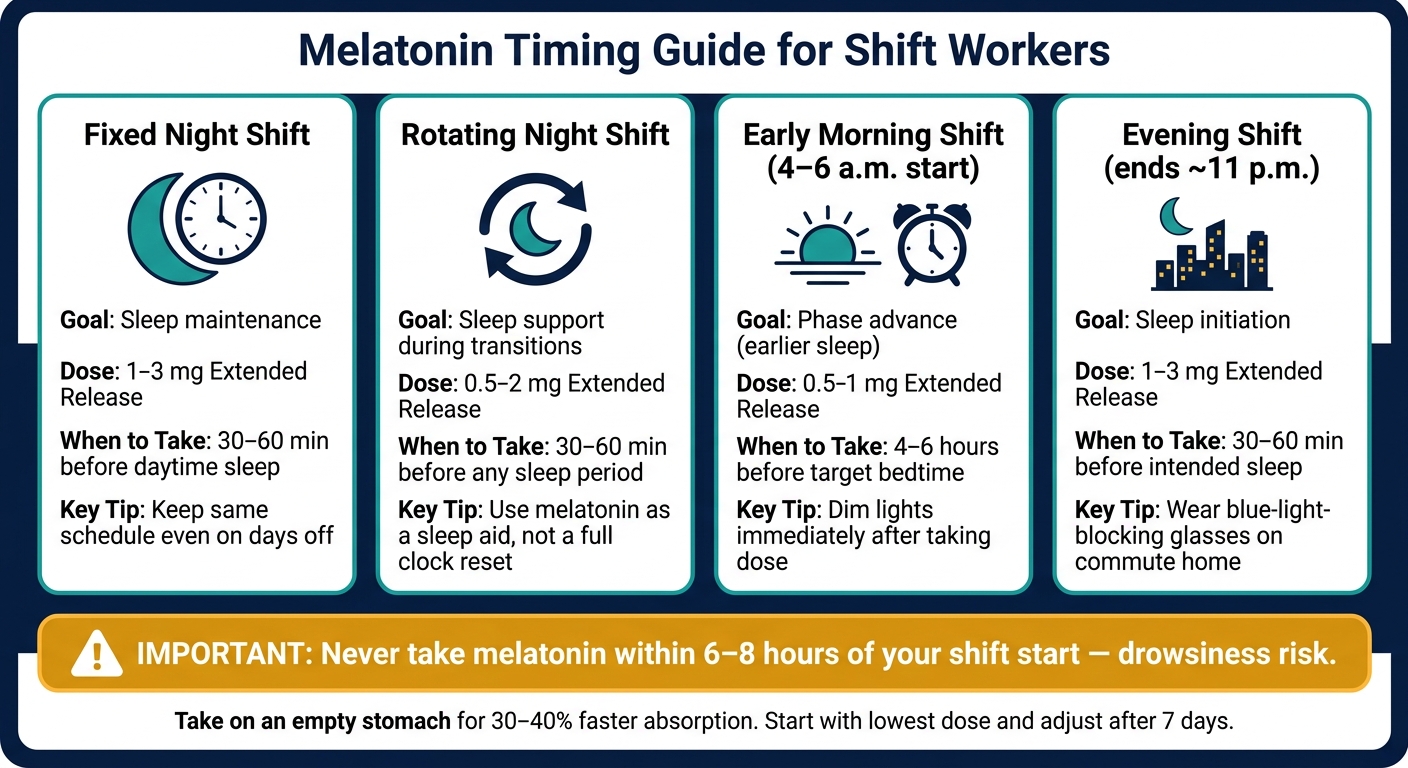
Melatonin Timing Guide for Shift Workers by Shift Type
After understanding the basics of melatonin dosage, it’s time to focus on how to adjust your timing based on your specific shift schedule. Here's a guide to help you fine-tune your approach.
General Melatonin Timing Guidelines
These tips apply no matter what type of shift you work:
- Start with your sleep window. Decide on a consistent target sleep time and work backward to determine when to take melatonin.
- Take it on an empty stomach. Melatonin absorbs 30–40% faster without food, helping you achieve better results.
- Set reminders. Use an alarm to stay on track, especially since irregular schedules can weaken your natural sleep cues.
- Avoid taking it too close to your next shift. Extended-release (ER) melatonin can remain active for up to 8 hours. Dosing within 6–8 hours of your shift could leave you feeling groggy, which can be risky if you’re driving or operating machinery.
- Stick to your schedule. Follow the same dosing routine for 5–7 days before making any changes. This consistency helps your body adjust.
Night Shift Workers
If you work night shifts, your melatonin strategy depends on whether your schedule is fixed or rotates:
- Fixed Night Shift: Take 1–3 mg of ER melatonin 30–60 minutes before your daytime sleep. It’s crucial to stick to this timing every day, even on your days off, to keep your circadian rhythm stable. Switching back to a daytime schedule can undo your progress.
- Rotating Night Shift: If your schedule changes every few days, use melatonin as a tool to help with sleep, rather than trying to fully reset your internal clock. A dose of 0.5–2 mg, taken 30–60 minutes before your planned sleep period (regardless of the time), can help you adjust.
Early Morning and Evening Shifts
- Early Morning Shifts (starting at 4:00–6:00 a.m.): To shift your sleep pattern earlier, take a low dose of 0.5–1 mg about 4–6 hours before your target bedtime. After taking melatonin, dim the lights in your environment to reinforce the sleep signal.
- Evening Shifts (ending around 11:00 p.m.–midnight): For these shifts, take 1–3 mg of ER melatonin 30–60 minutes before your intended bedtime. If you’re exposed to bright lights or screens during your commute home, consider wearing blue-light-blocking glasses to prevent melatonin suppression.
| Shift Type | Goal | Dose | When to Take It |
|---|---|---|---|
| Fixed Night Shift | Sleep maintenance | 1–3 mg | 30–60 min before daytime sleep |
| Rotating Night Shift | Sleep support during transitions | 0.5–2 mg | 30–60 min before any sleep period |
| Early Morning (4–6 a.m.) | Phase advance (earlier sleep) | 0.5–1 mg | 4–6 hours before target bedtime |
| Evening Shift (ends ~11 p.m.) | Sleep initiation | 1–3 mg | 30–60 min before intended sleep |
If you’re looking for a natural sleep aid designed for irregular schedules, RST Sleep offers an extended-release melatonin product combined with other ingredients to support healthy sleep cycles.
Up next, explore habits that can help you get the most out of melatonin.
Habits That Help Melatonin Work Better
Even if you're timing your melatonin perfectly, your daily habits can either support or sabotage its effectiveness. Small changes to your environment and routine can make a noticeable difference in how quickly you fall asleep and how well you stay asleep. These tweaks work alongside your melatonin schedule to improve your overall sleep quality.
Manage Your Light Exposure
Light is the most powerful tool your body uses to regulate its internal clock - it's even more influential than any supplement.
"Light exposure overrides melatonin supplements. You can take 10mg of melatonin and still have your clock reset by 15 minutes of morning light." - Circadian Lighting Lab
Just 15 minutes of sunlight at 7:00 a.m. can delay your sleep onset by an hour or more, even if you've already taken melatonin. To protect your sleep schedule, consider these steps:
- Wear blue-light blocking glasses before leaving work and keep them on during your commute home.
- Dim overhead lights and switch to warm amber bulbs (around 1400K) at least 60–90 minutes before your melatonin dose.
- Make your bedroom completely dark. If you can see your hand in front of your face at night, invest in better blackout curtains.
These adjustments help maintain your body's natural melatonin production and improve your ability to wind down.
Watch Your Caffeine and Meal Timing
Caffeine and meal timing can also influence how well melatonin works:
- Cut off caffeine at least 4–6 hours before bedtime. Remember, caffeine hides in unexpected places like chocolate, certain teas, and some medications.
- Time your meals carefully. A heavy, high-fat meal can delay melatonin's peak concentration by up to 60 minutes, while any food in your stomach can reduce absorption by 30–40%. Aim to finish your last substantial meal at least 2 hours before taking melatonin. A light snack is fine if you're hungry, but avoid anything too rich or heavy.
Alcohol is another factor to consider. It suppresses natural melatonin production by about 19% and disrupts REM sleep, undermining the benefits of supplementation. Once you've addressed light and food, you can focus on creating a consistent bedtime routine.
Build a Pre-Sleep Routine
A calming pre-sleep routine helps signal your brain that it's time to rest, making melatonin more effective. Spend about 30 minutes on low-stimulation activities like reading, gentle stretching, or slow breathing exercises. Avoid screens during this time, as blue light exposure can reduce melatonin's impact.
Temperature control matters too. Deep sleep begins when your core body temperature drops. To encourage this:
- Take a cool shower before bed.
- Keep your bedroom temperature between 65–68°F.
Finally, reduce noise distractions using white noise machines or earplugs. By combining these habits, you'll create an environment that supports your melatonin and sets the stage for better sleep.
When to Talk to a Doctor About Melatonin
Melatonin can be helpful for many people, but ongoing sleep issues might signal the need for professional advice. Knowing when to seek medical guidance is crucial for your overall health and safety, especially if your work schedule puts you at risk.
Signs of Shift Work Sleep Disorder
Shift Work Sleep Disorder (SWSD) affects between 10% and 38% of shift workers, making it more common than many realize. If, after using melatonin consistently for 7–10 days, it still takes you more than 45 minutes to fall asleep or you’re only managing 3–4 hours of sleep per night, it’s time to consult a doctor. The same goes if you’re struggling to stay awake during your shift or feel dangerously drowsy on your commute - night shift workers already face a three times higher risk of accidents compared to daytime workers.
"If your sleep problem is not primarily a timing problem, melatonin will not help it." - Sarah Winters, Sleep Specialist
If symptoms such as chronic insomnia, non-restorative sleep, or excessive daytime sleepiness persist for at least one month, a healthcare provider can assess whether you have SWSD or another condition like sleep apnea, which is also common among shift workers. Chronic insomnia, in particular, often requires behavioral therapies like CBT-I rather than melatonin.
Recognizing these symptoms early is essential before considering other factors like medication interactions or underlying health conditions.
Health Conditions and Medications
Certain health conditions and medications require extra care when using melatonin. For instance, fluvoxamine (Luvox) can increase melatonin levels by up to 17 times, which may result in severe drowsiness. Other notable interactions include:
| Medication Category | Adverse Risk |
|---|---|
| Anticoagulants (e.g., Warfarin) | Increased risk of bleeding |
| Anticonvulsants | Reduced effectiveness; higher seizure risk |
| Blood Pressure Medications | Potentially worsened blood pressure control |
| CNS Depressants | Enhanced sedation and drowsiness |
| Diabetes Medications | Possible effects on blood sugar levels |
| Immunosuppressants | May interfere with therapeutic effects |
If you’re taking any of these medications, it’s important to consult your doctor before starting melatonin. Additionally, individuals with autoimmune conditions like rheumatoid arthritis should be cautious, as melatonin’s immune-stimulating properties might worsen their condition.
Pregnancy and Chronic Health Issues
Melatonin is not recommended for pregnant individuals or those who are breastfeeding. It can pass to the fetus and through breast milk, and there isn’t enough research to confirm its safety. If you’re planning a pregnancy, discuss melatonin use with your doctor, as high doses or prolonged use may impact fertility in both men and women.
People with chronic health conditions such as liver disease, kidney impairment, epilepsy, or diabetes also need tailored medical advice. Since melatonin is metabolized in the liver, impaired liver function can lead to its accumulation. For those with diabetes, melatonin may disrupt blood sugar control for several hours, especially if taken alongside a carbohydrate-heavy meal.
"Melatonin is not a panacea for all sleep problems, and it could even backfire depending on what your actual sleep problem is." - Jade Wu, Behavioral Sleep Medicine Psychologist
Conclusion: Key Takeaways for Shift Workers
Here's a quick recap of the key strategies for using melatonin effectively as a shift worker.
Getting better sleep as a shift worker often hinges on the timing of melatonin use rather than simply taking it. Experts emphasize that when you take melatonin can significantly impact its effectiveness.
For the best results, extended-release melatonin should be taken 30–60 minutes before your planned sleep time. Pairing a low, well-timed dose with good sleep habits gives melatonin the best chance to help. Staying consistent with your melatonin schedule - even on days off - can help reinforce your internal clock.
If regular use doesn't improve your sleep, it might be time to talk to your doctor. Ongoing sleep issues could signal that melatonin alone isn’t enough, especially if you're juggling other medications or health concerns.
Even small changes can make a difference. Studies suggest that tweaking your routine could add 24–48 minutes of sleep per cycle. That extra rest can be a game-changer when you're working against your body's natural rhythm. Use the checklist above to refine your approach and get the most out of your sleep.
FAQs
How do I choose between extended-release and immediate-release melatonin?
Choosing between immediate-release and extended-release melatonin comes down to your specific sleep challenges. If falling asleep is your main issue, immediate-release melatonin might be the better choice since it acts quickly to replicate the body's natural melatonin surge. On the other hand, if staying asleep is your struggle, extended-release melatonin could help by delivering a gradual release throughout the night. For those with irregular schedules, like shift workers, supplements such as RST Sleep - which combine extended-release melatonin with other sleep-supporting compounds - might be particularly helpful.
What should I do if melatonin makes me groggy during my shift?
If you’re feeling groggy, it might mean your melatonin dose is higher than you need. For many adults, a dose of 1–3 mg works well, while others find that 0.5–1 mg is enough. Consider lowering your dose to minimize side effects. Also, don’t take melatonin within 6–8 hours of your shift, as it can lead to lingering drowsiness. RST Sleep offers a low-dose, extended-release formula designed to support your sleep cycles without leaving you groggy.
Can I take melatonin every day long-term as a shift worker?
The long-term consequences of taking melatonin daily remain unclear, as most studies concentrate on short-term usage. While it's generally regarded as low-risk for healthy individuals, experts suggest reserving melatonin for adjusting to schedule changes or managing shift transitions, rather than relying on it as a daily habit. Further research is necessary to better understand its safety over extended periods and the possibility of developing tolerance.