

How Melatonin Helps Shift Workers Sleep Better
Struggling to sleep after a night shift? Melatonin might be the answer. This natural hormone, produced by your brain in response to darkness, helps regulate your sleep-wake cycle. For shift workers, whose schedules disrupt their internal clocks, melatonin supplements can signal the body that it’s time to rest - even during the day. Research shows it can shorten the time it takes to fall asleep and improve sleep quality, though it’s less effective for staying asleep.
Key Takeaways:
- Shift work disrupts circadian rhythms, leading to fragmented and shorter sleep.
- Melatonin supplements help align your body’s clock, especially if taken 30–90 minutes before sleep.
- Studies show melatonin can improve sleep onset and quality, but it won’t prevent nighttime awakenings.
- Pair melatonin use with light management, a dark sleep environment, and consistent habits for the best results.
If your schedule leaves you exhausted, melatonin could be a simple, safe tool to sleep better after working nights.
How Melatonin Regulates Sleep and Circadian Rhythms
What Is Melatonin and How Does It Work?
Melatonin is a hormone produced by the pineal gland, a tiny structure located deep within the brain. Its production is closely tied to light exposure: as darkness sets in, the pineal gland ramps up melatonin production, signaling to the body that it’s time to wind down. When daylight returns, melatonin levels drop, helping the body transition to wakefulness. This cycle essentially acts as the body’s internal cue for "biological night", preparing it for rest. For those working night shifts, this natural rhythm is often disrupted, making supplemental melatonin a helpful tool.
The suprachiasmatic nucleus (SCN), often referred to as the body’s "master clock", plays a key role in this process. Located in the hypothalamus, the SCN collects light data from the retina and directs the pineal gland on when to release melatonin. As Clayton Vasey from the Lake Erie College of Osteopathic Medicine explains:
"Melatonin is also involved with the promotion of sleep, timing of other circadian functions, immune regulation, and modulation of pituitary and adrenal hormones."
How Shift Work Disrupts the Circadian Rhythm
Shift work creates a major challenge for the body’s natural rhythms. Bright artificial light at night suppresses melatonin production, throwing off the body’s internal 24-hour clock. Studies show that "the circadian rhythms of shift workers do not usually phase shift to adapt to working at night and sleeping during the day". This misalignment results in a constant struggle: the body signals for sleep during work hours and promotes wakefulness when it’s time to rest. This mismatch is a key factor behind the exhaustion many shift workers experience.
How Melatonin Helps the Body Prepare for Sleep
Unlike sedatives that directly induce sleep, melatonin works differently. It binds to MT1 and MT2 receptors in the brain, which helps lower core body temperature and signals the body that it’s time to sleep.
For shift workers, supplemental melatonin acts as a substitute for the body’s natural "biological night" signal. Taken at the right time, it helps the SCN adjust to a new sleep schedule, a process called circadian adaptation. Shantha M. W. Rajaratnam, Mark E. Howard, and Ronald R. Grunstein highlight this in their research:
"Shifting the circadian pacemaker with appropriately timed melatonin and/or bright light may be used to facilitate adjustment to a shift work schedule."
This mechanism has laid the foundation for clinical studies exploring how melatonin can benefit those with disrupted sleep patterns.
| Factor | Normal Sleep Schedule | Shift Worker's Challenge |
|---|---|---|
| Light Exposure | Daylight during waking hours | Artificial light during biological night |
| Melatonin Levels | Peaks naturally at night | Suppressed during night work; low during daytime sleep |
| Core Body Temperature | Drops naturally before sleep | Stays elevated during daytime sleep attempts |
| SCN Alignment | In sync with the environment | Misaligned with work/sleep schedule |
sbb-itb-5106bd1
What Research Says About Melatonin for Shift Workers
Key Clinical Findings
A 2024 double-blind, placebo-controlled RCT involving 72 night-shift resident physicians found that taking 5 mg of melatonin 30 minutes before sleep improved sleep quality for 75.8% of participants, compared to 34.4% in the placebo group. Another double-blind crossover trial with 86 shift-working nurses showed that the same 5 mg dose reduced the time it took to fall asleep by 16 minutes and significantly improved scores on the Occupational Cognitive Failure Questionnaire after four weeks. Additionally, a broader meta-analysis revealed that melatonin reduced sleep onset latency by an average of seven minutes compared to placebo. These studies highlight melatonin's ability to help people fall asleep faster, providing a foundation for understanding its benefits and limitations.
What Melatonin Can and Cannot Do
Based on these findings, it’s clear that melatonin is most effective at helping people fall asleep. While it significantly shortens the time to fall asleep, it doesn’t do much for maintaining sleep - like preventing awakenings during the night or extending total sleep duration.
It’s equally important to know what melatonin isn’t designed to do. Melatonin works by signaling the body to start the sleep process at the right time, but it won’t induce sleep if taken during the day. The American Academy of Sleep Medicine also notes that while melatonin can help shift workers sleep during daytime hours, it doesn’t necessarily enhance alertness during their work shifts. For shift workers, this distinction is crucial when balancing sleep and alertness during non-traditional hours.
Safety and Short-Term Use
Melatonin is considered safe for short-term use. Unlike many traditional sleep medications, it doesn’t lead to dependency or impair cognitive function. Common side effects are typically mild and include drowsiness, headaches, and dizziness.
However, since melatonin is sold as a dietary supplement in the U.S. and isn’t regulated by the FDA like prescription drugs, product quality can vary. For those planning to use it regularly, choosing a product from a GMP-certified manufacturer can help ensure better consistency and reliability.
"Melatonin was safely and tolerably superior to placebo in treating patients with sleep disorders following shift work in the short term." - Journal of Clinical Pharmacy and Therapeutics
In short, melatonin is a safe and research-supported option for shift workers who struggle to fall asleep. Just remember to set realistic expectations and opt for high-quality products.
How to Defeat Jet Lag, Shift Work & Sleeplessness | Huberman Lab Essentials
How to Use Melatonin Effectively as a Shift Worker
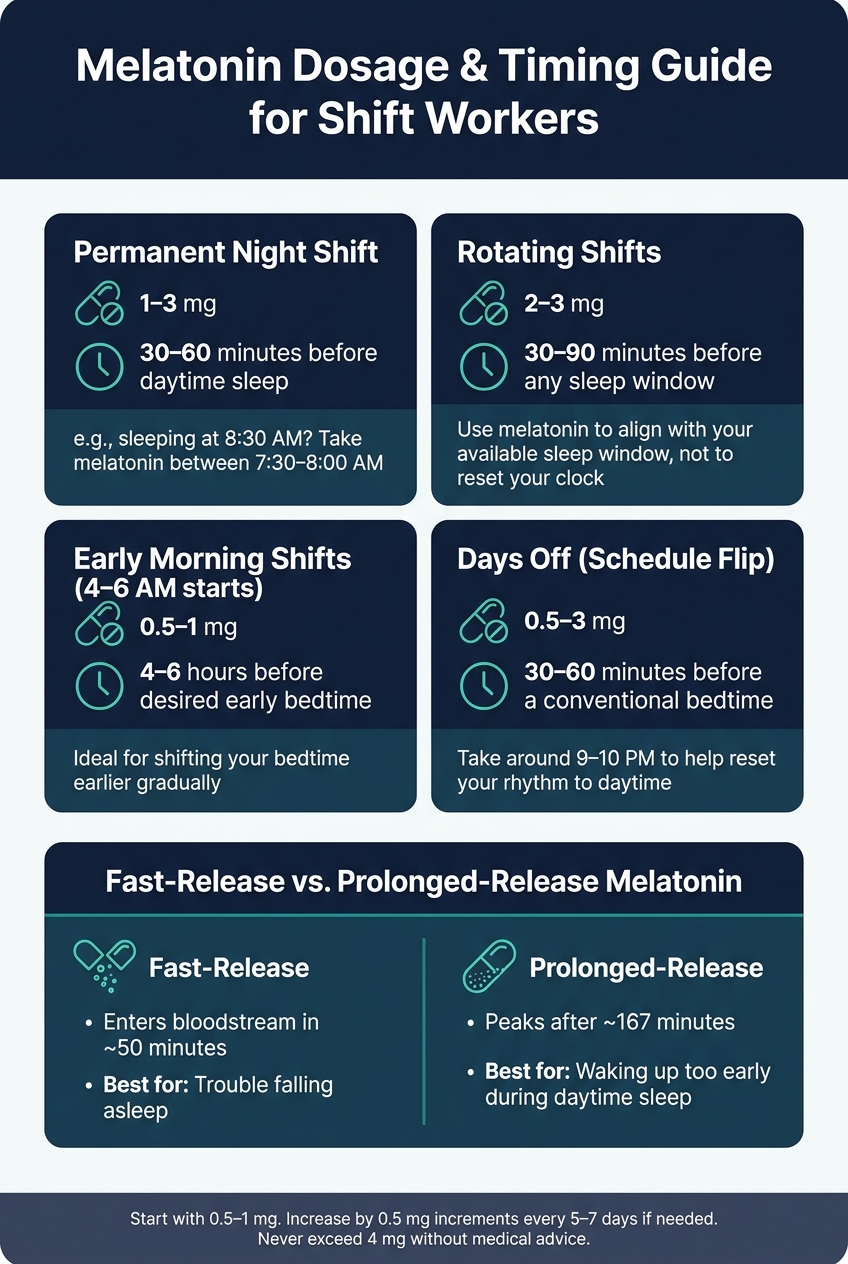
Melatonin for Shift Workers: Dosage & Timing Guide by Shift Type
Timing and Dosage Recommendations
When it comes to melatonin, timing matters more than the dose. Taking it at the wrong time can leave you feeling groggy during your shift or make it less effective overall.
"Taking melatonin at the wrong time (e.g., immediately before bed) reduces its effectiveness. Pay close attention to timing - 2–3 hours before your intended sleep time is optimal." - Roger Sutherland, Coach and Advocate for Shift Workers
Start with a low dose - around 0.5–1 mg. If your sleep doesn’t improve after 5–7 days, increase the dose in small steps of 0.5 mg. Research shows that doses up to 3 mg can significantly increase total sleep time, while doses between 3–4 mg can help you fall asleep faster. Going beyond this range is rarely necessary.
The type of melatonin you choose also matters. Fast-release melatonin enters your bloodstream in about 50 minutes and is ideal if your main issue is falling asleep. On the other hand, prolonged-release melatonin peaks after roughly 167 minutes and works better if you struggle with waking up too early during daytime sleep.
Guidance for Different Shift Patterns
Your shift schedule plays a big role in how and when you should take melatonin. Here’s a quick guide:
| Shift Type | Recommended Dose | When to Take It |
|---|---|---|
| Permanent Night | 1–3 mg | 30–60 minutes before daytime sleep |
| Rotating Shifts | 2–3 mg | 30–90 minutes before any sleep window |
| Early Morning (4–6 AM starts) | 0.5–1 mg | 4–6 hours before desired early bedtime |
| Days Off (schedule flip) | 0.5–3 mg | 30–60 minutes before a conventional bedtime |
For example, if you work a permanent night shift and plan to sleep at 8:30 AM, take melatonin between 7:30 and 8:00 AM. If you’re on rotating shifts, use melatonin to help you sleep during your available window rather than trying to reset your body clock. On your days off, decide early whether you’ll stick to your night schedule or switch to a daytime one. If you’re flipping to a daytime routine, take a low dose around 9–10 PM to help reset your rhythm.
Tips for Safe and Effective Use
- Never take melatonin during your shift - it’s critical to stay alert while working.
- Avoid driving or operating machinery after taking a dose.
- Stick to a consistent schedule, even on your days off, to reinforce your sleep-wake cycle.
- Pair melatonin with a calming bedtime routine. Skip alcohol and screens before bed, as both can interfere with melatonin’s effects.
Consistency and proper timing are your best tools for making melatonin work for you.
Combining Melatonin with Light Management and Sleep Habits
For melatonin to work effectively, it needs the right environment. Factors like light, temperature, and daily routines send powerful signals to your brain. If these signals are out of sync, your sleep quality can take a hit.
Managing Light Exposure to Support Circadian Alignment
Light plays a huge role in setting your body’s internal clock. Even a short exposure to morning sunlight during your commute can delay melatonin production, cutting into your sleep by as much as 40 minutes.
"Light is melatonin's nemesis." - Roger Sutherland, Coach and Advocate for Shift Workers
To combat this, wear amber or wrap-around dark sunglasses as soon as you leave work, and keep them on until you're in a dark, sleep-ready space. During your shift, aim for bright light exposure early on - using a 10,000-lux light therapy box if possible - to signal your body that it’s time to stay active. These strategies, when paired with melatonin, can help reset your internal clock.
Next, focus on creating a sleep environment that mimics nighttime, even during the day.
Setting Up a Sleep-Friendly Environment
Your bedroom should feel like it’s the middle of the night, no matter the time outside. Use blackout curtains and a sleep mask to block all light. Here’s a quick test: turn off the lights at noon - if you can see your hand, your room isn’t dark enough.
Temperature matters, too. Keep your room between 66–68°F to support the natural drop in core body temperature that happens during sleep. This helps your body prepare for deeper, more restorative rest. To block out daytime noise, consider using a white noise machine or earplugs.
Sleep Habits That Support Melatonin Use
Good sleep habits amplify the benefits of melatonin. Stick to a schedule rather than relying on how tired you feel. Set an alarm to remind yourself to take melatonin 30–90 minutes before your planned bedtime. Also, steer clear of caffeine 4–6 hours before sleep and avoid alcohol, as both can interfere with your rest.
For those on permanent night shifts, consistency is key. Maintain the same sleep schedule even on your days off to avoid the "jet lag" feeling that comes with shifting sleep patterns. If you need a boost before your shift, try a 90-minute nap about 2–3 hours before starting work. This can sharpen your focus and make it easier to handle an overnight stretch.
How RST Sleep Supports Shift Workers
For shift workers, improving sleep habits and creating an ideal sleep environment are crucial steps, but sometimes they’re not enough. That’s where RST Sleep comes in. This natural sleep supplement is specifically crafted for people with irregular schedules, offering a blend of ingredients to tackle the unique sleep challenges that shift work brings.
Science-Backed Ingredients
RST Sleep stands out by combining extended-release melatonin with other research-supported ingredients. The extended-release melatonin ensures a steady level throughout the day, helping with daytime sleep and reducing the chances of waking up frequently.
The formula also includes:
- Glycine: Helps lower core body temperature, making it easier to fall asleep.
- Phosphatidylserine: Reduces stress hormones, calming your mind after a demanding shift.
- Magnolia Bark: Known for its soothing effects, it supports relaxation.
- Apigenin: A natural compound that encourages relaxation without causing sedation.
These ingredients work together to address multiple aspects of sleep - helping you fall asleep faster and stay asleep longer. The thoughtful combination highlights the importance of reliability and consistency in sleep support.
Product Quality and Safety
Not all over-the-counter supplements are created equal. As sleep expert Roger Sutherland explains:
"The efficacy of online or store purchased melatonin is very very poor. Studies have shown that even tablets in the same bottle can have a huge range of difference in them."
To counter this inconsistency, RST Sleep is produced in GMP-certified facilities, ensuring each dose is accurate and pure. The formula is non-habit forming, which reduces the risk of dependency, withdrawal, or rebound insomnia. Plus, it’s allergen-conscious, making it a safe choice for a broader range of users.
Addressing the Long-Term Sleep Needs of Shift Workers
RST Sleep goes beyond short-term solutions, focusing on the ongoing sleep issues shift workers face. Between 10% and 38% of shift workers are affected by Shift Work Sleep Disorder (SWSD), a condition caused by the misalignment of work schedules and the body’s natural circadian rhythm. This highlights the need for a consistent, long-term sleep aid like RST Sleep, which targets these challenges head-on.
Studies have shown that melatonin, even with regular use for up to six months, has no significant adverse effects. The extended-release design of RST Sleep is tailored for the kind of steady, reliable support that shift workers require to manage their irregular schedules effectively.
Conclusion: Better Sleep for Shift Workers
Shift work takes a heavy toll on sleep. Around 32% of night-shift workers experience insomnia or excessive daytime sleepiness, compared to just 18% of those working during the day. While melatonin isn't a magic fix, research shows it can help shift workers fall asleep faster and enjoy deeper, more restorative sleep. This highlights the need to pair melatonin with practical sleep strategies for the best results.
To make the most of melatonin, it's crucial to adopt habits that promote better rest. As Roger Sutherland aptly states:
"Thriving as a shift worker requires not only enduring shifts but also cultivating energy and balance outside of work."
This means managing light exposure effectively, sticking to a consistent sleep schedule, and creating a sleep-friendly environment - even if your "night" happens during the day.
For those looking for a tailored solution, RST Sleep offers a supplement specifically designed for shift workers. It combines extended-release melatonin with glycine, phosphatidylserine, magnolia bark, and apigenin in a non-habit forming, GMP-certified formula that supports long-term sleep health.
The stakes are high - shift work-related sleep issues not only affect personal health but also contribute to up to $93 billion in annual costs. Prioritizing better sleep with the right tools and strategies isn't just important; it's essential.
FAQs
How do I find my best melatonin timing for my shift?
To figure out the best time to take melatonin for your shift, match it to your sleep schedule. In most cases, melatonin is most effective when taken about 30–60 minutes before your planned sleep time. If you work night shifts, this usually means taking it after your shift ends. For rotating shifts, adjust the timing to align with your current sleep window. It's always a good idea to consult a healthcare provider to fine-tune the timing based on your unique schedule.
What’s the difference between fast-release and extended-release melatonin?
Fast-release melatonin works quickly, usually reaching its highest levels in the body within 45 minutes to an hour. Its effects last for about five hours, making it a good option for those who need help falling asleep faster. On the other hand, extended-release melatonin is designed to release gradually over time. This provides consistent support to help you stay asleep longer, closely mimicking how your body naturally produces melatonin. It's particularly useful for shift workers who require longer-lasting sleep assistance.
Can melatonin help if I have Shift Work Sleep Disorder (SWSD)?
Melatonin can assist with Shift Work Sleep Disorder (SWSD) by improving daytime sleep and helping to regulate the body's circadian rhythm. It's most effective when taken at the right time - typically before trying to sleep during the day. This can be particularly helpful for shift workers who face disrupted or irregular sleep patterns.