

Melatonin and Acid Reflux: Benefits for Night Shifts
If you work nights and reflux hits when you try to sleep, melatonin may help with sleep timing - but it does not treat GERD by itself.
From what I see in this article, the main point is simple: night shifts can throw off melatonin, sleep, and digestion at the same time. That can make reflux more likely when you lie down after eating. Melatonin may help some people sleep after a shift and may also support the esophagus and stomach, but it should be used alongside reflux care, not instead of it.
Here’s the short version:
- Night shift work can delay or blunt melatonin release
- Lying down after a meal makes reflux more likely
- Melatonin may help set a sleep window after a shift
- Meal timing, left-side sleeping, and head-of-bed tilt still matter
- Red-flag symptoms need medical care right away
- Melatonin can cause drowsiness, headache, or dizziness and can interact with some drugs
A few practical takeaways stand out:
- Take melatonin shortly before your planned sleep time
- Try to leave 2 to 3 hours between your last big meal and sleep
- Keep caffeine to the first half of your shift
- Sleep on your left side if reflux tends to flare in bed
- Ask a clinician before using melatonin if you take blood thinners, seizure medicines, diabetes drugs, PPIs, or H2 blockers
One more point: if you have trouble swallowing, weight loss, vomiting blood, black stools, or chest pain, don’t try to fix that on your own. Get checked.
So if I had to sum it up in one line, it would be this: melatonin may help night shift workers with reflux by helping sleep timing, but the best results usually come from pairing it with reflux habits and medical care when symptoms keep coming back.
The Link Between Night Shift Work, Melatonin, and Acid Reflux
How Shift Work Throws Off Your Body Clock
Night shift work turns the body’s normal light-dark rhythm upside down. Instead of winding down when it gets dark, the body has to stay awake and alert. That can hold back melatonin right when it would usually start to rise.
When that rhythm gets thrown off, the effects may go beyond sleep. Night shifts can keep the body in a more alert state during rest, which may interfere with digestion and lower esophageal sphincter function. That helps explain why reflux can feel worse after a night shift.
How Melatonin May Support the Esophagus and Stomach
Most people think of melatonin as a sleep aid. But it may do more than help you fall asleep.
Research suggests melatonin may help protect the esophagus, support stomach function, and help maintain lower esophageal sphincter pressure. So when shift work suppresses melatonin, the body may lose sleep support and digestive support at the same time.
That bigger role helps explain why melatonin may help with more than sleep alone.
sbb-itb-5106bd1
How Melatonin May Help Night Shift Workers With Reflux
How Melatonin Can Support Sleep After a Night Shift
After a long overnight shift, it’s common to get home and still feel switched on. Your body may act like it’s daytime even when you’re dead tired. Melatonin can help send the message that it’s time to slow down and sleep, even with morning light outside.
That matters because longer, steadier sleep may give acid fewer chances to move up into the esophagus. Sleep after night shifts is often lighter and broken up, which can make it harder for your body to recover. Melatonin may help anchor a more steady sleep window after each shift. The aim is simple: a sleep window your body can start to expect and follow.
The next step is timing melatonin so it helps your sleep window instead of throwing it off.
Using Melatonin as Part of a Broader Reflux Plan
Melatonin is an add-on, not a replacement, for reflux treatment. When you use it along with meal timing and sleep after night shifts, it may help support sleep timing, which may ease reflux symptoms.
If reflux keeps happening and doesn’t improve with these changes, it’s worth getting checked out. A healthcare provider can look for complications or other issues that may overlap, like obstructive sleep apnea.
That makes timing and routine the next priorities.
Major Melatonin Mistakes for Acid Reflux
How to Use Melatonin if You Work Night Shifts and Have Reflux
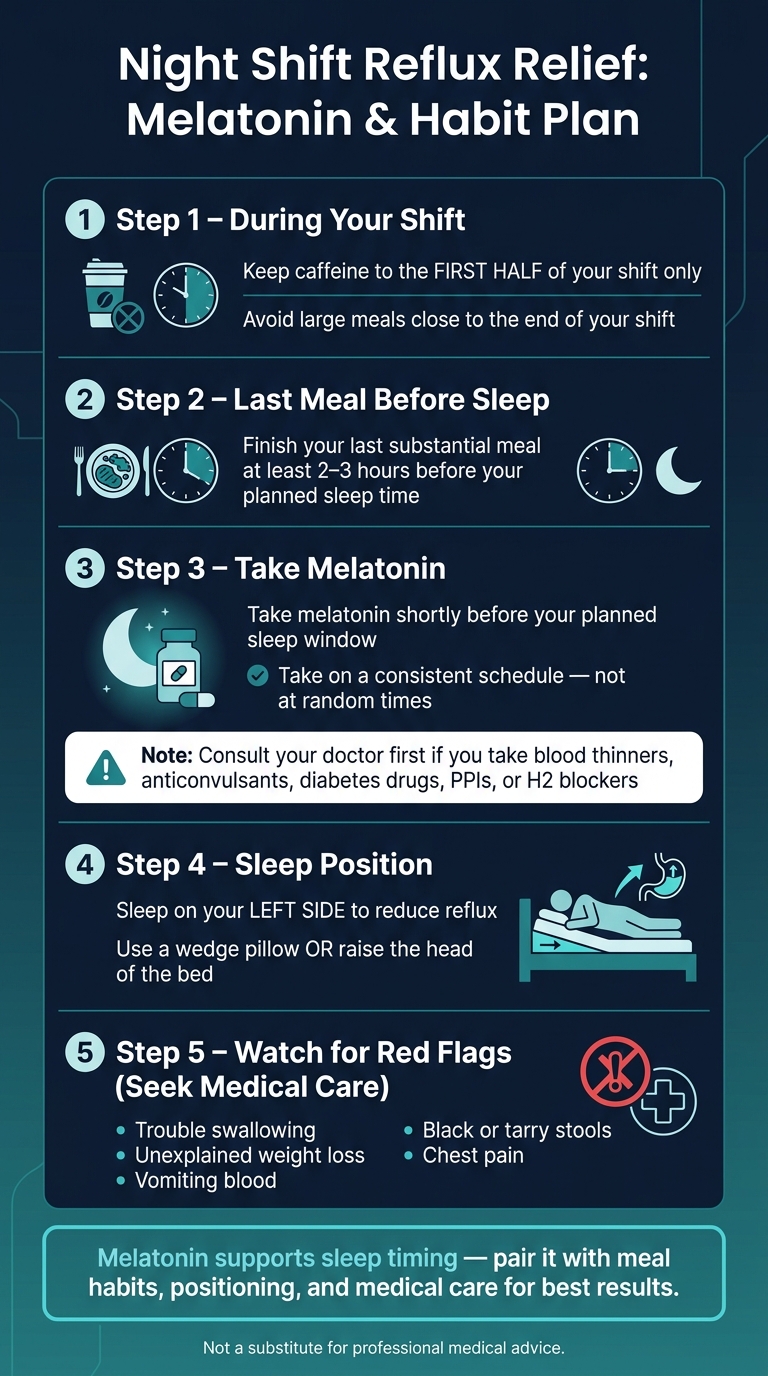
Night Shift Reflux Relief: Melatonin Timing & Habit Plan
When to Take Melatonin Around Your Sleep Window
Take melatonin on a set schedule, shortly before your planned sleep time, not at random points in the day. The goal is to line it up with the sleep window you want your body to follow. If you already use a PPI or H2 blocker for GERD, talk with your doctor before adding melatonin.
Sleep and Meal Habits That Lower Reflux Risk
Melatonin timing works better when you pair it with sleep habits that also cut down reflux risk. Leave at least two to three hours between your last substantial meal and your sleep time. That gap matters. Going to bed on a full stomach can make reflux more likely, especially when you're lying flat.
It also helps to keep caffeine in the first half of your shift. Later caffeine can push sleep back and make the whole schedule harder to hold.
When you lie down, left-side sleeping can ease reflux. A wedge pillow or raising the head of the bed can also help keep acid from rising.
Safety, Limits, and Key Takeaways
When to See a Healthcare Professional
Before you try melatonin for shift-related reflux, it helps to be clear about where it fits and where it doesn’t. Melatonin is generally well tolerated, but it’s not a fit for everyone. It can lead to next-day drowsiness, headache, or dizziness. It can also interact with blood thinners, anticonvulsants, and diabetes medications. Because of that, review your medication list with a clinician before starting.
Get medical care if you have trouble swallowing, unexplained weight loss, vomiting blood, black or tarry stools, or chest pain. Those symptoms need medical evaluation.
What to Take Away From This Article
Safety comes first because melatonin works best as a support tool, not as a stand-alone reflux treatment. Night shift work throws off your body clock, and melatonin may help support your sleep-wake cycle. But it tends to work best when it’s part of a broader plan.
In most cases, the best approach is a combined one: melatonin for sleep timing, meal timing and positioning for reflux control, and medical care when symptoms stick around.
FAQs
Can melatonin make reflux worse?
The information provided doesn’t show that melatonin makes acid reflux worse.
For night shift workers and people with irregular schedules, RST Sleep offers a natural sleep supplement with glycine, phosphatidylserine, magnolia bark, extended-release melatonin, and apigenin to support relaxation and sleep quality.
How long should I try melatonin before talking to a doctor?
Melatonin may help you sleep, but it doesn’t fix the root cause of a medical problem. If sleep issues stick around, or if you’re worried about your health more broadly, talk to a doctor.
That matters because a doctor can help spot what’s actually going on instead of leaving you to lean on a supplement for long-term, unresolved insomnia or other sleep disorders.
Should I take melatonin on my days off too?
It depends on whether you want to keep a steady sleep schedule. Night shift work can throw off your natural circadian rhythm, so sticking to the same sleep routine, even on days off, is often the best move. That can help your body fall asleep more easily and stay asleep longer.
Using RST Sleep on days off may also help support that routine by helping you relax and maintain healthy sleep cycles.