

Managing Fertility Risks for Night Shift Workers
Night shift work can disrupt your body's natural rhythms, leading to fertility issues. Women working night shifts face higher risks of menstrual irregularities, fertility treatment needs, and pregnancy complications due to hormonal imbalances caused by light exposure and sleep disruptions. Here's how you can protect your reproductive health:
- Prioritize Sleep: Use blackout curtains, maintain consistent sleep schedules, and consider melatonin supplements to regulate hormones.
- Manage Light Exposure: Avoid bright lights during shifts and get sunlight after waking to support melatonin levels.
- Eat Well: Focus on high-protein, fiber-rich meals and limit caffeine to improve hormone balance.
- Reduce Stress: Practice yoga, meditation, or breathing exercises to lower cortisol levels that interfere with ovulation.
These strategies, when applied consistently, can help mitigate the fertility challenges associated with night shifts.
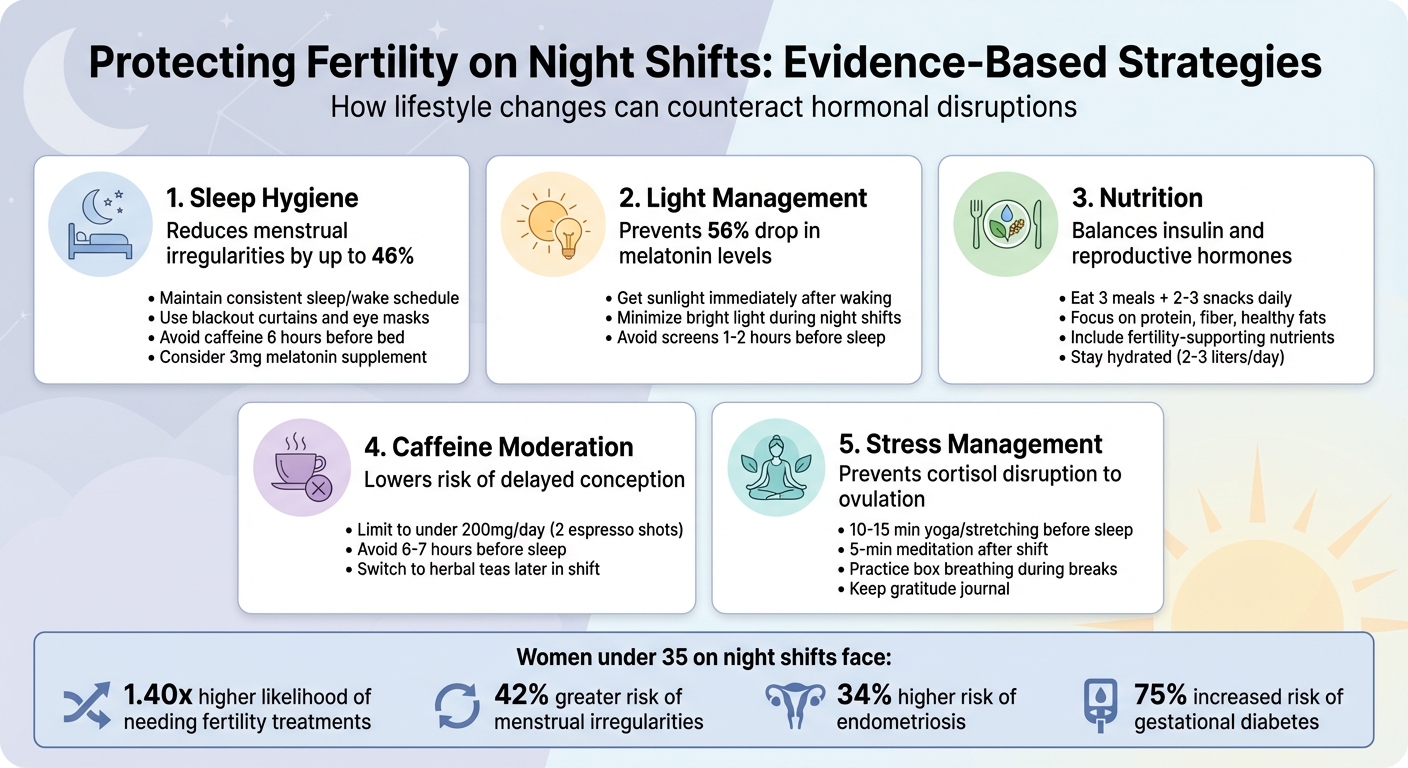
Lifestyle Strategies to Protect Fertility for Night Shift Workers
Trying to Conceive? Here’s How Night Shifts Could Impact Fertility | Dr Shilpa GB: Gynecologist
sbb-itb-5106bd1
How Night Shifts Affect Female Fertility
Night shifts expose women to artificial light that disrupts their internal body clock, or suprachiasmatic nucleus (SCN). This disruption delays the release of hormones essential for ovarian function, leading to a range of reproductive challenges outlined below.
Disrupted Sleep Cycles and Hormone Production
Exposure to bright lights at night suppresses melatonin - a hormone that not only regulates sleep but also triggers the surge of luteinizing hormone (LH) necessary for ovulation. Without enough melatonin, the hypothalamic-pituitary axis can lose its rhythm, throwing off the balance of key reproductive hormones like LH, follicle-stimulating hormone (FSH), estrogen, and progesterone.
"Shift workers remain entrained to [melatonin] rhythm despite misalignment with the timing of the sleep/wake cycle. However, they experience reductions in melatonin levels due to sleep deprivation and nocturnal light exposure, which can contribute to hypothalamic pituitary axis deregulation."
– Christina Y. Lee, Department of Sleep Medicine, ChristianaCare Health System
When circadian genes are disrupted, progesterone levels drop, ovarian follicles are reduced, and menstrual cycles become irregular. These changes can interfere with processes like folliculogenesis, ovulation, fertilization, and embryo implantation. Such hormonal imbalances are a direct pathway to the fertility challenges explored further in this discussion.
Menstrual Cycle Problems and Endometriosis
The impact of night shifts goes beyond hormonal imbalances. They are also linked to irregular menstrual cycles and a higher risk of endometriosis. A study involving 128,852 first-time mothers in South Australia revealed that night shift workers had a 42% greater likelihood of experiencing menstrual irregularities and a 34% higher risk of endometriosis compared to those working daytime schedules. The study also highlighted that women under 35 were significantly more likely to require clinical fertility treatments such as in vitro fertilization (IVF) or intracytoplasmic sperm injection (ICSI).
"Night shift work may contribute to increased need for fertility treatment in younger women. This increased risk may reflect young women's vulnerability in terms of poor tolerance of night shift work, and/or lack of control and choice about shift schedule."
– Renae C. Fernandez, Adelaide Medical School
Ovulation Issues and Pregnancy Risks
Night shifts can also influence fertility by increasing risks during pregnancy. A study involving 5,191 pregnant women across eight U.S. hospitals found that those working afternoon or night shifts were 75% more likely to develop gestational diabetes. Additionally, women who worked three or more consecutive night shifts during their first trimester faced a threefold increase in the risk of preterm birth.
Solutions for Protecting Fertility on Night Shifts
Improving Sleep Quality for Better Hormone Balance
Creating an ideal sleep environment is essential for maintaining the hormonal balance that supports fertility. Your bedroom should be completely dark, quiet, and cool. Blackout curtains, eye masks, and earplugs or a white noise machine can help eliminate light and sound distractions. Even small amounts of light can interfere with melatonin production, which is crucial for regulating reproductive hormones.
Maintaining a consistent sleep and wake schedule - even on days off - can help stabilize your internal clock and promote the regular release of hormones like luteinizing hormone (LH) and follicle-stimulating hormone (FSH). Morning sunlight exposure is particularly helpful for resetting your circadian rhythm, while avoiding screens 1–2 hours before bedtime minimizes blue light's impact on melatonin.
For added support, you might consider a daily 3 mg melatonin supplement and magnesium, which have been shown to improve IVF outcomes and encourage relaxation. RST Sleep (https://rstsleep.com) offers a supplement tailored for night shift workers, combining extended-release melatonin with ingredients like glycine, phosphatidylserine, magnolia bark, and apigenin to enhance sleep quality. These strategies establish a strong foundation for dietary and stress management practices that further support reproductive health.
Nutrition Changes That Support Reproductive Health
A steady meal routine - three meals and 2–3 snacks - can help stabilize insulin levels and appetite hormones. Prioritize high-quality proteins like eggs, Greek yogurt, tofu, and lean meats during your shift to keep you full and avoid the energy crashes that come with sugary snacks.
Incorporate fertility-supporting nutrients into your diet by choosing high-fiber foods (such as legumes, whole grains, and vegetables), antioxidants (berries and leafy greens), and healthy fats (avocado, oily fish, nuts, and olive oil). A small protein-rich snack before your daytime sleep, like cottage cheese on whole-grain toast, can prevent blood sugar dips that might wake you up.
Keep caffeine intake under 200 mg per day (around two espresso shots) and avoid it at least 6–7 hours before sleeping. High caffeine intake has been linked to delayed conception and an increased risk of pregnancy loss. Staying hydrated is equally important - aim for 2–3 liters of water daily to maintain focus and energy during long shifts. When paired with better sleep habits, a balanced diet creates a strong foundation for managing stress effectively.
Stress Reduction Methods for Fertility
Chronic stress can elevate cortisol levels, which disrupts the release of reproductive hormones and interferes with ovulation. Incorporating stress-relief practices like yoga, meditation, and deep breathing can lower cortisol and help restore hormonal balance.
"Your body may interpret poor sleep as stress - and stress is not an ideal condition for reproduction."
– Ubie Health
Consider adding 10–15 minutes of light yoga or stretching before your main sleep block to prepare your body for rest. After your shift, a five-minute guided meditation can ease oxidative stress. Keeping a gratitude journal, such as "The Five Minute Journal", by your bed can help you process daily stressors. During breaks, practice box breathing (inhale for 4 seconds, hold for 4 seconds, exhale for 4 seconds, and pause for 4 seconds) to activate your parasympathetic nervous system and lower your heart rate.
Many women notice improved cycle regulation within 1–3 months of consistent stress management and lifestyle adjustments, showing that the body can adapt when given the right care.
Lifestyle Changes and Their Effects on Fertility
Building on the earlier strategies for sleep, nutrition, and stress management, further lifestyle adjustments can have a measurable impact on fertility for night shift workers. For example, maintaining a consistent sleep-wake schedule has been shown to lower the chances of menstrual irregularities by as much as 46%.
Regulating light exposure is another key factor. Night shifts can cause melatonin levels to drop by 56%, but getting sunlight right after waking helps protect melatonin production, improves egg quality, and supports the LH surge necessary for ovulation.
A steady diet and moderating caffeine intake - both covered in the nutrition section - help stabilize insulin sensitivity and appetite-regulating hormones. These changes also lower the risks of delayed conception and pregnancy loss. Together, these adjustments provide a more well-rounded approach to supporting fertility for those working night shifts.
Table: Lifestyle Strategies and Fertility Results
Here’s a summary of these lifestyle strategies and their effects on fertility, along with tips for implementation.
| Lifestyle Strategy | Proven Fertility Benefit | How to Implement |
|---|---|---|
| Improved Sleep Hygiene | Reduces menstrual irregularities by up to 46%; supports proper LH surge timing | Stick to regular sleep/wake times; use blackout curtains; avoid caffeine 6 hours before bed |
| Circadian Light Management | Maintains melatonin levels (which can drop by 56% on night shifts); supports egg quality | Expose yourself to sunlight immediately after waking; minimize bright light exposure during night shifts |
| Nutritional Consistency | Balances insulin and appetite hormones; ensures steady energy for ovulation | Eat three balanced meals and 2–3 snacks daily; focus on protein and fiber-rich foods |
| Caffeine Moderation | Lowers risk of delayed conception and pregnancy loss | Limit caffeine intake to under 200 mg per day; switch to herbal teas later in your shift |
| Stress Management | Prevents cortisol-related disruptions to reproductive hormones | Dedicate 10–15 minutes daily to meditation, yoga, or deep breathing exercises |
For those looking for additional sleep support, RST Sleep (https://rstsleep.com) offers a natural supplement designed for night shift workers. It promotes relaxation and helps improve sleep quality, especially for individuals with irregular schedules.
Conclusion
Working night shifts can pose challenges to fertility, but there are practical steps you can take to safeguard your reproductive health. Strategies like maintaining a consistent sleep routine, managing light exposure, eating a balanced diet, and reducing stress can help counteract the hormonal disruptions caused by irregular work hours.
The statistics highlight the stakes: women under 35 working night shifts are 1.40 times more likely to require fertility treatments and face a 46% higher chance of experiencing menstrual irregularities . As The Dietologist explains:
"Shift work doesn't mean your fertility journey is doomed. With a little intention around your meals, sleep, hydration and schedule, you can support your fertility health, even on an unconventional routine."
Among these strategies, prioritizing quality sleep is essential. Sleep is the foundation for producing key hormones like melatonin, LH, FSH, estrogen, and progesterone - critical for ovulation and conception. Supplements tailored for night shift workers can also help maintain a healthy circadian rhythm.
For example, RST Sleep (https://rstsleep.com) offers a natural supplement specifically designed for those with irregular schedules. Its ingredients, including extended-release melatonin, glycine, phosphatidylserine, magnolia bark, and apigenin, aim to promote relaxation and improve sleep quality. This targeted support can be a game changer for protecting your reproductive health when working against your body’s natural rhythm.
Start with small, intentional changes - optimize your sleep environment, focus on consistent habits, and consider supportive tools. Taking these steps can help you protect your fertility while navigating the demands of night shift work.
FAQs
How long does it take for my cycle to normalize after changing my night shift routine?
It can take a few months for your menstrual cycle to settle after changing your night shift schedule. Hormonal imbalances and irregular periods might linger for weeks or even months, influenced by factors such as your general health and the duration of your night shift work. Everyone's experience is different, so making gradual lifestyle changes and being patient is important.
What’s the best light routine for night shifts if I’m trying to conceive?
To support fertility while working night shifts, controlling your light exposure is key to maintaining a steady circadian rhythm. Use blackout curtains or dim lighting to create a dark, restful environment for daytime sleep. Minimize exposure to bright light during these hours. On the flip side, make sure to spend time in bright light during your waking hours to help stabilize your internal clock. Sticking to a consistent sleep-wake schedule, even on your days off, can go a long way in regulating hormonal cycles and promoting fertility.
Is melatonin safe to take when trying to get pregnant or during pregnancy?
Melatonin use during pregnancy is typically discouraged because research on its effects on the baby is limited. Although there’s no proof that it impacts fertility, it’s a good idea to consult a healthcare provider if you’re pregnant or trying to conceive. They can provide guidance tailored to your situation to ensure your safety and well-being.