

Magnolia Bark for Sleep: How It Works
Magnolia bark, derived from the Magnolia officinalis tree, has been used for centuries to address stress, anxiety, and sleep issues. Its active compounds, honokiol and magnolol, work by enhancing GABA activity in the brain, which promotes relaxation and reduces stress hormones like cortisol. This makes it a natural option for improving sleep quality, especially for those with disrupted sleep patterns like night shift workers. Here’s what you need to know:
- How it works: Boosts GABA activity, lowers stress hormones, and supports brain relaxation.
- Benefits: Helps you fall asleep faster, enhances sleep quality (NREM and REM), and reduces nighttime arousal.
- Forms: Capsules, standardized extracts, powders, and multi-ingredient blends.
- Dosage: Start with 200 mg, increasing to 400 mg if needed; take 30–60 minutes before bed.
- Safety: Generally safe but avoid during pregnancy, breastfeeding, or with certain medical conditions. Monitor for mild side effects like drowsiness or dizziness.
Magnolia bark offers a gentle, non-habit-forming alternative to pharmaceutical sleep aids, helping you achieve better rest without grogginess.
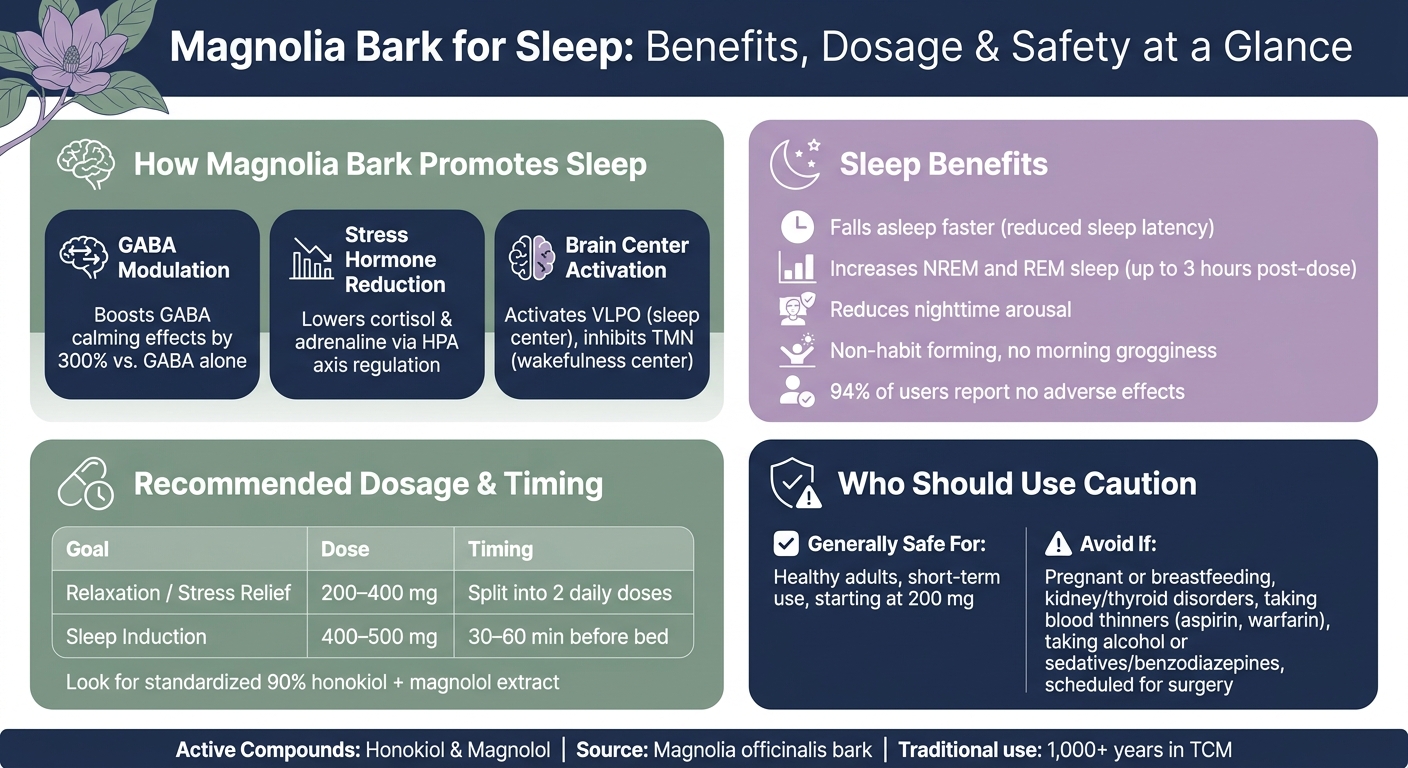
Magnolia Bark for Sleep: Benefits, Dosage & Safety at a Glance
Magnolia Bark and Sleep: The Basics
What Is Magnolia Bark?
Magnolia bark comes from the Magnolia officinalis tree, native to East and Southeast Asia. For over 1,000 years, it has been a cornerstone of Traditional Chinese Medicine (TCM), used to alleviate stress and restore qi - an essential energy flow believed to be tied to emotional well-being and fatigue. In Japanese Kampo medicine, it’s also valued for its calming effects.
In modern times, researchers are exploring how this ancient remedy may help people fall asleep more easily and stay asleep longer.
Active Compounds: Honokiol and Magnolol
Researchers have identified over 250 compounds in magnolia bark, but two stand out: honokiol and magnolol. Honokiol enhances GABA activity - boosting its calming effects by 300% compared to GABA alone. Meanwhile, magnolol contributes additional anti-anxiety and sedative properties.
"Instead of forcing sleep, magnolia bark helps create the conditions where drifting off feels effortless." - Dr. Taz, Board-certified Integrative Medicine physician
These compounds work together to promote relaxation, making magnolia bark particularly helpful for those dealing with disrupted sleep patterns. Its ability to calm the mind is especially valuable for individuals whose schedules interfere with regular sleep cycles.
Why Night Shift Workers May Benefit
Night shift work often throws off natural circadian rhythms and increases stress hormones like cortisol and adrenaline. Magnolia bark’s active compounds can help lower these stress hormones, easing the “wired but tired” sensation that many night shift workers experience.
"Magnolia's ability to lower levels of the alertness-producing hormone adrenaline may also make it an effective natural sleep aid for people who tend to be wired or stressed." - Michael J. Breus, Ph.D., Clinical Psychologist
To address these challenges, RST Sleep was developed. This supplement blends magnolia bark with other well-researched ingredients, including glycine, phosphatidylserine, extended-release melatonin, and apigenin. Together, these components aim to help those with irregular schedules relax and achieve deeper, more restorative sleep.
sbb-itb-5106bd1
How Magnolia Bark Works in the Body and Mind
How It Affects GABA Receptors
GABA is the brain's primary neurotransmitter responsible for calming the mind. When GABA activity is low, the brain stays overactive, making it difficult to relax or fall asleep. Compounds in magnolia bark, specifically honokiol and magnolol, work as positive allosteric modulators of GABA_A receptors. This means they enhance GABA's natural calming effects by binding to the benzodiazepine site, boosting chloride ion flow, and reducing neuron excitability. Additionally, magnolol may help increase the density of GABA_A receptors with alpha subunits, further supporting its calming properties.
"GABA is a neurotransmitter that exerts a calming effect. Increased GABA activity quiets excitatory neurons in the brain, helps reduce anxiety, and promotes sleep." - Michael J. Breus, Ph.D., Clinical Psychologist
How It Lowers Stress Hormones
Magnolia bark doesn't just influence neurotransmitters; it also helps regulate stress hormones. Normally, cortisol levels drop in the evening, signaling the body to prepare for sleep. But for those experiencing chronic stress or irregular schedules, cortisol can stay elevated, keeping the body in a daytime-like state. Magnolia bark supports the hypothalamic-pituitary-adrenal (HPA) axis, which controls the release of cortisol and adrenaline, helping to bring these hormones back to balance.
In a 2013 study, 56 moderately stressed adults took 250 mg of a magnolia and phellodendron bark blend (Relora®) twice daily for four weeks. The results showed a reduction in salivary cortisol levels and perceived stress.
"Daily supplementation with a combination of Magnolia bark extract and Phellodendron bark extract (Relora®) reduces cortisol exposure and perceived daily stress, while improving a variety of mood state parameters, including lower fatigue and higher vigor." - Journal of the International Society of Sports Nutrition
Beyond hormone regulation, magnolia bark's honokiol and magnolol compounds also neutralize free radicals and inhibit the NF-kB pathway, reducing oxidative stress and supporting overall brain health.
How It Improves Sleep Quality
Magnolia bark’s combined effects on neurotransmitters and stress hormones create an ideal environment for better sleep. Animal studies have shown that administering magnolol at doses of 5 or 25 mg/kg not only reduced the time it took to fall asleep but also increased both non-rapid eye movement (NREM) and rapid eye movement (REM) sleep for up to three hours after administration.
This is achieved by increasing activity in the ventrolateral preoptic area (VLPO), the brain’s primary sleep center, while decreasing activity in the tuberomammillary nucleus (TMN), which is associated with wakefulness. This natural shift from alertness to rest often occurs without the grogginess that many conventional sleep aids can cause.
| Mechanism | Biological Action | Sleep Benefit |
|---|---|---|
| GABA Modulation | Positive allosteric modulation of GABA_A receptors | Quiets excitatory neurons and promotes relaxation |
| HPA Axis Regulation | Calms the HPA axis to lower cortisol and adrenaline | Reduces nighttime arousal |
| Brain Center Regulation | Activates the VLPO and inhibits the TMN | Shortens sleep latency; increases NREM and REM sleep |
| Neuroprotection | Inhibits the NF-kB pathway and provides antioxidant activity | Supports long-term brain health and cognitive clarity |
How to Use Magnolia Bark for Better Sleep
Available Forms of Magnolia Bark
Magnolia bark comes in several forms, making it easy to find an option that fits your routine. Capsules are the simplest choice, offering pre-measured doses with consistent potency. Standardized extracts, usually containing 90% honokiol and magnolol, are a reliable option for sleep support, as they deliver consistent levels of the active compounds. If you prefer a more traditional approach, loose powder can be brewed into tea. This method has roots in traditional medicine practices like Saiboku-to, though the strength can vary depending on how it's prepared. Another convenient choice is multi-ingredient sleep blends, which combine magnolia bark with other supportive ingredients. For instance, RST Sleep includes magnolia bark along with glycine, phosphatidylserine, extended-release melatonin, and apigenin, specifically designed for those with irregular sleep patterns, such as night shift workers.
Once you've chosen your preferred form, the next step is figuring out the right dose and timing.
Dosage and Timing
Getting the dosage and timing right is key to making the most of magnolia bark. For sleep and stress relief, start with 200 mg per day and increase up to 400 mg if needed, while keeping an eye out for any signs of morning grogginess.
Timing is crucial. To help with sleep, take magnolia bark 30–60 minutes before going to bed. This allows enough time for the active compounds to interact with GABA receptors, promoting relaxation. If you're a night shift worker, align the timing with the start of your sleep window, regardless of the time on the clock.
| Goal | Recommended Dosage | Timing |
|---|---|---|
| Relaxation/Stress Relief | 200–400 mg | Divided into two daily doses |
| Sleep Induction | 400–500 mg | 30–60 minutes before bedtime |
Adding Magnolia Bark to Your Nightly Routine
Consistency is the secret to success. Pair magnolia bark with a few simple habits to help your body wind down. About an hour before bed, dim the lights and stay away from screens to support magnolia bark's cortisol-lowering effects.
Take your supplement and spend 30 minutes on calming activities like reading, light stretching, or quiet breathing exercises. If you plan to use magnolia bark regularly, consider taking breaks periodically to avoid building a tolerance. Also, steer clear of mixing it with alcohol or sedative medications, like benzodiazepines, as magnolia bark can enhance their effects on the central nervous system.
Safety and Precautions for Magnolia Bark
Side Effects to Know About
Magnolia bark is generally considered safe for short-term use. In one clinical study, 94% of participants reported no adverse effects.
That said, some mild side effects can occur, such as heartburn, drowsiness, dizziness, and headache. These effects are usually temporary and resolve on their own. However, rare but serious reactions have been noted, including thyroid dysfunction and kidney damage, especially in cases involving multi-ingredient supplements.
Understanding these potential risks is key to using magnolia bark safely.
Who Should Use Caution
Certain groups should approach magnolia bark with extra care and consult a healthcare provider before use.
- Pregnant individuals should avoid magnolia bark altogether. Animal studies suggest that its active compounds, honokiol and magnolol, may inhibit uterine contractions. It is classified as Safety Class 2b, meaning it’s not recommended during pregnancy. Similarly, breastfeeding individuals should steer clear.
- People with kidney disease, thyroid disorders, or diabetes should exercise caution. Magnolia bark may affect blood sugar levels and has been linked to rare cases of kidney and thyroid issues.
- If you’re scheduled for surgery, it’s crucial to inform your healthcare provider. Magnolia bark’s antiplatelet properties could heighten bleeding risks, especially if combined with blood thinners like aspirin or warfarin.
- Avoid combining magnolia bark with alcohol or sedatives, as this may amplify central nervous system depression.
"The ingredients in dietary supplements like magnolia bark may have strong, druglike effects." - FDA
By being mindful of these precautions, individuals can make informed decisions about incorporating magnolia bark into their routine.
Weighing the Benefits Against the Risks
For healthy adults, using magnolia bark at recommended doses often provides more benefits than risks. Starting with 200 mg and monitoring how your body reacts is a good approach. While its benefits include promoting relaxation and improving sleep quality, it’s important to remain aware of possible side effects. Responsible use is essential for achieving better sleep while minimizing risks.
Here’s a quick comparison of the benefits and precautions:
| Benefits | Risks & Precautions |
|---|---|
| Promotes relaxation and reduces anxiety | Can cause excessive drowsiness if combined with alcohol or sedatives |
| May improve sleep quality and reduce time to fall asleep | May increase bleeding risk when taken with blood thinners |
| Helps lower cortisol levels | Rare risks: thyroid issues, sexual dysfunction, kidney damage |
| Offers anti-inflammatory and antioxidant effects | Not safe during pregnancy |
| Well-tolerated by most users (94% report no side effects) | May interfere with blood sugar control in diabetics |
If you notice unusual symptoms like numbness, persistent dizziness, or skin reactions, stop using magnolia bark and consult a healthcare provider. Since long-term safety data in humans is limited, taking breaks from use is a sensible way to reduce potential risks.
How magnolia bark affects sleep and health
Conclusion: Using Magnolia Bark as Part of a Sleep Plan
Magnolia bark works by amplifying your brain's natural calming signals, thanks to compounds like honokiol and magnolol. Instead of forcing sedation, it supports your body’s ability to transition naturally from wakefulness to sleep, preserving the restorative qualities of your sleep cycle.
This calming effect can be especially helpful for night shift workers, who often deal with circadian rhythm disruptions and higher levels of adrenaline and cortisol.
As Dr. Taz, a board-certified integrative medicine physician, explains:
"Magnolia bark for sleep has become a go-to for those who want a natural, gentle way to help the body unwind at night."
For anyone looking to include magnolia bark in their sleep routine, a starting dose of 200 mg, taken 30–60 minutes before bedtime, is recommended. Look for a standardized 90% extract for optimal results. To get the most out of magnolia bark, combine it with good sleep habits, like keeping your bedroom dark and cool, avoiding screens before bed, and eating balanced meals to maintain stable blood sugar levels.
If you’re interested in a science-backed sleep aid that combines magnolia bark with ingredients like glycine, phosphatidylserine, apigenin, and extended-release melatonin, check out RST Sleep. It’s non-habit forming and produced in GMP-certified facilities, offering a convenient option as part of a comprehensive sleep strategy.
FAQs
How fast does magnolia bark work for sleep?
Magnolia bark is often suggested for use about 30–60 minutes before bedtime. This timing allows its key compounds, honokiol and magnolol, to work effectively in promoting relaxation and easing anxiety. RST Sleep incorporates magnolia bark into its formula, blending it with other research-backed ingredients to help calm the mind, improve sleep quality, and maintain healthy sleep patterns - especially beneficial for people dealing with irregular routines.
Can I take magnolia bark with melatonin or other sleep aids?
Magnolia bark is frequently paired with natural sleep aids such as melatonin, magnesium, theanine, and apigenin to help improve sleep quality and consistency. By interacting with GABA receptors, it encourages relaxation, making it a popular ingredient in many sleep-support formulas. However, it's important to consult your healthcare provider before mixing it with other aids - especially prescription sedatives or alcohol - since it can amplify their effects.
How do I choose a high-quality magnolia bark supplement?
To pick a reliable magnolia bark supplement, focus on products standardized to include consistent amounts of honokiol and magnolol. Aim for supplements with at least 2% honokiol to ensure effectiveness. Stick to trusted brands, verify third-party testing, and confirm quality assurance measures. A dependable choice is RST Sleep, which combines magnolia bark with other research-supported ingredients designed to promote relaxation and healthy sleep cycles - particularly helpful for those with irregular routines.