

5 Long-Term Effects of Untreated Shift Work Sleep Disorder
If shift work sleep disorder goes untreated, it can wear down more than your sleep. Over time, it can affect your energy, heart, blood sugar, weight, and mental health.
Here’s the short version: I’d watch for constant fatigue, heart and blood pressure strain, weight gain and type 2 diabetes risk, possible cancer risk from long-term body-clock disruption, and problems with memory, focus, anxiety, or depression. The article also points to simple next steps: keep a steadier sleep window, use light and caffeine at the right times, and get medical help if sleepiness or near-miss accidents keep happening.
At a glance, untreated SWSD may lead to:
- Chronic fatigue and poor alertness
- Cardiovascular problems like high blood pressure and arrhythmias
- Metabolic issues such as belly fat, insulin resistance, and type 2 diabetes
- Digestive trouble like heartburn, bloating, and constipation
- Brain and mood changes including memory lapses, irritability, anxiety, and depression
| Effect | What it can look like over time |
|---|---|
| Fatigue | Daytime sleepiness, microsleeps, slower reaction time |
| Heart and metabolic strain | Higher blood pressure, palpitations, weight gain |
| Diabetes and digestion | Poor glucose control, nighttime eating, gut symptoms |
| Cancer risk | Long-term cell stress tied to body-clock disruption |
| Cognitive and mood problems | Trouble focusing, low mood, memory issues |
If you work nights, early mornings, or rotating shifts, this article is a plain-language look at what can happen when your body clock stays out of sync for too long.
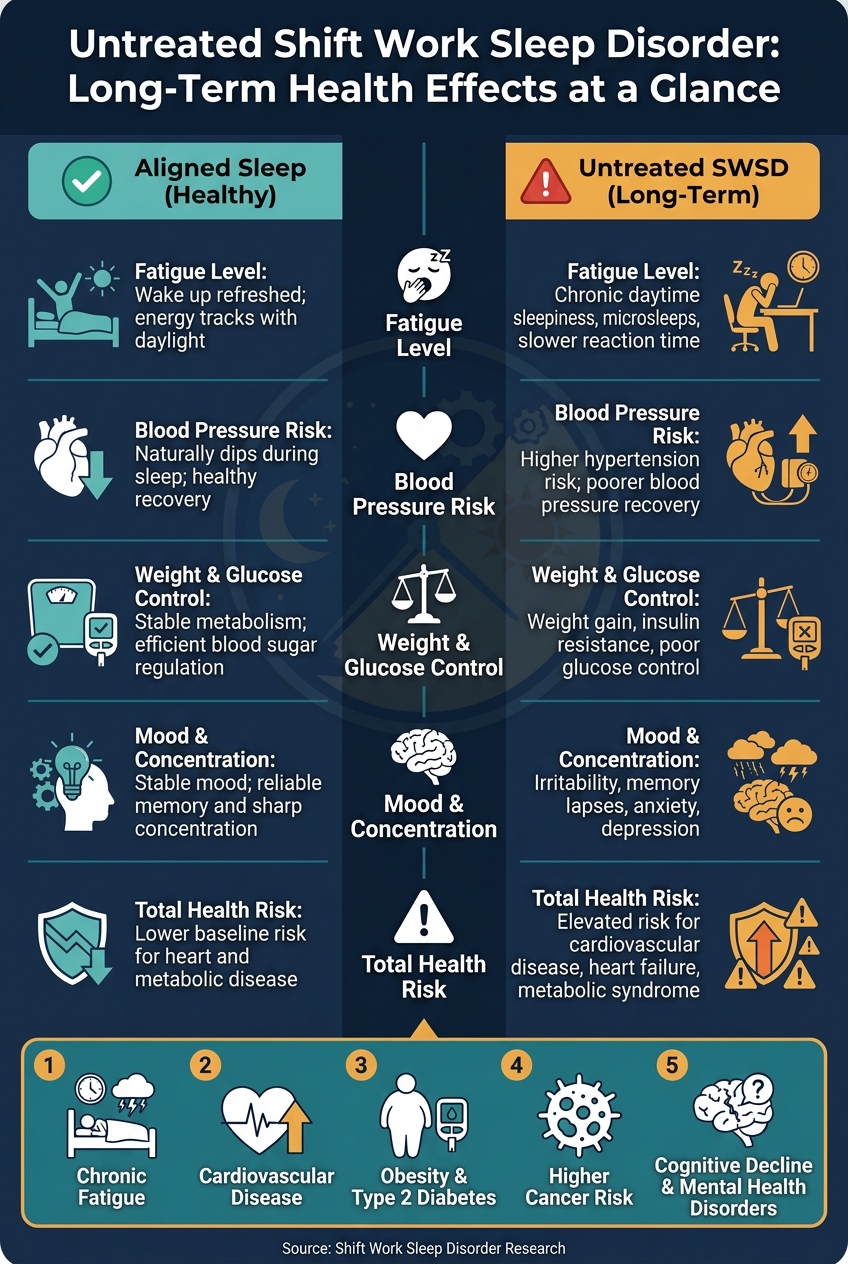
Untreated Shift Work Sleep Disorder: Long-Term Health Effects at a Glance
What Untreated Shift Work Sleep Disorder Does to the Body Over Time
Untreated SWSD throws the body out of sync, and that strain adds up. It often starts with poor sleep, but it doesn’t stay there. Over time, the effects can spread to the heart, metabolism, and brain.
How Circadian Misalignment Disrupts Sleep, Hormones, and Metabolism
Your body runs on a roughly 24-hour internal clock. That clock helps control sleep, hormone release, and metabolism. When you work night shifts or rotating shifts, your sleep-wake schedule no longer lines up with that internal timing. As a result, sleep, hormones, and energy use can all fall out of rhythm.
Two hormones take a big hit here: melatonin and cortisol. When their timing gets disrupted, sleep quality can drop. Appetite regulation can also shift, and glucose control may get worse.
Sleep also plays a big part in tissue repair, protein synthesis, and growth hormone release. So when sleep keeps happening at the “wrong” biological time, the body doesn’t recover as well. It’s a bit like trying to do home repairs in the dark. The work still happens, but not as smoothly.
How Repeated Sleep Loss Raises Chronic Disease Risk Over Time
Each night of broken or mistimed sleep can set off a stress response. The sympathetic nervous system becomes more active, which can increase heart rate and tighten blood vessels. If that pattern keeps repeating during night-shift work, the heart and blood vessels take on more strain over time.
The problem is that the body can get stuck in that stress mode. Even during the day, blood pressure and inflammation may stay higher than they should. That steady wear and tear can chip away at long-term health.
| Mechanism | What It Disrupts | Long-Term Risk |
|---|---|---|
| Circadian misalignment | Melatonin, cortisol, appetite hormones | Higher risk of chronic disease |
| Sympathetic overdrive | Heart rate, blood pressure | Strain on heart and blood vessels |
| Inflammatory activation | Oxidative stress, cellular repair | Inflammation and slower recovery |
| Hormonal imbalance | Glucose control, energy metabolism | Poor glucose control and weight gain |
At first, these changes may feel like plain old fatigue. But over time, they can turn into deeper problems tied to the heart, metabolism, brain, and mood.
sbb-itb-5106bd1
1. Chronic Fatigue and Reduced Daytime Functioning
The first long-term effect is usually the one people feel right away: fatigue that doesn’t go away, even after sleep. When shift work sleep disorder is left untreated, lost sleep can turn into constant daytime tiredness and poor functioning. Over time, that can lead to chronic insufficient sleep, where you never get enough rest to stay alert.
Untreated SWSD can lower alertness, concentration, and reaction time. It can also trigger microsleeps, which are brief, involuntary sleep episodes that can happen without warning.
That’s when even routine tasks can become unsafe. In day-to-day life, this may show up as irritability, missed details, and dangerous drowsy driving.
2. Cardiovascular Disease and Metabolic Syndrome
Chronic sleep disruption can keep the sympathetic nervous system switched on. That means a faster heart rate and tighter blood vessels, which can push blood pressure up over time and add to the risk of arrhythmias and coronary heart disease.
That strain doesn’t just come and go. Over time, it can change how the heart functions. Long-term inflammation and autonomic imbalance are linked to a higher risk of atrial fibrillation and heart failure.
Sleep loss also tends to worsen insulin resistance and drive abdominal weight gain, which increases the risk of metabolic syndrome.
Watch for signs like palpitations, rising blood pressure, and more fat around the midsection. As insulin resistance and abdominal weight gain build, type 2 diabetes becomes more likely.
3. Obesity, Type 2 Diabetes, and Digestive Problems
Metabolic strain from untreated SWSD often shows up first in weight, blood sugar, and digestion.
Untreated SWSD can throw off weight control, blood sugar, and digestion. Shift work can suppress the body’s rest-and-digest response, which may slow digestion and weaken normal gut function. Circadian misalignment also disrupts appetite hormones. That can lead to higher calorie intake during night shifts and uneven hunger signals across the day.
Over time, this kind of circadian disruption can increase appetite, add weight, and increase the risk of type 2 diabetes. You end up with a frustrating pattern: irregular hunger, poorer glucose control, and digestive symptoms that get harder to brush off.
Shift workers often report:
- Heartburn
- Bloating
- Constipation
- Irregular hunger cues
It also helps to watch for rapid weight gain, belly fat that may point to abdominal obesity, and nighttime eating tied to disrupted appetite signals.
4. Higher Cancer Risk From Long-Term Circadian Disruption
Beyond heart and metabolic strain, long-term circadian disruption may also affect cancer risk. Over time, untreated SWSD may increase that risk.
When your body clock gets thrown off again and again, the effects don’t just vanish by morning. Repeated circadian disruption can increase inflammation and oxidative stress, which may interfere with normal cell repair. And when that misalignment goes on for years, the damage can build. That can make it harder for the body to spot and fix the kinds of cellular changes tied to long-term disease risk.
5. Cognitive Decline and Mental Health Disorders
When circadian misalignment and chronic sleep loss drag on, the brain and mood often start to break down at the same time. Untreated SWSD can slowly chip away at thinking, memory, and emotional control.
Chronic sleep loss disrupts the N1 and N2 sleep stages, and that disruption is directly linked to cognitive decline. One serious red flag is automatic behavior - getting through tasks on autopilot with no conscious awareness. Over time, sleep deprivation also hurts executive function, learning, and language processing. These slips in thinking often show up right alongside changes in mood.
The link between sleep disruption and mental health works both ways. Circadian disruption keeps the body stuck in an always-on stress response, which wears down emotional resilience and increases the risk of anxiety and depression.
Watch for signs like:
- Persistent irritability
- Memory lapses
- Trouble concentrating
- A less positive mood
If those symptoms are starting to feel normal day after day, that deserves attention. These warning signs help show the overall health burden of untreated SWSD.
Health Impact at a Glance
These effects build over time. Put the two side by side, and the gap stands out fast.
| Health Area | Aligned Sleep (Normal) | Untreated SWSD (Long-Term) |
|---|---|---|
| Fatigue Level | Wake up feeling refreshed; energy tracks with daylight hours. | Chronic daytime sleepiness and reduced alertness. |
| Blood Pressure Risk | Blood pressure naturally dips during sleep. | Higher hypertension risk and poorer blood pressure recovery. |
| Weight & Glucose Control | Stable metabolism; efficient blood sugar regulation. | Weight gain and poorer glucose control. |
| Mood & Concentration | Stable mood; reliable memory and sharp focus. | More irritability, low mood, and memory lapses. |
| Total Health Risk | Lower baseline risk for heart and metabolic disease. | Elevated risk for cardiovascular disease, heart failure, and metabolic syndrome. |
This is where the problem starts to feel less abstract. It’s not just about feeling tired after a bad shift. Over months and years, poor sleep timing can put extra strain on blood pressure, mood, focus, and metabolic health.
The next step is reducing that strain before it turns into long-term damage.
How Shift Workers Can Protect Their Sleep and Health
Once SWSD starts to affect your health, the aim is simple: take some of the daily pressure off your body. You usually don't need a perfect routine. But small changes done often can make a big difference.
Build a More Consistent Sleep Routine Between Shifts
Try to keep the same sleep window as often as you can. That gives your body a better shot at knowing when it's time to wind down, even if your work hours are all over the place.
Before daytime sleep, block light with blackout curtains or an eye mask. That can help your brain treat daytime rest more like nighttime sleep. On the flip side, bright light at the start of your shift can help move your body clock during night work. It sounds simple, but light is one of the biggest signals your brain uses to set sleep timing.
It also helps to track when you sleep and how alert you feel. A basic log can show patterns you might miss otherwise.
Light and sleep timing help reset the clock; caffeine, naps, and meals help you stay functional while you do it.
Time Your Caffeine, Naps, and Meals More Carefully
Use caffeine early in your shift so it doesn't get in the way of your next sleep. That's the sweet spot: enough to help you stay awake, but not so late that you're staring at the ceiling later.
Short naps before a night shift or during a break can cut sleepiness. Planned naps aren't always easy to pull off in real life, but they can still help when you can fit them in.
Meal timing matters too. Eating at about the same times each day can help keep blood sugar steadier, which may make long or odd-hour shifts feel a little less rough.
When to See a Doctor or Add Optional Sleep Support
If self-management isn't enough, it's time to bring in a medical professional. Persistent sleepiness, mood changes, or near-miss accidents can point to worse SWSD and are signs to seek medical evaluation.
A sleep specialist may order a sleep study to look for other sleep problems, such as obstructive sleep apnea. That condition affects roughly 30% of men and 15% of women in North America and can make shift-work fatigue worse.
For extra support, RST Sleep is a natural, non-habit-forming supplement for night shift workers. Use it as one part of a broader sleep plan, not as a replacement for medical care.
Conclusion
These five effects point back to one main cause: chronic circadian misalignment. The harm doesn’t always show up all at once. It builds in the background, bit by bit. When SWSD goes untreated, short-term fatigue can turn into long-term health risk.
The pattern stays the same across fatigue, chronic disease, and cognitive decline: the body never gets the recovery it needs. That’s why early symptom awareness matters. A steady sleep routine can help cut down the load that adds up over time.
Start with a consistent sleep window. If symptoms don’t go away, get medical support. The aim is steady sleep and early treatment to limit long-term damage.
FAQs
How do I know if I have SWSD?
SWSD happens when a work schedule with late-night or early-morning hours throws off your circadian rhythm. One of the most common signs is excessive daytime sleepiness.
That can make it hard to stay awake or alert on the job. And when you're fighting sleep, your judgment and work performance can slip.
If these symptoms seem linked to your shift pattern, talk with a healthcare professional about your sleep habits, work schedule, and fatigue.
When should I see a doctor?
See a doctor if you have persistent sleep disturbance symptoms. Daytime fatigue can signal a sleep disorder, but it can also point to other health issues, including cardiometabolic disease, depression, or cancer.
If you’re worried about your sleep quality, a physician can do a full assessment. That may include sleepiness scales, sleep diaries, or a diagnostic sleep study to check for underlying conditions.
Can SWSD cause permanent health problems?
Yes. If Shift Work Sleep Disorder (SWSD) goes untreated, and sleep disruption keeps happening over time, it can lead to major long-term health problems.
These problems include:
- Heart disease
- High blood pressure
- Obesity
- Diabetes
- Cognitive decline
- A higher risk of death
Long-term sleep problems are also often linked to depression and anxiety. That’s a big part of why treating SWSD matters - not just for physical health, but for mental health too.