

How Guided Imagery Helps Improve Sleep
If stress keeps you awake, guided imagery can help you settle down in 5 to 15 minutes. It works by giving your mind one calm thing to focus on, which can help slow rumination, ease muscle tension, and make sleep feel less like a fight.
Here’s the short version:
- Guided imagery = a calm mental scene you focus on at bedtime
- It can help when stress, racing thoughts, or shift work make sleep harder
- A simple routine is: set up a cool, dark room, do 2–3 minutes of slow breathing, then picture a peaceful place
- If mental pictures are hard, try body-scan imagery or counting down stairs from 10 to 1
- It tends to work better when you also cut caffeine before bed and keep a steady sleep window when you can
One point stands out for shift workers: research cited in the article notes that night shift workers can have higher sympathetic nervous system activity during sleep, which may make winding down harder. Another point: even a small, repeatable bedtime routine can help when your schedule changes often.
What I’d take from this article is simple: don’t try to force sleep. Give your brain a quiet job, keep the room dark and cool, and use the version of imagery that fits the problem that night.
A quick look at the three methods covered:
| Method | Best for | Usual length |
|---|---|---|
| Calm-place imagery | Stress and anxious thoughts | 10–20 minutes |
| Body-scan imagery | Physical tension | 5–15 minutes |
| Staircase/counting | Busy mind | 5–10 minutes |
This guide is about making bedtime simpler, especially when your brain won’t slow down on its own.
Sleep Meditation Using Guided Imagery
sbb-itb-5106bd1
How Guided Imagery Helps You Wind Down for Sleep
At bedtime, guided imagery gives your mind one calm place to land. That matters because it can help your body move out of alert mode and into rest-and-recovery mode.
How It May Lower Stress Before Sleep
A big reason many people struggle to fall asleep is rumination - that mental loop where you replay conversations, worry about tomorrow, or run through problems again and again. Guided imagery helps interrupt that loop by giving your attention one calm image instead. As you stay with that image, your breathing may slow and your heart rate may become steadier. That change in focus can help your body start to settle down for sleep.
Why It Helps Shift Workers
Shift workers often try to sleep when their bodies still feel switched on. Guided imagery can help ease that change. It turns your attention toward a calming mental scene, which may help your body settle into sleep whether you're heading to bed after a night shift or trying to sleep during the day.
Next, you’ll use that focus in a simple bedtime exercise.
How to Use Guided Imagery at Bedtime
You don’t need a long routine to get started. Five to 15 minutes is enough. The point isn’t to make yourself fall asleep on command. It’s to give your mind one quiet place to rest.
Set Up Your Sleep Space First
Your room plays a big part here. Keep it cool, dim the lights, silence your phone, and get into a position that feels comfortable. Then take 2–3 minutes of slow, controlled breathing before you start the imagery.
Once the room feels quiet and your body has settled a bit, move into the exercise.
Try a Simple Calm-Place Exercise
This is the main practice. Go slowly and don’t rush it.
- Choose a peaceful scene Pick a place that actually feels calm to you. It could be a quiet beach, a shaded forest trail, or a familiar backyard on a still evening. Personal scenes tend to work better than vague, generic ones.
- Add sensory details Don’t stop at the visual. Notice what you hear too: waves, wind in the leaves, distant birds. Think about what the air feels like on your skin, whether that’s warm sun or a cool breeze. The more senses you bring in, the easier it is to hold your attention there.
- Let your body feel heavier with each breath As you exhale slowly, picture your arms, legs, and shoulders sinking a little deeper into the bed. That body cue works well with the mental image and can help your muscles let go of tension bit by bit.
- Stay with the scene Keep your attention there until you start to drift.
If that’s tough on a given night, try one of the backup options below.
2 Backup Options for a Busy Mind
Some nights, a calm scene just won’t click. That’s normal. When visualization feels out of reach, these two options can be easier to use:
- Body-scan imagery shifts your attention from the room to your body, starting at your feet and moving upward.
- Staircase imagery keeps things simple: imagine yourself walking down from 10 to 1. With each step, picture the space around you getting quieter and darker.
Common Problems and Simple Fixes
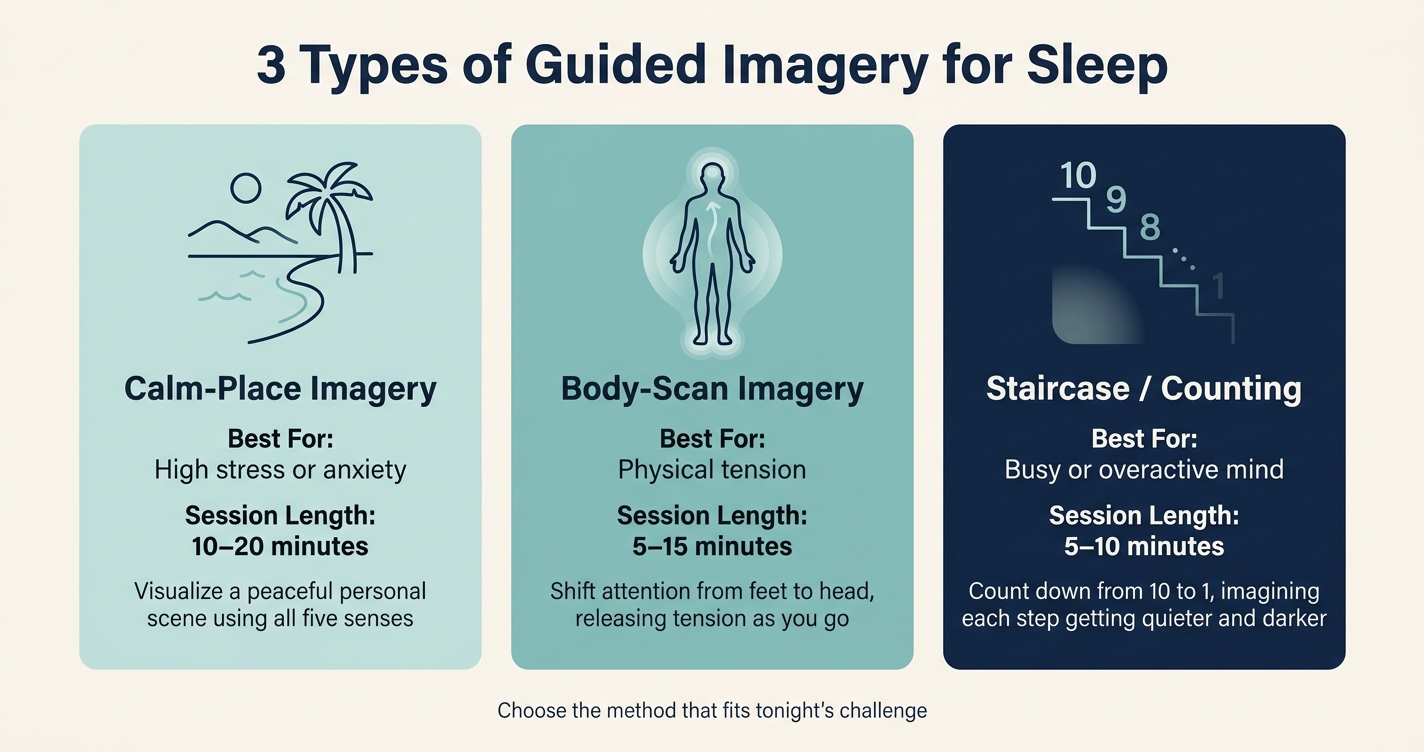
3 Types of Guided Imagery for Sleep: Which One Is Right for You?
If this exercise feels a little awkward at first, that's normal. Two issues come up a lot: it can be hard to picture a scene, and random thoughts can keep barging in. The good news is that both are pretty easy to work around.
If You Have Trouble Picturing a Scene
Not everyone sees sharp mental pictures, and that's completely normal. If the image feels fuzzy, shift your attention to physical sensations instead. Think about how a cool breeze might feel on your forearm or the pressure of your body sinking into the mattress. That can work just as well.
It can also help to use a real place you already know, like a favorite park or a room from childhood. Places you've actually been are often easier to rebuild in your mind than ones you make up from scratch. If that still feels like a stretch, try an audio-guided session so you don't have to do all the work yourself.
If Your Thoughts Keep Breaking In
A wandering mind is normal. Notice the thought, then return to the image. Once you're back in the scene, keep going until your body starts to feel heavier or calmer. If you start to feel overloaded, keep the session short and simple. Night shift workers may find this harder because their bodies can stay more activated during sleep.
Comparison Table: 3 Types of Guided Imagery for Sleep
| Type | Best For | Typical Session Length |
|---|---|---|
| Calm-Place Imagery | High stress or anxiety | 10–20 minutes |
| Body-Scan Imagery | Physical tension | 5–15 minutes |
| Staircase/Counting | Busy or overactive mind | 5–10 minutes |
Pick the method that fits the problem you're dealing with tonight.
Make Guided Imagery Part of Your Sleep Routine
Pair It With Other Sleep Habits
Guided imagery tends to work better when the rest of your bedtime setup supports sleep too. That means using it in a dark, quiet, cool room. A lower body temperature helps support better sleep.
It also helps to keep a regular sleep window when you can and skip caffeine close to bedtime. If your sleep schedule changes from one day to the next, that kind of structure matters even more.
Where RST Sleep May Fit for Irregular Schedules
For night shift workers and people with irregular schedules, RST Sleep may fit before a short guided imagery session as part of a structured wind-down. Used this way, RST Sleep can sit in the same bedtime routine as guided imagery.
Conclusion: Key Points to Remember
Guided imagery works best when you pair it with a dark room, a steady sleep window, and less caffeine before bed. For irregular schedules, RST Sleep can be part of that same wind-down routine.
FAQs
How often should I use guided imagery for sleep?
There’s no one-size-fits-all schedule for guided imagery. But like most relaxation methods, it tends to work best when you do it on a regular basis.
Similar methods, like slow-paced breathing, have been practiced for 15 minutes each evening for 30 days.
For sleep hygiene, guided imagery may help most when you make it part of your nightly wind-down routine. The goal is simple: support a steady, repeatable shift into sleep.
What if guided imagery makes me feel more alert?
If guided imagery leaves you feeling more alert, that’s not always a bad thing. But it can be a sign that your mind isn’t fully shifting into sleep mode yet.
A simple fix is to make the exercise gentler. Try a calmer script, dial down the intensity, or keep the session shorter and stop as soon as you notice your alertness picking up.
If that still happens, move guided imagery earlier in your bedtime routine instead of saving it for the moment the lights go out. It also helps to stick to a steady sleep schedule so your body knows when it’s time to wind down.
Can I use guided imagery during daytime sleep after a night shift?
Yes. Guided imagery can help you fall asleep during the day after a night shift.
When odd work hours throw off your internal clock, guided imagery can help your mind and body slow down and settle into rest. That can be especially helpful when you're trying to sleep outside normal nighttime hours.