

Glycine Side Effects: What to Know Before Use
For most healthy adults, glycine at about 3 grams before bed is usually well tolerated - but it can still cause side effects. The most common ones are nausea, stomach cramps, diarrhea, headache, and morning grogginess. More serious problems, like hives, swelling, wheezing, or trouble breathing, need 911 care right away.
If I were giving you the short answer, it would be this:
- Typical sleep dose: about 3 g, often 30 to 60 minutes before bed
- Most common side effects: stomach upset, mild headache, grogginess
- Less common issues: irritability, trouble falling asleep, broken sleep
- Who should be careful: people who are pregnant, breastfeeding, taking certain meds, or living with narcolepsy or orexin-related sleep issues
- When to stop and call a doctor: if side effects keep happening, get worse, or your sleep becomes more broken after taking it
- When to call 911: if you have swelling of the lips, tongue, or throat, wheezing, fainting, hives with breathing trouble, or shortness of breath
One point stands out: “usually safe” does not mean risk-free. Your dose, your meds, and your health history all matter.
| What to know | Quick answer |
|---|---|
| Standard sleep amount | ~3 g |
| Common mild effects | Nausea, cramps, diarrhea, headache, grogginess |
| Main high-dose concern | More stomach issues and sleep disruption |
| Main emergency warning | Allergic reaction symptoms |
| Best first step | Start low and watch how you feel |
If you want a plain-English takeaway, here it is: glycine may help sleep, but I’d treat it like any supplement - start small, watch for side effects, and check with a doctor first if you take meds or have a sleep or medical condition.
What Are The Side Effects Of Glycine? - Sleep Wellness Workshop
sbb-itb-5106bd1
Common Glycine Side Effects at Normal Sleep Doses
At the usual sleep dose of 3 g, glycine side effects are not common and are usually mild. When they do show up, they tend to be digestive or neurological. The next section goes over the warning signs that call for medical care.
Stomach-Related Side Effects
The side effects people report most often involve the stomach. These can include nausea, stomach cramps, diarrhea, and, less often, vomiting. They’re more likely to happen if you go over the standard 3 g dose.
Drowsiness, Headache, and Less Common Reactions
Glycine may help sleep quality without leaving you foggy the next day. Even so, a small number of people report mild headaches or grogginess. In rarer cases, some people notice irritability or, oddly enough, trouble falling asleep. It doesn’t happen often, but it’s worth paying attention to.
Sleep Benefits vs. Common Mild Side Effects: Comparison Table
Here’s the short version of what glycine may do for sleep and what people most often notice instead.
| Potential Sleep Benefits | Common Mild Side Effects | |
|---|---|---|
| Standard dose (~3 g) | Improved sleep quality; faster sleep onset; less daytime sleepiness | Nausea, stomach upset, or mild cramps |
| Next-day alertness | Supports natural sleep stages; helps you wake rested | Possible grogginess or headache |
| Sleep effect | May reduce wakefulness and support deeper sleep | Rare irritability or trouble falling asleep |
| Body-temperature effect | May help lower core body temperature to signal sleep onset | Digestive issues if dose is too high |
Most reactions stay mild, but rare severe symptoms need prompt attention.
Serious Side Effects and When to Get Medical Help
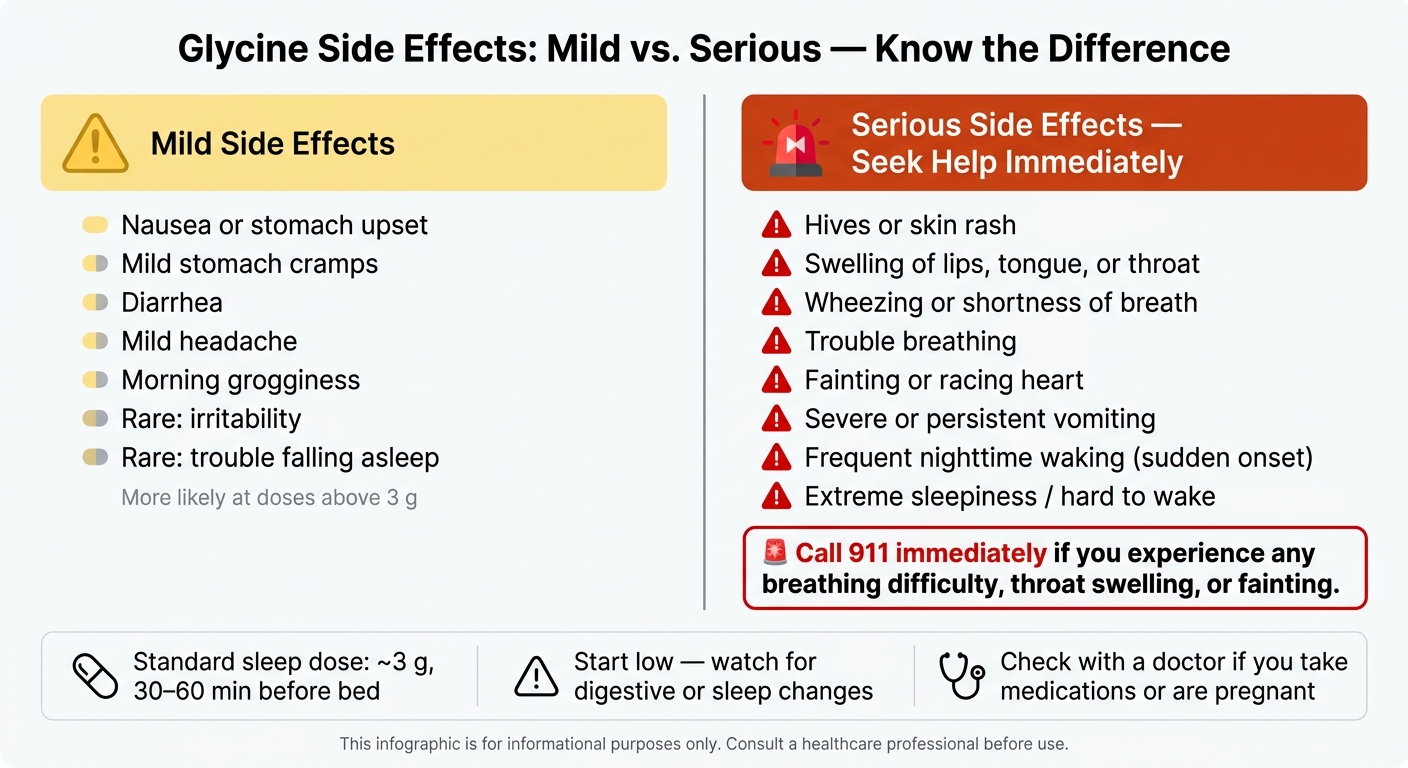
Glycine Side Effects: Mild vs. Serious Symptoms at a Glance
Serious reactions are rare, but these symptoms need urgent attention.
Signs of an Allergic Reaction
An allergic reaction can get worse fast. Call 911 immediately if you notice swelling of the lips, tongue, or throat, wheezing, trouble breathing, hives, fainting, or a racing heart. Mild itching or hives don't always mean a full allergic reaction, but any breathing trouble is an emergency.
If the symptoms don't look allergic, the next thing to watch for is dose-related effects.
High-Dose Risks and Neurological Concerns
If the reaction isn't allergic, sleep disruption from a higher dose is the next concern. Glycine works in part as an inhibitory neurotransmitter in the brain. At high doses, glycine may break up sleep instead of helping it. If you start waking up often through the night after taking glycine, stop using it and talk to a doctor. That can point to an adverse neurological reaction.
Higher doses may also make side effects last longer.
Mild Side Effects vs. Serious Side Effects: Comparison Table
| Category | Mild Symptoms | Serious Symptoms | When to Seek Emergency Care |
|---|---|---|---|
| Gastrointestinal | Minor nausea or stomach upset | Severe abdominal pain, persistent vomiting | If vomiting is severe or persistent |
| Sleep pattern | Mild drowsiness | Frequent waking, fragmented sleep/wake cycle | If sleep disruption is severe and sudden |
| Neurological | Mild grogginess | Extreme sleepiness, hard to wake | If you feel unusually hard to wake or alert |
| Skin/Physical | No major change | Hives, rash, swelling of the lips or tongue | Immediately - do not wait |
| Respiratory | Normal breathing | Wheezing, shortness of breath | Call 911 right away |
If you take medications or have a health condition, check the caution groups before use.
Who Should Avoid Glycine or Speak With a Doctor First
Some people shouldn’t use glycine on their own, especially if they take certain medications or deal with sleep-related conditions.
Medications and Health Conditions That May Raise Risk
Check with your doctor before using glycine if you take antidepressants, other serotonin-affecting medicines, or medications that affect NMDA receptors.
People with narcolepsy or orexin deficiency need to be extra careful. Glycine can make sleep-wake instability worse in people with narcolepsy or orexin deficiency. A neurologist should weigh in before use.
Pregnancy and Breastfeeding
Safety data on higher-dose glycine use during pregnancy and breastfeeding is limited. Pregnant or breastfeeding adults should use glycine only with OB-GYN guidance.
Groups Who Should Avoid or Use Caution: Comparison Table
Use the table below for a quick check.
| Condition or Medication | Why Caution Is Advised | Recommended Action |
|---|---|---|
| Orexin deficiency / narcolepsy | May worsen sleep-wake instability | Consult a neurologist before use |
| Serotonin-affecting medicines | May interact with serotonin-related treatment | Talk with your prescribing doctor |
| Medicines that affect NMDA receptors | May interact with NMDA-related treatment | Seek medical guidance |
| Pregnancy and breastfeeding | Limited safety data on higher-dose use | Use only under OB-GYN guidance |
| Infants and young children | May have opposite effects in the developing brain | Avoid use; consult a pediatrician |
How to Use Glycine More Safely for Sleep
A Starting Approach for First-Time Use
If glycine makes sense for you, start with a small dose and pay attention to how you feel.
A common study dose is 3 g, taken 30 to 60 minutes before bed. But jumping straight to that amount isn't always the best move. Starting lower gives you a chance to watch for things like digestive upset, morning grogginess, or headaches.
If you do fine with a lower amount, you can work up to 3 g. If symptoms stick around even after cutting the dose back, stop taking it and talk with a doctor.
How Glycine Fits Into a Broader Sleep Routine
Glycine works best as part of your sleep routine, not as a fix-all on its own.
It makes more sense to use it alongside steady sleep habits, like going to bed at the same time each night and keeping your room dark and quiet. That kind of setup can help you get better results.
If you're using a supplement that mixes glycine with other ingredients, read the label closely. Check the dose and look for any possible interactions.
Key Safety Points to Remember
Glycine is generally well tolerated at doses used for sleep. Still, some people should be more careful.
If you're pregnant, breastfeeding, have a health condition, or take medications that may interact, talk with a healthcare professional before using it.
FAQs
Can glycine make sleep worse?
Glycine is a sleep-promoting neurotransmitter that helps support healthy sleep stages. It isn't known to make sleep worse.
That said, sleep quality can still take a hit for other reasons, especially with irregular schedules like night shifts. Light, noise, hormone shifts, and circadian rhythm disruption can all get in the way of deep, restorative sleep.
Should I take glycine every night?
Whether you should take glycine every night comes down to your sleep goals and your overall health.
Research suggests glycine may help support non-REM sleep and improve sleep quality. That said, people don’t always respond the same way. For some, taking it on a steady nightly schedule may give the body time to adjust and may help support the best results.
Glycine is also a key ingredient in RST Sleep, which is made to support restorative sleep without dependency or next-day grogginess.
How long do glycine side effects last?
Current research doesn't say how long glycine side effects may last.
Some related compounds, such as dimethylglycine, are broken down and excreted fast. But that doesn't give us a clear timeline for glycine side effects itself based on the text available here.
If symptoms stick around or worry you after using a supplement, talk to a healthcare professional.