

Electrolytes for Night Shift Sleep Recovery
Electrolytes can help after a night shift, but they won’t fix bad sleep on their own. If I want better daytime sleep, I need to do three things: drink enough earlier in the shift, taper fluids in the last 1–2 hours before bed, and keep my sleep setup dark, cool, and quiet.
Here’s the short version:
- Before shift: I can drink about 16–17 oz. (500 mL) around 1 hour before work.
- During shift: I can sip 7–10 oz. (200–300 mL) every 60–120 minutes.
- If I sweat a lot: I may need more sodium and potassium.
- Near bedtime: I should switch to small sips only to avoid waking up to pee.
- Warning signs: Dark urine, headache, dry mouth, cramps, and dizziness can point to low fluids or low electrolytes.
- What electrolytes do not do: They do not fix circadian mismatch, sleep debt, or stress.
A night shift already cuts sleep. Research cited in the article notes that daytime sleep is often shorter and more broken, and long shifts plus physical work can make that worse. That means small hydration mistakes can hit harder when I’m trying to sleep during the day.
Bottom line: electrolytes fit best as part of a simple recovery plan: hydrate earlier, taper late, watch symptoms, cut caffeine later in the shift, and keep a steady wind-down routine.
What Electrolytes Do and Why They Matter After a Night Shift
Sodium and chloride help control fluid balance. Potassium supports nerve signals and muscle function. Magnesium helps muscles loosen up instead of staying tense. After a night shift, that fluid balance matters most when you're trying to get to sleep.
How Hydration Affects Sleep Quality
When you're low on fluids, sleep often gets worse too. Poor hydration can lead to headaches and a dry throat, and both can make daytime recovery sleep harder. For night-shift workers, lack of sleep often shows up as frequent wake-ups, waking too early, and feeling sleepy during the day.
What Electrolytes Can and Cannot Do
Electrolytes can help you rehydrate after a shift. But they won't fix circadian misalignment, sleep debt, or job stress. That's why when you drink fluids and use electrolytes matters more than simply having more of them.
sbb-itb-5106bd1
How to Use Electrolytes Around a Night Shift Without Disrupting Daytime Sleep
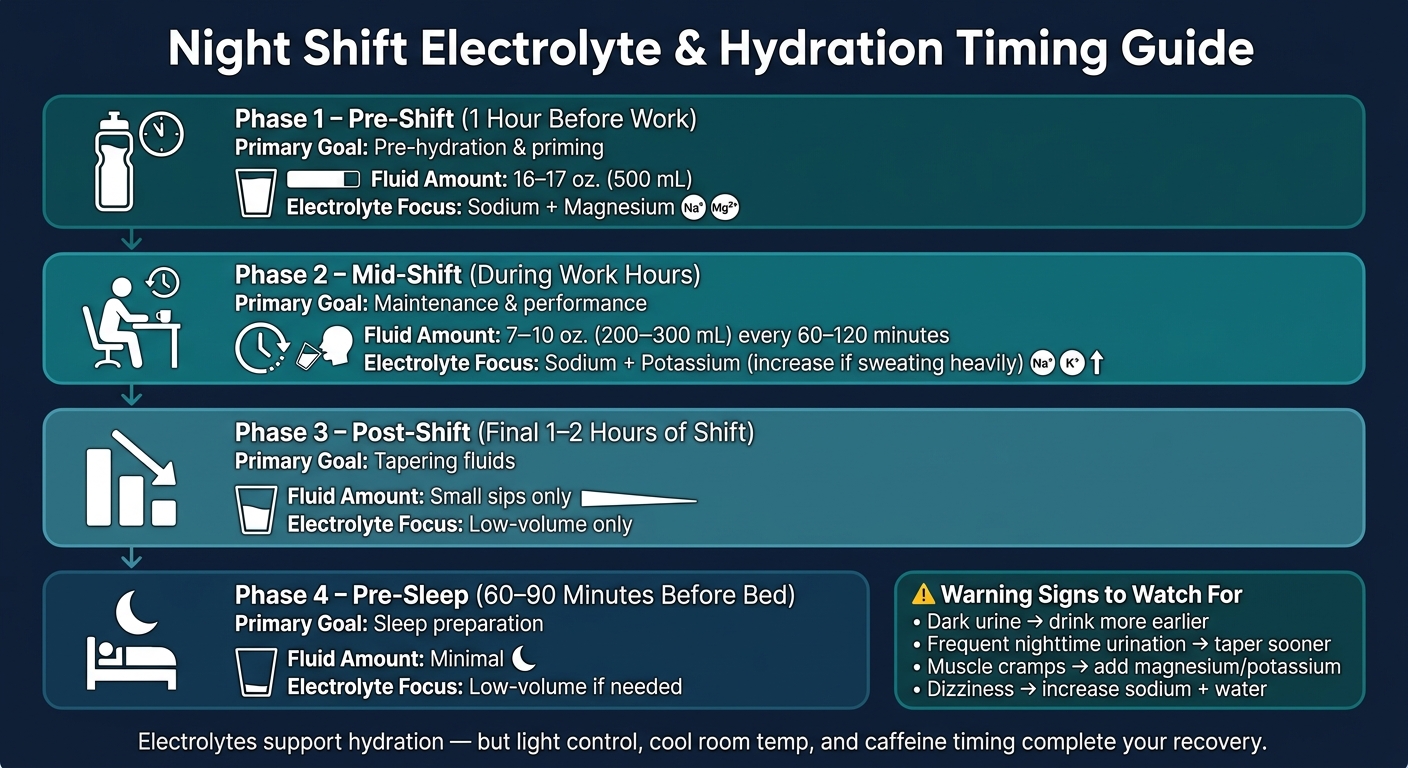
Night Shift Electrolyte & Hydration Timing Guide
Now that you know electrolytes can help, the next move is timing. You want enough fluid to recover, but not so much that it wrecks your daytime sleep. That's the balance.
Before and During the Shift
About 1 hour before your shift starts, drink 16–17 oz. (500 mL) of fluid. Think of it as topping off the tank before work begins.
Once you're on shift, switch from front-loading fluids to steady maintenance. Aim for 7–10 oz. (200–300 mL) every 60 to 120 minutes instead of drinking a lot at once. Slow, steady sipping is easier on your body and can help cut down on those big bathroom trips. If you sweat a lot or work in a hot setting, adding electrolytes - especially sodium and potassium - can help support fluid balance.
After the Shift and Before Sleep
As your shift winds down, your goal changes. At that point, it’s less about replacing fluids and more about protecting sleep.
In the final 1–2 hours of your shift, start tapering. Stick to small sips so your body has time to clear fluid before bed.
Then, in the 60 to 90 minutes before sleep, cut back even more. Go with minimal sips only. If you want something before bed, keep it small. A low-volume electrolyte drink can work well here if needed.
From there, the next step is paying attention to your symptoms and adjusting your fluid and electrolyte intake based on how you feel.
Timing Table: Goals, Fluid Amounts, and Electrolyte Focus
| Timing Window | Primary Goal | Suggested Fluid Amount | Electrolyte Focus |
|---|---|---|---|
| Pre-Shift (about 1 hour before) | Pre-hydration & priming | 16–17 oz. (500 mL) | Sodium / magnesium |
| Mid-Shift | Maintenance & performance | 7–10 oz. (200–300 mL) every 60–120 minutes | Sodium / potassium; more if sweating heavily |
| Post-Shift (final 1–2 hours) | Tapering | Small sips only | Low-volume only |
| Pre-Sleep | Sleep preparation | Minimal | Low-volume, if needed |
Reading the Signs: When You Need More Electrolytes, Less Fluid, or a Better Routine
When your hydration plan is off, your body usually tells you pretty clearly. The key is knowing how to read those signals so you can decide whether to drink more, drink earlier, cut back before sleep, or tighten up your routine.
Symptoms Linked to Dehydration or Electrolyte Imbalance
Start with the fastest check: urine color. Pale straw yellow usually means you're well hydrated. Dark yellow or amber is a sign you need more fluids earlier in your shift.
Other signs can point to dehydration or an electrolyte issue too. Headaches, dizziness, muscle cramps, dry mouth, and feeling overheated all fit that pattern. If that sounds familiar, deal with it during the active part of your shift instead of waiting until later.
On the other hand, frequent urination during daytime sleep usually isn't about low electrolytes. It's more often a fluid timing problem. In that case, taper fluids 1 to 2 hours before bed.
Some people need to be more careful here. If you have high blood pressure, kidney disease, heart failure, or take diuretics, electrolyte supplements may not be a good fit. Shift work has been shown to disrupt normal 24-hour blood pressure rhythms. If any of those apply to you, get medical advice before using electrolyte supplements.
Use these patterns as a simple guide. If you're seeing dehydration signs, drink more earlier. If sleep keeps getting interrupted by bathroom trips, pull fluids back before bed. If the same issue keeps showing up, it may be time to review the whole routine.
Symptom Table: Likely Cause and Next Step
| Symptom | Likely Cause | Adjustment Strategy |
|---|---|---|
| Dark urine, dry mouth, headache | Dehydration | Increase fluids and electrolytes earlier in the shift. |
| Waking frequently to urinate during sleep | Poor fluid timing | Taper fluid intake 1 to 2 hours before planned sleep time. |
| Muscle cramps or twitching | Low magnesium or potassium | Choose an electrolyte mix with higher magnesium levels. |
| Dizziness or feeling overheated | Dehydration or heat stress | Increase water intake with adequate sodium; if severe, seek medical advice. |
| High blood pressure | High sodium intake | Switch to a low-sodium option and consult your doctor. |
Once you know which signal you're dealing with, the next move is building a full recovery routine.
If symptoms like dizziness, severe cramps, or dark urine don't improve after you adjust your routine, bring in a clinician. If symptoms persist, get medical advice.
Building a Full Sleep Recovery Plan for Night Shift Workers
How Electrolytes Work Alongside Sleep Habits
Electrolytes can help with hydration and physical comfort. But daytime sleep still comes down to the basics: light control, room temperature, and caffeine timing.
A simple post-shift routine looks like this:
- Cut back on caffeine during the second half of your shift so it has time to leave your system before bed
- Keep your bedroom cool and dark
- Follow the same wind-down routine every day
That’s why your sleep setup matters just as much as your hydration plan.
Once hydration is in place, the next step is building a sleep routine that protects your daytime rest.
Where RST Sleep Fits Into a Night Shift Routine

If your sleep is still short or broken after you dial in hydration and timing, RST Sleep can fit into your wind-down routine.
RST Sleep is made for night shift workers and people with irregular sleep schedules. It combines glycine, phosphatidylserine, magnolia bark, apigenin, and extended-release melatonin to support relaxation, sleep onset, and sleep maintenance. It is non-habit forming and manufactured in GMP-certified facilities, which makes it a solid option for people on rotating or permanent night schedules.
Conclusion: Key Rules for Using Electrolytes to Support Sleep Recovery
Hydration supports the body. Sleep habits finish the recovery.
Electrolytes can help support recovery, but your sleep habits are what complete it.
FAQs
Do I need electrolytes if I’m not sweating much?
Usually, no. Working a night shift by itself doesn't mean you need electrolytes.
If you're trying to bounce back after poor sleep, the main things that matter are sleep hygiene and dealing with circadian disruption, not electrolyte replacement. Electrolytes come into play more when you're losing fluids or salts, like from heavy sweating or other major fluid loss.
How do I know if I’m drinking too close to bedtime?
A simple rule of thumb: keep liquids to one glass within 3 hours of dinner. If you drink too close to bedtime, you're more likely to deal with sleep interruptions.
It also helps to watch caffeine, alcohol, and tobacco in the hours before bed, since all three can interfere with your sleep.
When should I talk to a doctor about electrolyte use?
Talk to a doctor if you have a health issue that affects your fluid or mineral balance, especially kidney disease. The same goes if you take medicine that can change your electrolyte levels.
You should also get medical advice if you have symptoms like fainting, severe weakness, confusion, chest pain, or vomiting or diarrhea that won’t stop. Those can point to an electrolyte or hydration problem and need a proper checkup.