

How to Create a Post-Shift Wind-Down Routine
When your shift ends, falling asleep can feel impossible. Your body’s natural rhythms are disrupted, stress hormones are high, and exposure to morning light signals your brain to stay awake. The solution? A structured wind-down routine. Here’s how to reset after work and improve your sleep:
- Stick to a consistent sleep schedule: Even on days off, maintain regular sleep and wake times to avoid "social jet lag."
- Control light exposure: Wear blue-light-blocking glasses on your commute and use blackout curtains at home.
- Relax your mind: Try techniques like body scan meditation, 4-7-8 breathing, or writing down lingering thoughts.
- Create a sleep-friendly environment: Keep your room cool (60–67°F), dark, and quiet.
- Consider natural sleep aids: Supplements like melatonin or glycine can help you transition to rest.
The key is consistency and small adjustments to support your body’s internal clock.
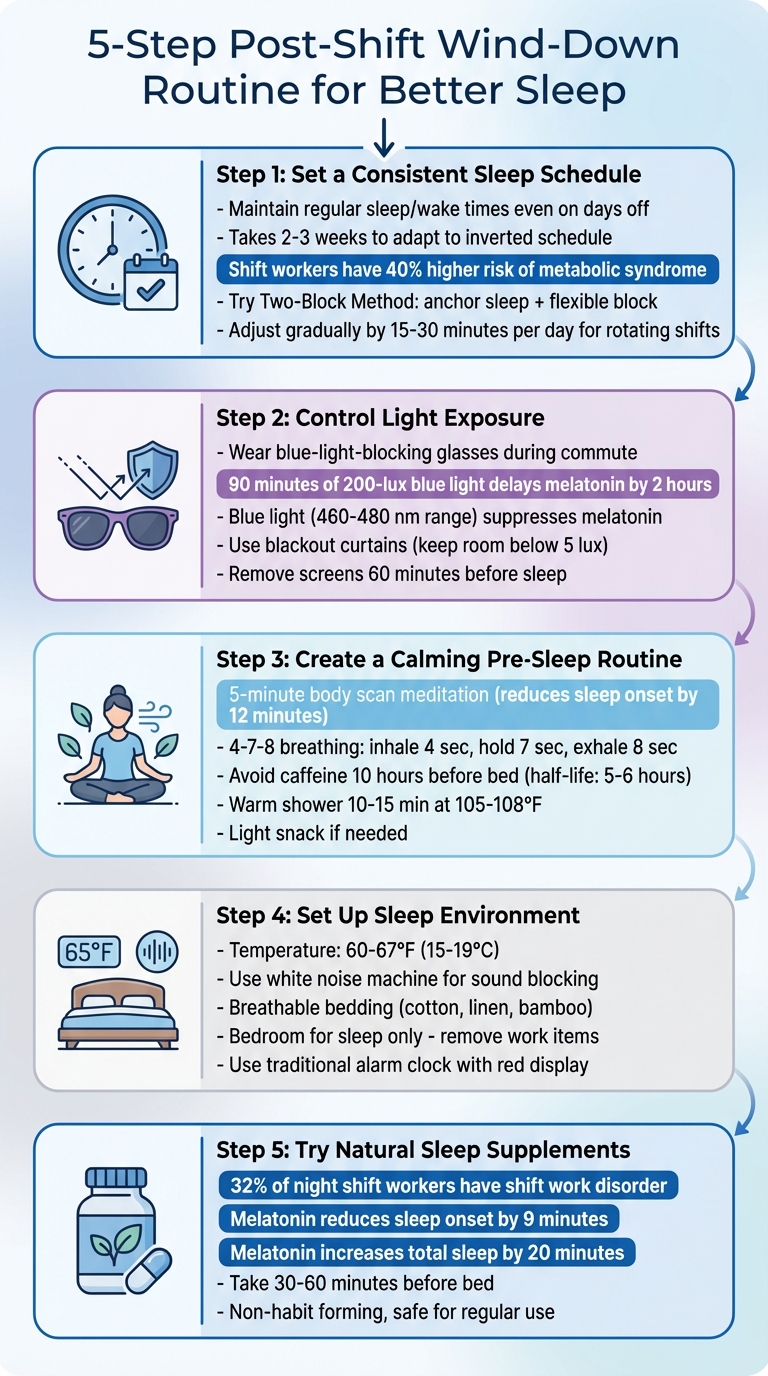
5-Step Post-Shift Wind-Down Routine for Better Sleep
Step 1: Set a Consistent Sleep Schedule
Why Consistency Matters
Your body operates on a 24-hour internal clock, guided by around 20,000 neurons in the suprachiasmatic nucleus (SCN). This internal clock influences everything from melatonin production to cortisol levels and even body temperature. Keeping consistent sleep and wake times - even on weekends or days off - helps avoid "social jet lag." This term describes the disruption caused by irregular sleep schedules, which can feel like flying coast-to-coast twice a week. For those working permanent night shifts, it takes about 2–3 weeks to fully adapt to an inverted schedule, but only if you stick to the same sleep and wake times every single day. Break that routine, and it’s back to dealing with fatigue, mood swings, and mental fog.
"The body loves predictability. Even when your schedule is nontraditional, consistency still matters." - Dr. Courtney Bancroft, Clinical Director of BeHealth, Northwell Health
The stakes are high for your health. Shift workers already face a 40% higher risk of metabolic syndrome compared to those with daytime schedules. Throw irregular sleep patterns into the mix, and the risk of conditions like cardiovascular disease and diabetes only increases. A steady sleep routine helps mitigate these long-term health risks.
How to Stick to Your Schedule
Understanding your body's internal clock is the first step, but putting it into practice requires specific strategies.
Set alarms not just for waking up but also for starting your wind-down routine. This helps avoid the temptation of staying up later than planned and disrupting your next cycle.
If a straight 7–8 hours of sleep isn’t possible, consider the Two-Block Method. This method involves a consistent "anchor sleep" period every day, supplemented by a second, more flexible block. For example, you might commit to sleeping from 9:00 AM to 1:00 PM daily and then add another 3–4 hours later in the evening when your schedule permits.
"Morning consistency anchors the clock far more than a flawless bedtime." - SleepCalculators.net
For rotating shifts, avoid abrupt changes to your sleep schedule. Instead, adjust your bedtime gradually by 15–30 minutes each day. Your body can handle shifts of 2–3 hours per night with the right environmental cues. However, trying to make bigger adjustments all at once often backfires. Full adaptation to a new schedule usually takes 7–14 days of consistent effort.
Finally, build your routine around your shift start rather than a fixed clock time. For example, schedule exercise two hours before your shift instead of at a specific time of day. This approach keeps your body aligned with your work schedule rather than the natural daylight cycle, making it easier to maintain consistency even when your shifts vary.
sbb-itb-5106bd1
How to Survive Night Shifts from a Sleep Expert | Management of Shift Work Sleep Disorder
Step 2: Control Light Exposure After Your Shift
Once you've set a consistent sleep schedule, the next step is managing light exposure. This plays a huge role in helping your brain recognize when it's time to wind down and prepare for sleep.
Light exposure directly affects your body's production of melatonin, the hormone that helps you feel sleepy. At the same time, it triggers cortisol, which promotes wakefulness. Stepping out into bright morning sunlight after a night shift sends a clear message to your body: it's time to wake up. Blue light, especially in the 460–480 nm range, is particularly effective at suppressing melatonin and ramping up cortisol production.
Just 90 minutes of exposure to 200-lux blue-enriched light can push back melatonin release by nearly two hours. That’s why controlling your light exposure during your commute and at home is so critical for quality sleep.
Reduce Light During Your Commute Home
As soon as you leave work, put on wraparound or blue-light-blocking glasses. Timing is everything - just a brief moment of sunlight can disrupt melatonin production. Keep the glasses on until you're in a dark, indoor space.
"The moment your eyes hit sunlight, your brain thinks it's daytime and blocks melatonin - making it much harder to fall asleep later." - Shift Sleep Well
If you're driving and feel drowsy, avoid wearing dark sunglasses, as they can reduce visibility and increase the risk of accidents. Instead, opt for lighter blue-light-blocking lenses that filter the harmful wavelengths without dimming your view. Alternatively, consider arranging a ride home via carpool, public transit, or a taxi.
This careful control of light exposure during your commute helps set the stage for a proper sleep environment once you get home.
Make Your Bedroom Dark
Your bedroom should be so dark that you can’t even see your hand in front of your face. Use blackout curtains or light-blocking shades to eliminate sunlight completely. Cover or remove any light sources, like LEDs on devices, to keep the room's brightness below 5 lux.
If you need light before bed, switch to amber-colored or warm-toned bulbs rated at 2700 K or lower. These emit less blue light, making them easier on your melatonin levels while still providing enough light to navigate. Remove all screens - phones, tablets, and TVs - from the bedroom. Blue light from these devices suppresses melatonin for about twice as long as green light, and the mental stimulation from scrolling or watching videos can make it even harder to relax.
Step 3: Create a Calming Pre-Sleep Routine
Once you've managed your light exposure, the next step is to guide your body toward relaxation.
Techniques to Relax Your Mind
Start with a 5-minute body scan meditation. Lie down comfortably and slowly focus on each part of your body, moving from your feet to your head, while consciously releasing tension. This simple exercise has been shown to reduce the time it takes to fall asleep by about 12 minutes for shift workers.
Another effective method is the 4-7-8 breathing technique: inhale through your nose for 4 seconds, hold your breath for 7 seconds, and exhale slowly through your mouth for 8 seconds. Repeat this cycle 3–5 times to activate your parasympathetic nervous system, which helps your mind and body relax.
If you find yourself stuck on work-related thoughts or worries, consider writing them down. Spend 5–10 minutes jotting down unfinished tasks, concerns, or ideas. This practice can help clear your mental "to-do list" and free your mind for rest. Another option is the 5-4-3-2-1 sensory grounding exercise: notice 5 things you see, 4 sensations you feel, 3 sounds you hear, 2 smells, and 1 taste. This technique helps anchor your focus in the present moment, quieting a racing mind.
Once your mind is calm, it’s crucial to minimize anything that could disrupt this state.
Avoid Caffeine and Mental Stimulation
Caffeine can linger in your system for hours, with a half-life of 5–6 hours. To ensure restful sleep, avoid coffee, energy drinks, and soda for at least 10 hours before bedtime. Instead, reach for caffeine-free herbal teas like chamomile or peppermint to stay hydrated.
"Creating a calming night routine helps signal your brain it's time to rest, making falling asleep easier and improving sleep quality overall." – Dr. Suzanne Gorovoy, Sleep Expert and Clinical Psychologist
Mental stimulation can also interfere with your ability to wind down. Stop work-related tasks at least 2 hours before bed to allow stress hormones like cortisol to subside. Additionally, avoid screens - phones, tablets, and laptops - at least 60 minutes before sleep. Blue light from these devices can suppress melatonin for twice as long as green light, making it harder to fall asleep.
Taking these steps helps your body transition smoothly into sleep mode.
Take a Warm Shower and Eat a Light Snack
A warm shower can work wonders for relaxation. Spend 10–15 minutes under water heated to 105–108°F (40–42.5°C) to ease muscle tension and lower your core body temperature - both of which signal your body it's time to sleep. For added benefit, alternate between warm water (3–5 minutes) and cool water (10–20 seconds) to reset your nervous system.
If you're feeling hungry before bed, choose a light snack. Options like a banana with peanut butter, yogurt, or a handful of nuts can curb hunger without overloading your digestive system. Avoid heavy or greasy meals within 3 hours of bedtime, as they might cause indigestion and disrupt your rest. The goal is to feel satisfied, not weighed down.
Step 4: Set Up Your Sleep Environment
Once you've managed light exposure and created a calming pre-sleep routine, it's time to focus on your sleep environment. Creating the right atmosphere can make a big difference in how well you rest, especially when it comes to temperature, noise, and comfort.
Adjust Temperature, Noise, and Comfort
Keep your bedroom temperature between 60–67°F (15–19°C) - this range helps your body cool down naturally for better sleep. For those working night shifts and sleeping during the day, cooling your room before you get home can make it more inviting. Sharing a bed with someone who likes a different temperature? Try separate blankets or a dual-zone electric blanket to keep everyone comfortable.
To block out disruptive sounds like traffic or noisy neighbors, consider using a fan or a white noise machine. For bedding, opt for breathable materials like cotton, linen, or bamboo. These natural fabrics help regulate temperature and wick away moisture, keeping you comfortable all night long.
"A cool, dark, and quiet room supports the body's natural cues for rest." – Dr. Samantha Domingo, Sleep Expert and Clinical Health Psychologist
These adjustments work together to create a space that signals your body it's time to rest.
Use Your Bedroom Only for Sleep
Your bedroom should be a sanctuary for sleep and intimacy - nothing else. Remove work-related items like laptops, paperwork, or to-do lists, and keep them in another room or a dedicated workspace. Swap out your smartphone alarm for a traditional alarm clock with a red display to avoid the temptation of late-night scrolling.
If you find yourself tossing and turning for more than 20 minutes, leave the bedroom and do something quiet in another room. This helps prevent frustration and reinforces the idea that your bed is a place for rest, not stress.
Step 5: Try Natural Sleep Supplements
Once you've optimized your sleep environment, you might want to consider natural sleep supplements to help ease the transition into restful sleep.
Night shift workers face unique challenges when it comes to sleep. Around 32% of them deal with shift work disorder, and they are four times more likely to experience depression compared to day workers. The disruption of your body's natural circadian rhythm can also lead to higher cortisol levels and lower melatonin production - exactly when you need to rest most.
How Natural Sleep Supplements Work
Natural sleep aids can help shift your body from a heightened state of alertness to a more relaxed one. For instance, glycine works to lower your core body temperature, which is helpful because your body temperature tends to stay elevated during the day when you're trying to rest. Meanwhile, extended-release melatonin supports both falling asleep and staying asleep by providing an immediate hormonal boost followed by a steady release. Research shows melatonin can cut the time it takes to fall asleep by about 9 minutes and increase total sleep duration by roughly 20 minutes.
Other helpful ingredients like phosphatidylserine, magnolia bark, and apigenin calm the nervous system and ease that "wired" feeling you might experience after a shift. These can also help reduce cortisol levels, which is crucial for winding down, especially if caffeine is still lingering in your system. To get the best results, take your supplement about 30–60 minutes before bed.
Safe for Regular Use
Natural sleep supplements are generally safe for regular use. Unlike prescription sleep aids, they don't create dependency or cause withdrawal or rebound insomnia. Long-term studies, lasting up to six months, have shown that regular melatonin use doesn't lead to significant side effects or dependency.
RST Sleep offers a specially formulated supplement for night shift workers, combining glycine, phosphatidylserine, magnolia bark, extended-release melatonin, and apigenin. It's made in a GMP-certified facility and designed with allergen-conscious standards.
"Melatonin is a safer, non-habit-forming alternative [to pharmaceutical options]." – Roger Sutherland, Certified Nutritionist and Shift Work Coach
Stick to the recommended dosage and pair the supplement with the dark, cool sleep environment you've already prepared. Take it 30–60 minutes before bed, and avoid activities like driving or operating heavy machinery, as it may cause drowsiness.
These tips can help you make natural sleep supplements a seamless part of your routine.
Conclusion
Creating a post-shift wind-down routine takes some trial and error, but the payoff is better sleep and improved well-being. The key? Consistency. Whether it’s sticking to a regular wake-up time or safeguarding a core "anchor sleep" period each day, these habits help regulate your internal clock - even for night shift workers. Pair this with smart light management, like wearing blue-light-blocking sunglasses on your way home, and setting up a sleep-friendly bedroom (aim for a cool 60–65°F, dark, and quiet environment) to signal your body it’s time to rest.
Equally important is unwinding mentally. Simple techniques like a 5-minute "brain dump" or practicing the 4-7-8 breathing method can help shift your nervous system from "on" to "off" mode. Be mindful of caffeine - avoid it 4–6 hours before bedtime. You might also explore natural sleep aids, such as RST Sleep (https://rstsleep.com), taken about 30–60 minutes before bed. Tweak these strategies and track how they impact your sleep.
"There's no single, one-size-fits-all routine - we're all unique! But with a little bit of experimentation and patience, you can absolutely build an evening ritual that perfectly fits your life." – Dr. Shiyan Yeo, MD
Dr. Yeo’s advice highlights the importance of personalization. Spend 2–3 weeks experimenting with different techniques to find what works best for you. Some people may need extra time to mentally unwind after a demanding shift, while others might prefer a quick shower before diving straight into bed. The ultimate goal is to establish a repeatable routine that supports you, even on your most draining days.
A well-thought-out recovery routine can help restore balance to both your body and mind. With the right approach, you can reclaim restful sleep and feel more in control, no matter how unconventional your work hours may be.
FAQs
How long does it take to adjust to a night shift sleep schedule?
Adjusting to a night shift sleep schedule can take anywhere from a single day to as long as three weeks. While some people might feel somewhat acclimated after just a few days, achieving full adjustment can be much harder. This is because the body’s internal clock, or circadian rhythm, doesn’t fully sync with working at night.
There are ways to make the transition easier, though. Sticking to a consistent sleep routine, controlling your exposure to light, and setting up a sleep-friendly environment can all make a difference. However, the time it takes to adjust will always depend on the individual.
Do blue-light-blocking glasses really help after a night shift?
Yes, blue-light-blocking glasses may improve sleep quality after a night shift. These glasses filter out blue light, which can interfere with melatonin production - the hormone that helps regulate your sleep-wake cycle. While individual results can differ, research suggests they can lessen blue light's disruptive effects on sleep. To maximize their benefits, combine them with healthy sleep habits, such as maintaining a consistent bedtime routine and ensuring your sleep space is dark and quiet.
When should I take melatonin if I’m sleeping during the day?
If you sleep during the day, try taking melatonin 2–3 hours before your planned sleep time. This gives your body the cue it needs to prepare for rest, even with daylight outside. For those working night shifts, this timing can help you fall asleep faster and improve the quality of your rest.