

5 Common Sleep Problems with Rotating Shifts
Rotating shifts disrupt your natural sleep cycle, leading to several common problems that can affect your health, energy, and focus. Here's a quick overview of the five most frequent issues and how to address them:
- Daytime Sleepiness and Fatigue: Misaligned sleep-wake cycles cause persistent drowsiness and slower reaction times. Solutions include short naps, controlled caffeine use, and light exposure during shifts.
- Insomnia: Difficulty falling asleep due to circadian rhythm conflicts, noise, and light. Remedies include blackout curtains, white noise machines, and a consistent pre-sleep routine.
- Fragmented Sleep: Frequent interruptions during rest reduce sleep quality. Stick to a steady schedule and consider "anchor sleep" or gradual shift adjustments.
- Digestive Issues: Irregular eating patterns can lead to bloating, heartburn, or IBS. Focus on lighter meals during late hours and avoid heavy, fatty foods.
- Metabolic and Hormonal Imbalances: Shift work can disrupt insulin and cortisol levels, increasing risks of weight gain and diabetes. Time-restricted eating and regular movement help restore balance.
Rotating shifts can challenge your body, but small, consistent changes - like managing light, timing meals, and improving sleep hygiene - can help you feel more rested and focused.
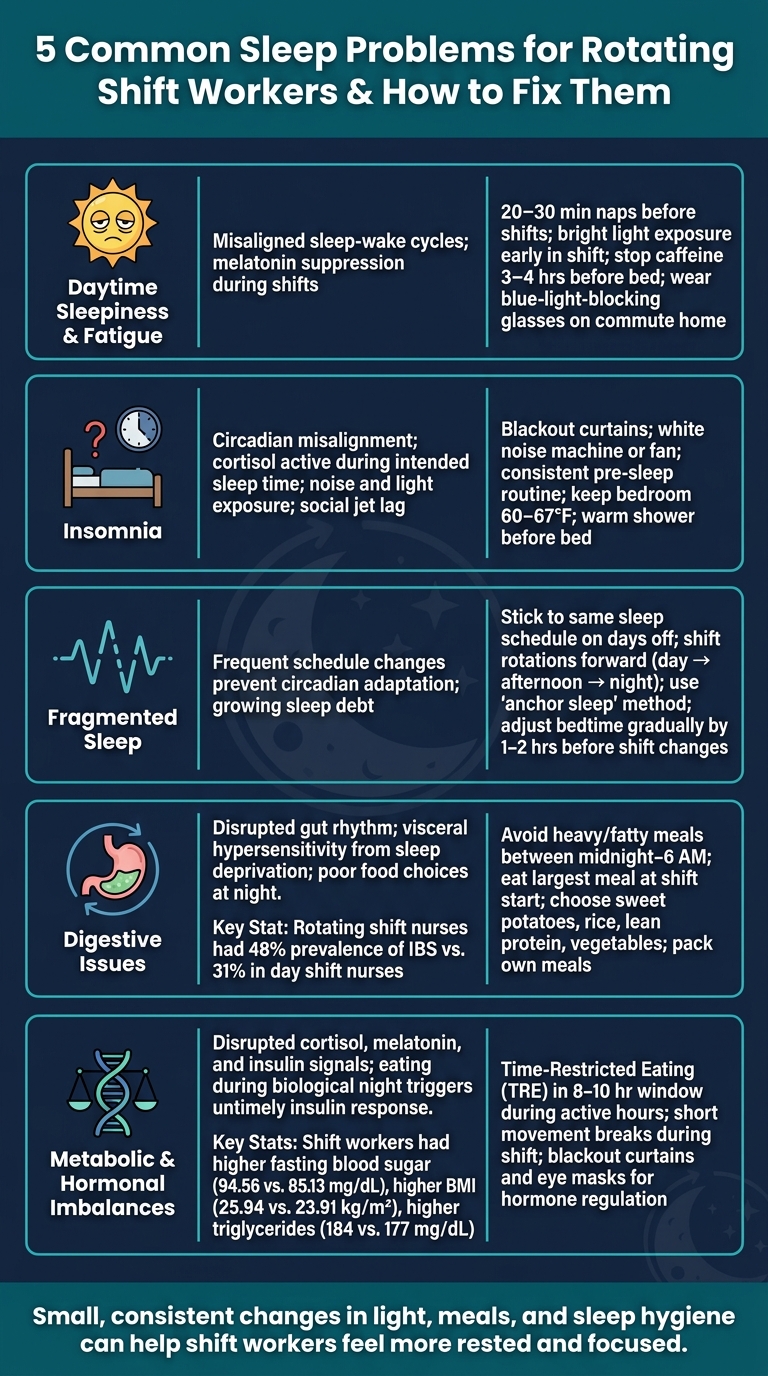
5 Common Sleep Problems for Rotating Shift Workers & How to Fix Them
How shift workers can avoid bad sleep
sbb-itb-5106bd1
Daytime Sleepiness and Fatigue
Rotating shifts throw off the body's natural sleep-wake rhythms, leading to daytime sleepiness that lingers even after a good night's rest. This misalignment creates a persistent sense of fatigue that can't be fixed with just one night of sleep.
Symptoms and Risks
When sleep-wake cycles are disrupted, excessive sleepiness - known as hypersomnia - can occur, especially during night shifts or early mornings. This isn't just about feeling tired; it can significantly impact performance. Fatigue slows reaction times, hampers focus, and can even result in microsleeps - brief, involuntary moments of sleep. These lapses are particularly dangerous in jobs where safety is critical, such as healthcare, transportation, or manufacturing. The Sleep Foundation highlights this risk:
"The inability to stay alert and focused at your job site can also have a detrimental effect on your work performance and safety, as well as your abilities to communicate with coworkers and handle stressful situations."
Drowsy driving is another major concern, especially between midnight and 6 a.m.. Fatigue-related errors have even been tied to catastrophic events like the 1986 Chernobyl disaster and the Exxon Valdez oil spill. Recognizing these symptoms is key to finding effective ways to manage them.
Practical Solutions
Managing fatigue on rotating shifts requires a proactive approach. Short naps of 20–30 minutes before a shift can improve alertness, while a longer 90-minute nap allows the body to complete a full sleep cycle. Robon Vanek, APRN, CNP at Cleveland Clinic, emphasizes the value of napping:
"Napping is one of the most effective tools that night‑shift workers can use to stay alert, lessen fatigue and protect cognitive performance."
Bright light exposure during the early part of a shift - using tools like a lightbox or high-intensity lamp - can help suppress melatonin and enhance wakefulness. Moderate caffeine intake at the start of a shift can also help, but it's essential to stop consuming it 3–4 hours before bedtime to avoid disrupting sleep. Lastly, wearing dark sunglasses or blue-light-blocking glasses during the commute home can reduce the impact of morning light, making it easier for the body to wind down for rest.
Insomnia and Trouble Falling Asleep
Feeling exhausted doesn't always lead to falling asleep easily. Many shift workers know the struggle of lying in bed, completely drained, but still unable to drift off. This happens because sleep isn't just about being tired - it also depends on biological rhythms, environmental factors, and mental stress.
Causes of Insomnia
At the heart of the issue is circadian misalignment. Our internal body clock is naturally programmed to keep us awake during the day and help us wind down at night. So, when you try to sleep at 9 a.m. after finishing a night shift, your body might still be in "daytime mode." During this time, melatonin - the hormone that makes you feel sleepy - remains suppressed, while cortisol, the hormone that keeps you alert, is still active. Robon Vanek, APRN, CNP at Cleveland Clinic, explains:
"When you work a nontraditional shift, though, your body's awakening signals are likely to conflict with your desire to sleep, no matter how tired you are after working."
Eric Zhou, Assistant Professor at Harvard Medical School, adds:
"They're working against the universe's natural inclinations - not just their body's."
Environmental factors also play a big role. Daytime is often noisier, with traffic, doorbells, and household activities disrupting the quiet needed for sleep. On top of that, sunlight streaming through windows can signal your brain to stay awake. As Vanek notes, "Light is one of the biggest triggers that keeps people awake... light exposure to the eyes suppresses melatonin, a hormone that helps us feel sleepy."
Psychological stress adds another hurdle. Irregular schedules can create "social jet lag", a feeling of being out of sync with the rest of the world. This disconnect, combined with mounting sleep debt, can lead to irritability and anxiety, making it even tougher to relax at bedtime. For some, especially those with high sleep reactivity, rotating schedules may even increase the risk of depression and anxiety over time.
Recognizing these challenges is the first step toward finding solutions for better sleep.
Effective Remedies
Tackling these issues with specific strategies can make falling asleep easier. Blackout curtains are a game-changer because they block out morning sunlight that might otherwise keep your brain in "awake mode." Pairing these with a white noise machine or fan can help drown out daytime sounds. If blackout curtains aren't enough, a high-quality eye mask can provide additional darkness.
Creating a consistent pre-sleep routine is another key step. Dr. Courtney Bancroft, Clinical Director of BeHealth at Northwell Health, highlights the importance of routine:
"The body loves predictability. Even when your schedule is nontraditional, consistency still matters."
For example, taking a warm shower before bed can help. The drop in body temperature afterward signals your body that it's time to sleep. Keeping your bedroom cool - between 60°F and 67°F - can further reinforce this signal. You can also reduce interruptions by letting family members or roommates know your sleep schedule and asking them to use headphones during your rest periods.
If you need extra help, a natural sleep supplement like RST Sleep might be worth considering. Designed for night shift workers, its extended-release melatonin mimics your body's natural sleep rhythm, while ingredients like magnolia bark and apigenin promote relaxation without leaving you groggy the next day.
Fragmented and Irregular Sleep Patterns
Rotating shift workers often face a frustrating challenge: even when they manage to fall asleep, their rest is frequently disrupted. Waking up multiple times or sleeping in short, broken chunks throughout the day can take a toll over time. This irregular pattern only adds to issues like insomnia and daytime fatigue.
Effects of Fragmented Sleep
Rotating schedules rarely stay consistent long enough for the body to adapt. Frequent changes in work hours make it nearly impossible for the circadian rhythm to fully adjust. The result? A growing sleep debt that leads to chronic fatigue, trouble focusing, and memory lapses. On top of that, fragmented sleep deprives the body of the deep, restorative stages it needs for physical recovery, a strong immune system, and emotional balance. As Eric Zhou, Assistant Professor at Harvard Medical School, explains:
"Working and sleeping during hours misaligned with natural light for extended periods of time is not likely to be healthy for you."
For those with existing conditions like sleep apnea, fragmented sleep can worsen symptoms by disrupting the stability that deeper sleep stages provide.
Ways to Build a Stable Sleep Schedule
To combat the effects of fragmented sleep, consistency is crucial. One key approach is sticking to a steady sleep schedule - even on days off. Switching back to a daytime routine on weekends can create a pattern similar to jet lag. Dr. Courtney Bancroft, Clinical Director of BeHealth at Northwell Health, emphasizes:
"The body loves predictability. Even when your schedule is nontraditional, consistency still matters."
When a shift change is coming, try gradually adjusting your bedtime by 1–2 hours each night in the days leading up to the new schedule. It also helps to rotate shifts forward - moving from day shifts to afternoon to night - since this progression is generally easier for the body to handle than erratic or backward rotations.
If getting a full block of sleep isn't realistic, consider using an "anchor sleep" approach. This involves sleeping for a few hours right after your shift and taking a longer nap later. This method provides a steady reference point for your sleep, even if it's split into segments.
Some shift workers also turn to natural sleep aids, such as RST Sleep, to help relax and support a healthier sleep cycle. While not a cure-all, these supplements can be a helpful addition to a broader strategy for improving sleep.
Gastrointestinal Problems from Disrupted Eating
When your sleep schedule is thrown off, it doesn’t just mess with your energy levels - it also wreaks havoc on your digestion. Shift work, in particular, disrupts your body’s natural rhythm for processing food, leading to a range of gastrointestinal issues.
Common Symptoms
If you’re a rotating shift worker, you might be all too familiar with symptoms like bloating, constipation, diarrhea, abdominal pain, and heartburn. Research from Ping-Huei Tseng and Ming-Shiang Wu at National Taiwan University Hospital found that rotating shift nurses had a 48% prevalence of irritable bowel syndrome (IBS), compared to 31% among day shift nurses. Another study of 2,936 people revealed that 18% experienced IBS-like symptoms, 8.6% reported functional dyspepsia (FD), and 7.9% had GERD-like symptoms.
What’s behind these issues? One culprit is visceral hypersensitivity, where your gut becomes unusually sensitive to pain and discomfort due to sleep deprivation. On top of that, shift work can disrupt anorectal motility, which impairs bowel function and increases the likelihood of constipation. As Tseng and Wu explain:
"RSW [rotating shift work] workers are more vulnerable to anorectal dysfunction, which may be related to vagal activity disturbance and further impair bowel function and predispose them to constipation."
It’s a vicious cycle: poor sleep can worsen gastrointestinal symptoms, and those symptoms can, in turn, make it harder to sleep.
The good news? Adjusting your eating habits can go a long way in easing these digestive troubles.
Dietary Adjustments
One of the most effective ways to support your digestion is to avoid heavy, fatty meals between midnight and 6:00 AM. During these hours, your digestive system slows down, so eating a large meal can overload your gut. Research also shows that working late often leads to poor food choices, like junk food, because your body craves quick energy when it thinks it should be resting.
Instead, swap out processed snacks for more nourishing options like sweet potatoes, rice, lean protein, and vegetables. These foods are easier on your stomach and help maintain steady energy levels. Timing is key too: aim to eat your largest meal at the start of your shift and stick to lighter, more digestible meals later on. Packing your own meals can also help you steer clear of fast food loaded with inflammatory ingredients.
Supplements can provide additional support. Melatonin, for example, not only helps with sleep but may also reduce bowel symptoms by calming visceral sensitivity. For those looking to improve their sleep and digestion, a natural sleep aid like RST Sleep could be a helpful addition to dietary changes.
Metabolic and Hormonal Imbalances
Rotating shifts don't just throw off your sleep and digestion - they can deeply affect your metabolism and hormone regulation, disrupting cortisol, melatonin, and insulin levels. When your sleep and wake cycles constantly change, these crucial hormonal signals can become misaligned.
Health Effects
The Centers for Disease Control and Prevention (CDC) explains:
"When overnight or rotating shifts disrupt your circadian rhythm, these hormones [cortisol and insulin] can also be disrupted. Unbalanced cortisol and insulin levels can increase your blood sugar and cause insulin resistance."
Research backs this up. A 10-year cohort study revealed that shift workers consistently showed worse metabolic markers than their daytime counterparts. For example, shift workers had higher fasting blood sugar (94.56 mg/dL vs. 85.13 mg/dL), elevated triglycerides (184 mg/dL vs. 177 mg/dL), and a higher BMI (25.94 vs. 23.91 kg/m²). Additionally, sleeping fewer than 7 hours per day has been directly linked to a greater risk of developing type 2 diabetes.
Timing your meals also plays a major role. Eating during your biological night - when your body expects to be resting - triggers an untimely insulin response. This can reset your peripheral organ clocks, worsening insulin resistance. Studies have also shown a direct connection between working night shifts and obesity: the more night shifts you work, the higher your risk.
Steps to Restore Balance
Adopting specific habits can help counteract these effects. Time-Restricted Eating (TRE) - where you limit food intake to an 8–10 hour window during your active hours - has been shown to help. A 16-week study found that participants who reduced their eating window from over 14 hours to just 10 hours lost about 3% of their initial body weight without changing their diet. Early TRE windows, like eating between 8:00 AM and 5:00 PM, are especially effective at lowering fasting glucose and inflammation compared to late-day eating.
Even small adjustments to your routine can make a difference. Short movement breaks during your shift can help mitigate metabolic risks, and if you're too busy for a full workout on workdays, focus on staying active during your days off. To improve your sleep, tools like blackout curtains, eye masks, and white noise machines can create the restful environment you need to regulate hormones overnight.
For additional support, RST Sleep, a natural sleep supplement designed for shift workers, combines extended-release melatonin and phosphatidylserine to help realign your circadian rhythm and boost sleep quality. Building routines and using aids like RST Sleep can be key to restoring balance. Better metabolic health not only improves sleep but also enhances your energy levels, helping you better manage the challenges of rotating shifts.
Conclusion: Managing Sleep Problems on Rotating Shifts
Rotating shifts can throw your body's natural rhythm completely off track. This misalignment often leads to daytime fatigue, insomnia, fragmented sleep, digestive troubles, and even metabolic issues. The silver lining? These challenges can improve with steady, practical adjustments.
At the core of these sleep problems lies circadian disruption, but targeted strategies can help realign your internal clock. Simple changes - like sticking to a consistent sleep schedule, controlling light exposure, timing meals wisely, and creating a restful sleep environment - can make a big difference. As Dr. Courtney Bancroft, Clinical Director of BeHealth, explains:
"Sleep affects everything. Mood, memory, immune function, emotional resilience. It's not a luxury. It's essential."
Ignoring these issues can have serious consequences. Studies link untreated shift work sleep problems to heart disease, type 2 diabetes, obesity, and more. While 10% to 40% of shift workers experience Shift Work Disorder, the majority do not - often because they take consistent steps to protect their sleep.
For those seeking extra support, RST Sleep offers a solution tailored to shift workers. Its formula combines extended-release melatonin, phosphatidylserine, magnolia bark, glycine, and apigenin to promote better sleep without the risk of dependency or harsh side effects. It’s designed to help you fall asleep faster, stay asleep longer, and wake up feeling refreshed.
Your schedule might be set in stone, but how you approach it is entirely up to you. Start small - make one change, stick with it, and build from there. Over time, these efforts can transform the way you sleep and feel.
FAQs
How do I reset my body clock after a shift change?
To adjust your body clock after a shift change, syncing your sleep schedule with your new work hours is key. Start by managing your exposure to light. For instance, after night shifts, use blackout curtains or wear sunglasses to block sunlight - this helps signal to your body that it’s time to rest. On the flip side, exposing yourself to bright light at the right times can aid in resetting your circadian rhythm. Sticking to a consistent sleep routine, even on your days off, can make the adjustment smoother and more effective.
What’s the best way to sleep in daylight after a night shift?
To get quality sleep after a night shift, setting up a dark, quiet, and cool space is key. Blackout curtains or an eye mask can block out sunlight, while earplugs or white noise can help drown out daytime sounds. Stick to a regular sleep schedule and steer clear of caffeine, alcohol, or heavy meals before heading to bed. Another tip? Wear sunglasses on your way home to reduce light exposure and help your body shift into rest mode.
When should I eat during rotating shifts to avoid stomach issues and weight gain?
To keep stomach troubles and unwanted weight gain at bay, try eating your main meal a few hours before your shift begins. During your shift, stick to small, healthy snacks to keep your energy up. Make sure to eat within an hour of waking, and aim to have meals or snacks every 3–5 hours throughout the day. Steer clear of large, heavy meals while working, as they can lead to indigestion. Instead, choose nutrient-packed snacks like fruits, nuts, or yogurt to keep your digestion on track and your energy steady.