

Best Drinks to Stay Hydrated on Night Shifts
If I work nights, the best drink is usually plain water. If I’m sweating a lot or working in heat, I switch to an electrolyte drink. And if water gets boring, I use caffeine-free herbal tea or lightly flavored drinks so I keep sipping.
Here’s the short version:
- Water is the first pick for most low-strain shifts
- Electrolyte drinks make more sense for heavy sweating or hot work areas
- Herbal teas and flavored water can help me drink more over long hours
- Dark urine, dry mouth, headache, and brain fog can point to dehydration
- Caffeine late in the shift can hurt sleep because its half-life is about 5 hours
- Clear to pale yellow urine is a simple hydration check
- In the last 1–2 hours before bed, I ease up on fluids to cut down on wake-ups
Night shifts can make dehydration harder to spot because it often feels like plain tiredness at 2:00 a.m. So I keep it simple: sip in small amounts, use electrolytes only when sweat loss is high, and limit sugary drinks and late-shift caffeine.
Quick Comparison
| Drink | Best for | Main upside | Watch out for |
|---|---|---|---|
| Plain water | Desk jobs, light-duty shifts | Good for day-to-day hydration | May not be enough after heavy sweating |
| Electrolyte drinks | Hot work areas, long active shifts | Replace fluid plus sodium and other minerals | Some options have a lot of sugar |
| Herbal tea | Long shifts when water feels dull | Easy to sip, no caffeine | Sweetened versions can add extra sugar |
| Lightly flavored water | People who drink less when bored with plain water | Makes steady intake easier | Skip heavy sweeteners |
| Energy drinks / large sodas | Short-term boost only | Caffeine and sugar may feel helpful at first | Can work against hydration and sleep |
That’s the core idea of the article: start with water, add electrolytes when sweat loss is high, and keep late-shift drinks sleep-friendly.
Best Drinks to Stay Hydrated on Night Shifts
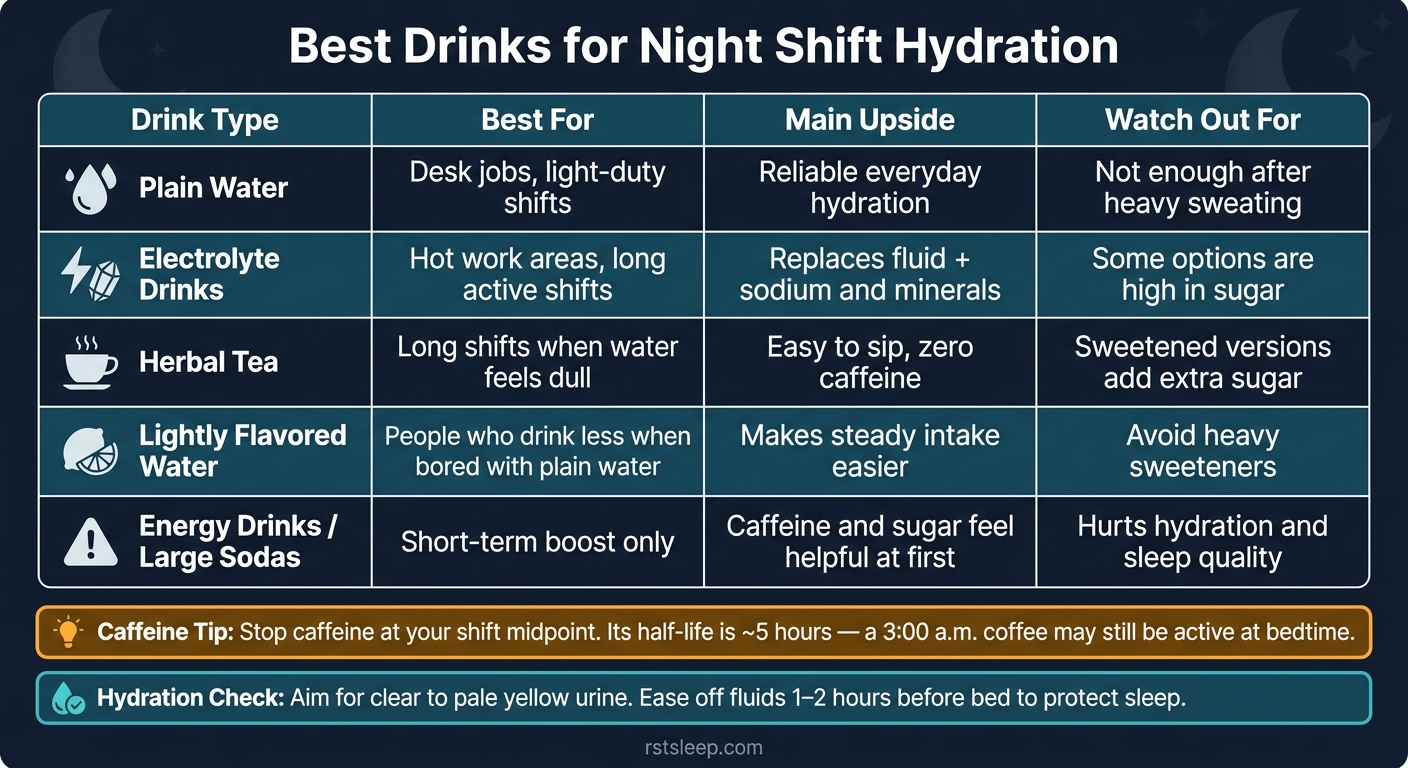
Best Drinks for Night Shift Hydration: Quick Comparison Guide
Start with the simplest option. Then switch only if the shift calls for it.
1. Plain Water for Basic Hydration
Water is the go-to choice for routine shifts with low physical strain. It does the job for most desk-based or light-duty work.
But hotter conditions or more physical work change the picture. If you're sweating a lot, plain water may not be enough. Sweat doesn't just take out fluid. It also strips out minerals, and water can't replace those on its own.
When sweat loss starts to climb, it's time to bring in electrolytes.
2. Electrolyte Drinks for Heavy Sweating or Hot Work Areas
If you're sweating heavily, reach for an electrolyte drink instead of relying only on water. During long shifts with heavy sweat loss, too much plain water can dilute sodium.
The best pick depends on the kind of shift you're working:
- Low-sugar electrolyte mixes work well for most shifts
- Oral rehydration solutions fit severe sweat loss
- Coconut water is better as a lighter option
If you'd rather skip stimulants and want something easy to sip over several hours, a flavored or herbal drink can be a better fit.
3. Herbal Teas and Lightly Flavored Drinks for Steady Intake
Plain water can get old fast in the middle of a long night shift. That's where caffeine-free herbal teas and lightly flavored drinks help. They make steady sipping easier, which matters more than people think.
Infused water with lemon or lime can help. Diluted fruit juice can also work well for people who get tired of the same taste halfway through a shift. Keep these drinks unsweetened or only lightly sweetened so they help with hydration instead of piling on extra sugar.
Chamomile, rooibos, hibiscus, and lavender are good choices when you want more variety without caffeine.
How to Time Your Drinks Across an Overnight Shift
Knowing what to drink helps. Knowing when to drink it is what gets you through a long night without feeling wrung out.
Before the Shift: Start Hydrated, Not Catching Up
Your body makes less urine at night, so it helps to begin the shift already hydrated. Don’t try to make up for lost time with one big chug right before work. That usually backfires. Steady sips work better. Once your shift begins, keep that same pace instead of swinging between “forgot to drink” and “drank too much at once.”
Mid-Shift: Sip Regularly and Use Electrolytes When Needed
Through the middle of the shift, sip water on a steady schedule. Think of it like topping off a tank, not waiting for the warning light.
Use electrolyte drinks only when they fit the situation, like heavy sweating or long stretches without cooling breaks. If sweat loss stays low, plain water is usually enough. As the shift starts to wind down, your goal changes a bit: you’re not just replacing fluids now, you’re also trying to protect your sleep.
End of Shift: Pick Drinks That Won't Disrupt Sleep
In the last 2 hours of your shift, start tapering fluids so you can still hydrate without waking up to pee. Stick with water, and skip very cold drinks right before bed. If you use caffeine during the night, stop early enough that it wears off before sleep.
sbb-itb-5106bd1
What to Limit: Drinks That Can Work Against Hydration
The last step is to watch out for drinks that seem hydrating but can pull you off track.
High-Sugar Drinks and Oversized Convenience-Store Drinks
Energy drinks and giant fountain sodas are easy to grab on a break. But they pack in a lot of sugar without doing much to help hydration. That combo can set you up for an energy crash and make it harder to sleep once your shift ends.
A simple move helps here: skip the oversized sugary drinks and go with lower-sugar options in smaller portions.
Sugar-heavy drinks can throw off hydration. And later in the shift, caffeine-heavy drinks can cause problems too.
Too Much Caffeine Late in the Shift
Caffeine can help at the start of an overnight shift, but the timing matters. Its average half-life is about 5 hours, which means a coffee at 3:00 a.m. may still be in your system when you're trying to sleep.
A good rule of thumb is to use the midpoint of your shift as your caffeine cutoff. If you work from 11:00 p.m. to 7:00 a.m., stop around 2:00–3:00 a.m.
Too much caffeine can also make hydration tougher to keep up with. Why? Because it can take the place of better fluid choices during the part of the shift when steady sipping matters most.
Conclusion: Build a Simple Hydration Routine That Supports Recovery
Keep it simple. That usually works best.
Start with water as your default. If you're sweating a lot, add electrolytes. And when plain water starts to feel boring, reach for caffeine-free flavored drinks instead of forcing yourself to choke down another glass.
A quick way to check if you're on track: clear to pale yellow urine is a good sign.
Timing matters too. Hydration can affect sleep, so it helps to ease up on fluids during the last 1–2 hours before bed.
Hydration can support recovery, but sleep still does a lot of the heavy lifting. If sleep is still a problem after you fix your hydration routine, RST Sleep is designed to support healthy sleep cycles for night shift workers.
FAQs
How much water should I drink on a night shift?
Focus on steady water intake through the morning and afternoon, when your body is often better set up to handle fluids.
Instead of drinking a lot all at once, sip water across the day. Then ease back a few hours before your planned bedtime to help with rest and overnight recovery. If night shift work throws off your sleep, RST Sleep offers support for healthy, natural sleep cycles.
When do I need electrolytes instead of plain water?
Consider an electrolyte drink instead of plain water when you need to maintain proper electrolyte balance, especially if you’re drinking large amounts of fluids.
Plain water still matters. But when fluid intake gets high, it can make it harder for your body to keep the right mineral balance for nerve signaling, muscle function, and cell health. That’s where electrolytes come in. They help your body keep those systems running the way they should.
What should I drink to stay hydrated without hurting sleep?
To stay hydrated without messing up your sleep, aim to drink water steadily through the morning and afternoon. Then ease up a few hours before bed. That simple shift can help cut down on middle-of-the-night bathroom trips that break up deep sleep.
Late-evening water is where people often run into trouble. If you drink a lot right before bed, your body has more to process while you're trying to wind down. Cold water late at night can also work against your body’s natural cooling cycle, which is part of how it gets ready for sleep. On top of that, your kidneys are still busy handling that extra fluid instead of settling into their usual nighttime rhythm.