

Top Certifications for Third-Party Tested Supplements
Most supplement labels are not checked by the FDA before sale. So when I want a fast way to screen a product, I look for a third-party seal on the finished product and then confirm that seal in the certifier’s database.
Here’s the short version:
- For label accuracy and contaminant checks: USP Verified and NSF Contents Certified
- For athletes or drug-tested jobs: NSF Certified for Sport, Informed Sport, and BSCG Certified Drug Free
- For independent product reviews: ConsumerLab
- What matters most: the seal must apply to the exact product, not just the brand or factory
I also check three things before I trust any seal:
- Identity: Is the listed ingredient in the product?
- Amount: Does the dose match the label?
- Purity: Is it screened for things like heavy metals or microbes?
And one more point: GMP is not the same as third-party product testing. GMP refers to how a product is made. It does not confirm what’s in the bottle.
NSF International Dietary Supplement Product Certification Program
sbb-itb-5106bd1
Quick Comparison
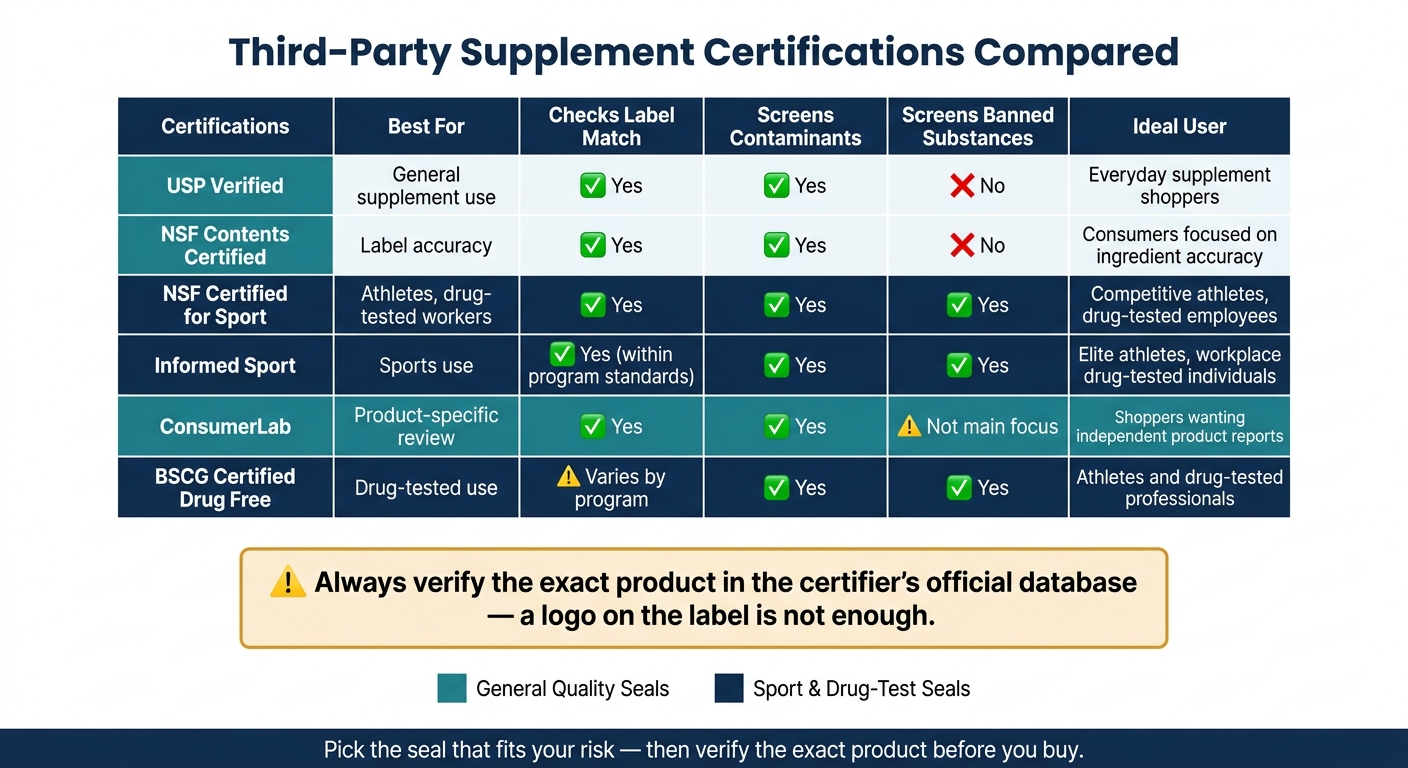
Third-Party Supplement Certifications Compared: Which Seal Do You Need?
| Certification | Best for | Checks label match | Screens contaminants | Screens banned substances |
|---|---|---|---|---|
| USP Verified | General supplement use | Yes | Yes | No |
| NSF Contents Certified | Label accuracy | Yes | Yes | No |
| NSF Certified for Sport | Athletes, drug-tested workers | Yes | Yes | Yes |
| Informed Sport | Sports use | Yes, within program standards | Yes | Yes |
| ConsumerLab | Product-specific review | Yes | Yes | Not the main focus |
| BSCG Certified Drug Free | Drug-tested use | Varies by program scope | Yes | Yes |
If I had to boil the article down to one rule, it would be this: pick the seal based on your risk, then verify the exact product on the certifier’s site before you buy.
What Third-Party Tested Supplements Actually Mean
When a supplement brand tests its own products, that's first-party testing. In plain English, the company is checking its own product.
Third-party testing is different. It means an independent organization checks the finished supplement's ingredients, amounts, and contaminant levels.
GMP (Good Manufacturing Practices) is about how a supplement is made. It does not confirm what's in the finished product. That's a big difference, and it matters when you're comparing certification seals.
A GMP facility can support manufacturing quality. But only product-level certifications verify the finished supplement. Next, use the seals below to confirm the finished product, not just the facility.
What to Look for Before Trusting a Supplement Seal
Now that you know how third-party testing differs from GMP, you can look at the seal itself with a more critical eye.
The big question is simple: does the seal apply to this exact product, or only to the brand or the manufacturing facility? That distinction matters a lot. You want to know whether the seal covers the finished product sitting on the shelf, not just the company name or the place where it was made.
Then look at how often the product gets tested. Is it checked batch by batch, or does the program rely on occasional spot checks? Those are not the same thing.
It also helps to look at what the testing includes. A strong certification should check three core things:
- Identity: Is the ingredient actually in the product?
- Potency: Does it match the strength listed on the label?
- Purity: Is it free from contaminants like heavy metals or harmful microbes?
Some seals also test for banned substances. That can matter a lot if you're an athlete or if your job involves drug testing.
One more thing: watch out for marketing phrases that sound official but don't mean the product was independently tested. For example, "doctor formulated" tells you who put the formula together. It does not tell you whether an outside lab tested the finished product.
Use these checks as a filter when you compare the certifications below.
1. USP Verified
USP Verified is a certification from the U.S. Pharmacopeia that shows a supplement was tested for label accuracy and contaminant limits. Put simply, it means the finished product on the shelf matches what the label says and meets safety thresholds for heavy metals and other contaminants.
That matters because you’re not just taking a brand’s word for it. You’re buying a product that has been checked against set standards.
For most shoppers, this works as a simple, no-fuss signal of basic safety and label accuracy. Next, it helps to compare it with certifications that look more narrowly at ingredient contents or sports screening.
2. NSF Contents Certified
NSF Contents Certified checks that the finished product contains the ingredients listed on the label, in the amounts claimed.
Use this seal when label accuracy is the main concern. If the product also needs banned-substance screening, look at the next NSF program.
3. NSF Certified for Sport
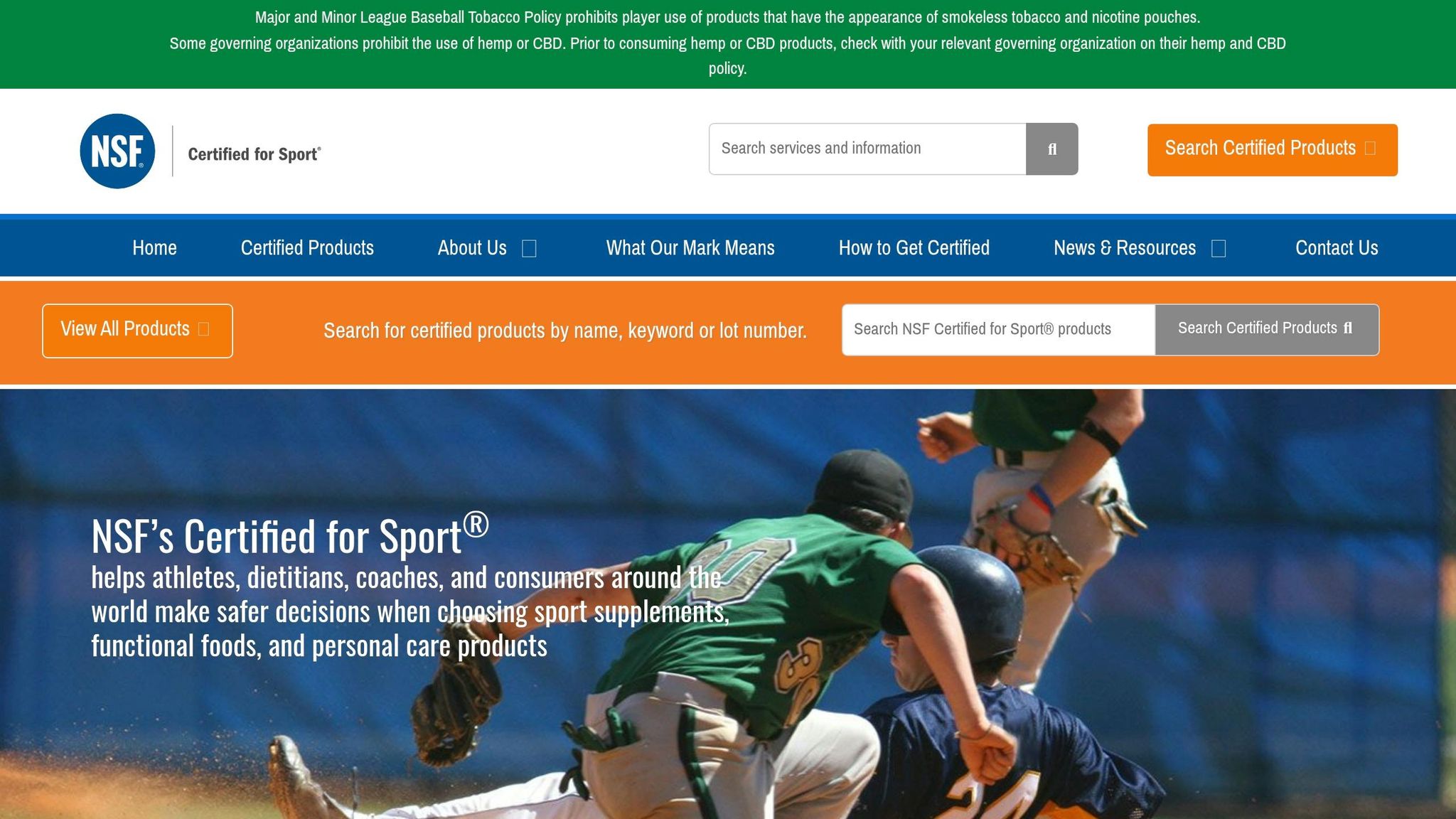
Among third-party seals, NSF Certified for Sport is the one that matters most when banned-substance screening is nonnegotiable.
This program tests finished supplements for banned substances and contamination. That makes it a strong pick for athletes and drug-tested workers. It’s built to catch cross-contamination and hidden banned ingredients.
If a failed test could affect your job or your eligibility to compete, put this certification at the top of your list.
If you want a similar banned-substance screen through a different testing program, the next seal to compare is Informed Sport.
4. Informed Sport
Informed Sport is built for one job: helping cut the risk of a failed drug test.
It tests finished supplements for banned substances and checks for contamination during manufacturing. That makes it a strong fit for athletes and for people in jobs where drug testing is part of the deal. In plain English, this matters most for elite athletes and anyone subject to workplace testing.
Use Informed Sport when avoiding banned substances matters more than general label checks.
If you want broader third-party quality testing without the sports angle, ConsumerLab is the next seal to compare.
5. ConsumerLab
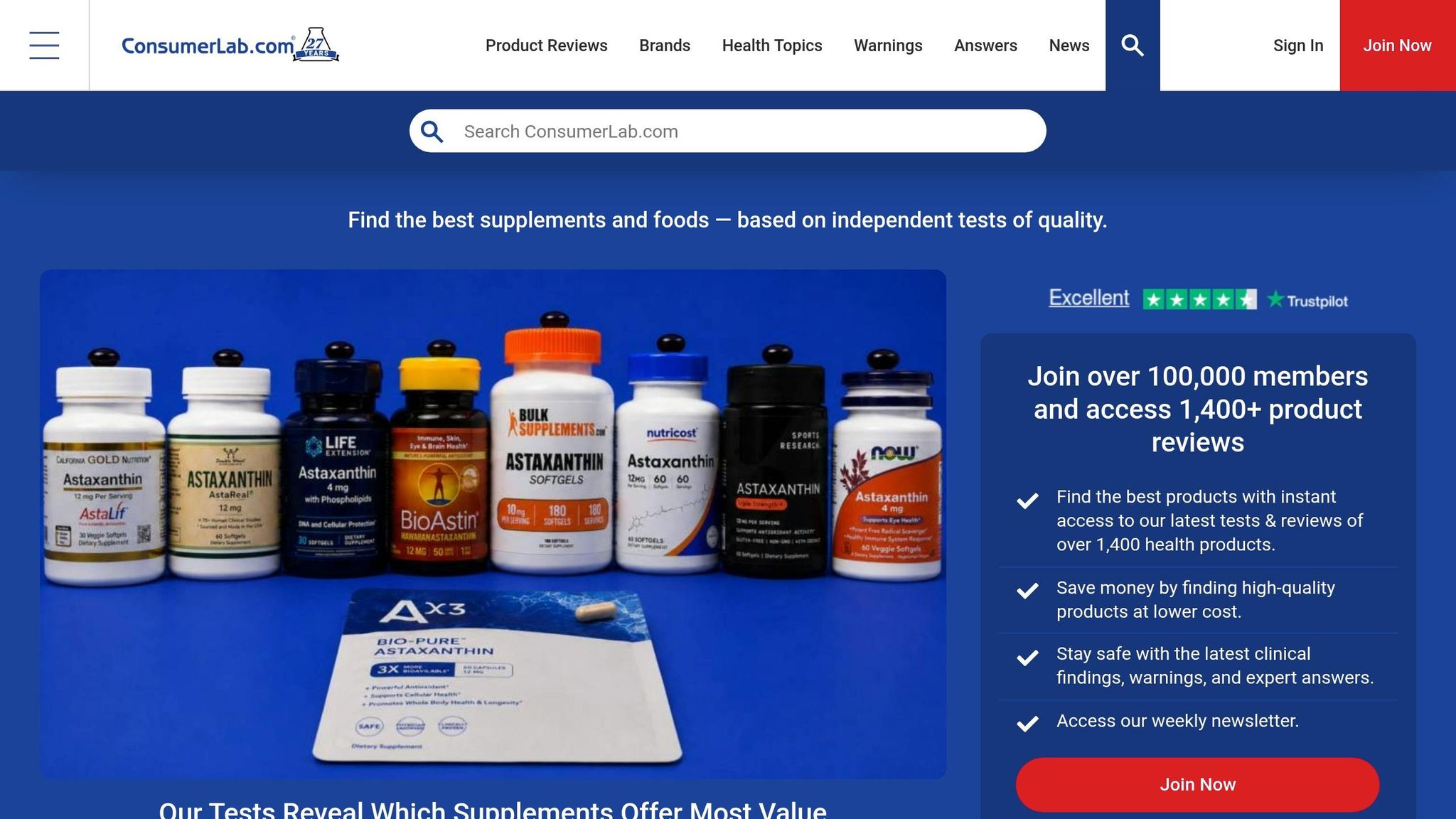
For shoppers who want more than banned-substance screening, ConsumerLab takes a different path.
ConsumerLab (CL) tests supplements for identity, potency, purity, and disintegration. Use ConsumerLab when you want an independent product review that focuses on label accuracy and core quality checks. It’s especially helpful if you want a report on a specific product, not just a broad brand claim.
Next, check how to confirm whether a seal or report is legitimate.
6. BSCG Certified Drug Free
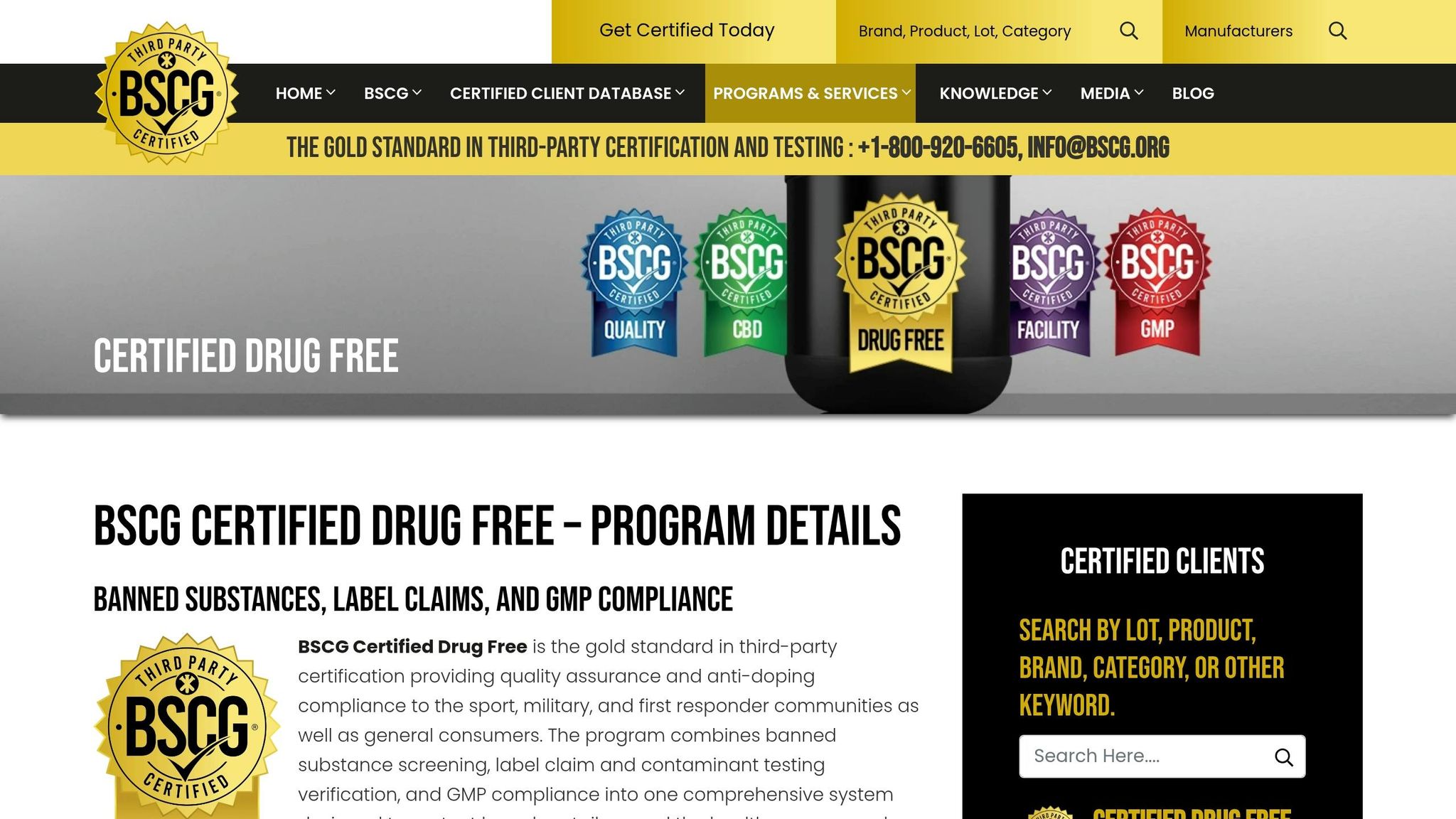
BSCG Certified Drug Free screens supplements for banned substances and contamination. That matters most for athletes and people in drug-tested jobs, such as those looking to sleep better after working nights, who need extra peace of mind about hidden ingredients.
One small but important step: before you trust the seal, make sure the exact product shows up in the certifier's database. A logo on the label is one thing. A live listing for that specific item is what you want to see.
How to Check If a Certification Seal Is Real
Once you pick a seal, don’t stop at the package.
A logo on the bottle doesn't prove much by itself. Brand claims and natural ingredients listed in cGMP facility statements also don't show that the finished product went through third-party testing.
The safer move is simple: check the certifier’s own registry.
Go to the certifier’s official database, search for the exact product name, and make sure the listing lines up with what’s on the label. You want four things to match:
- Product name and brand match the label
- Certification type matches the seal shown
- Dosage form matches the product
- Status is active and current
That small check makes the comparison below a lot more useful.
Quick Comparison Table
Here’s a side-by-side look at the seals so you can match each one to what you care about most.
Use the table below to compare how each certification handles label accuracy, contaminants, and banned substances.
| Certification | Label Accuracy | Contaminants | Banned Substances |
|---|---|---|---|
| USP Verified | Tests whether the product contains the listed ingredients in the listed amounts | Screens for certain harmful contaminants | Not focused on sports-related banned substance screening |
| NSF Content Certified | Checks that the contents match the label | Tests for contaminants and impurities | Does not center on athlete banned substance testing |
| NSF Certified for Sport | Confirms the product matches label claims | Screens for contaminants | Tests for substances banned by major sports groups |
| Informed Choice / Informed Sport | Verifies product quality and batch testing standards | Includes testing for contaminants as part of the program | Focuses on banned substance testing for athletes |
Conclusion
Pick the seal that fits your main risk.
For general use, USP Verified or NSF Contents Certified are strong checks for label accuracy and basic contaminant screening. They help answer a simple question: Does this product match what the label says, and has it been screened for common issues?
If your main concern is drug testing, that’s a different bar. General quality checks aren’t the same as sport-safe testing. If you compete or may be tested, look for NSF Certified for Sport, Informed Sport, or BSCG Certified Drug Free.
That’s why a third-party seal matters - but ONLY when it comes from the official certifier. Before you buy, verify the exact product in the certifier’s official database.
FAQs
How do I verify a seal is real?
Visit the certifying organization’s website, such as USP or NSF, and search its public database or directory by brand name, product name, or lot number.
Don’t rely on the logo on the packaging alone. Head to the certifier’s official verification portal and make sure the company and the exact product are still certified and in good standing.
Is GMP the same as third-party testing?
No. GMP (Good Manufacturing Practice) covers the systems and processes used to make products in a consistent way and in line with quality standards.
Third-party testing is different. Independent accredited labs check label accuracy, purity, and safety. GMP focuses on how the product is made, while third-party testing gives outside proof about the product itself.
Which certification is best for athletes?
For athletes, Informed Sport is one of the most respected certifications out there. It means a product has gone through strict testing to meet global anti-doping standards.
That gives athletes more confidence that a supplement is safer to use and allowed in elite competition.