

How Apigenin Helps Night Shift Workers Sleep
Apigenin is a natural compound that can help night shift workers improve their sleep. It works by calming the nervous system, reducing stress hormones like cortisol, and supporting deeper sleep cycles. Unlike prescription sleep aids, it doesn’t cause grogginess or dependency. Here’s what you need to know:
- What it does: Apigenin interacts with GABA-A receptors to promote relaxation and shorten the time it takes to fall asleep by up to 30%.
- Stress reduction: It lowers cortisol levels by about 47.5%, making it easier to sleep during the day.
- Improves sleep quality: Apigenin enhances slow-wave sleep, which is critical for recovery and energy.
- How to use it: Take 50–100 mg 30–60 minutes before sleep. Combine it with blackout curtains, reduced caffeine, and a cool, quiet room for the best results.
For night shift workers, apigenin offers a natural solution to combat disrupted sleep cycles and fatigue without the downsides of traditional sleep aids.
Do These Sleep Supplements Actually Work? (magnesium, apigenin, and theanine) - Rhonda Patrick
sbb-itb-5106bd1
What Apigenin Does to Improve Sleep
Apigenin is a plant-based compound found in chamomile, parsley, and celery. It serves as a natural, non-addictive sleep aid. Unlike prescription sedatives that push your body into sleep, apigenin works alongside your nervous system to create the right conditions for restful, natural sleep. This is especially helpful for night shift workers who struggle with high cortisol levels and racing thoughts during daylight hours.
How Apigenin Calms Your Nervous System
Apigenin interacts with GABA-A receptors, the same ones targeted by benzodiazepines, to promote relaxation. GABA, your brain's main "off switch", helps slow down neuron activity. When apigenin binds to these receptors, it boosts GABA's calming effects by increasing chloride ion flow into neurons, making them less excitable.
"Through binding to the subunit of the GABA-A receptor, apigenin enhances the effect of GABA and ultimately quiets brain activity, producing calming, anti-anxiety, and sedative effects." - Matthew Lees, PhD
While apigenin binds with moderate strength (Ki = 4–10 μM), it avoids the side effects of prescription drugs like motor impairment, brain fog, or dependency risks. Research indicates that doses of 50–100 mg can shorten the time it takes to fall asleep by 15–30%. For night shift workers trying to wind down after an overnight shift, this can make a big difference. Additionally, apigenin’s calming influence helps reduce stress levels, paving the way for deeper, more restorative sleep.
Lowering Cortisol and Reducing Stress
Night shift workers often face a unique challenge: their bodies naturally produce cortisol during the day - right when they need to sleep. Apigenin helps tackle this issue by blocking the enzyme 11β-HSD1, which converts inactive cortisone into active cortisol. In lab studies using human adrenal cells, apigenin was shown to cut cortisol production by 47.5%.
Lower cortisol levels make it easier to fall asleep by calming the nervous system. One night-shift software engineer shared that after three weeks of consistent apigenin use, his time to fall asleep dropped from 60–90 minutes to just 20–25 minutes. Clinical studies also report a 31% drop in anxiety-like behaviors and a 26% boost in stress resilience with regular apigenin use. By reducing cortisol, apigenin not only helps manage stress but also lays the groundwork for better sleep quality.
Improving Deep Sleep Quality
Apigenin doesn’t just help you fall asleep; it enhances the quality of your sleep. It promotes slow-wave sleep (SWS), the deepest phase of the sleep cycle, which is essential for tissue repair and hormonal balance. Research on apigenin-rich green tea (50 mg per 200 mL) showed an 18-minute increase in slow-wave sleep duration. Another study using apigenin-enriched fermented dairy (15 mg per 100 g) found a 22% reduction in sleep latency after four weeks.
Unlike many sleep aids that disrupt your natural sleep patterns, apigenin supports your body’s sleep cycles. It also aids the glymphatic system, your brain's waste-clearing process that kicks into gear during deep sleep. For night shift workers, improving slow-wave sleep is critical for recovery and overall health. Studies show that apigenin use leads to a 24% improvement in falling asleep and a 19% boost in sleep maintenance, all without the grogginess commonly associated with melatonin.
How RST Sleep Uses Apigenin for Night Shift Workers
RST Sleep has crafted a formula that blends apigenin with glycine, phosphatidylserine, magnolia bark, and extended-release melatonin to address the unique sleep challenges faced by night shift workers. This thoughtful combination not only helps calm the nervous system but also aids in resetting the circadian rhythm. Produced in GMP-certified facilities, this non-habit-forming blend is designed to tackle the irregular sleep patterns that often accompany shift work.
Why Apigenin Works for Irregular Sleep Schedules
Apigenin supports relaxation naturally, working with your body rather than forcing sleep. For night shift workers, elevated cortisol levels during the day can make falling asleep a struggle. Apigenin helps reduce these stress hormones and enhances the calming signals in your body by acting as a positive allosteric modulator at GABA-A receptors. This mechanism promotes relaxation without creating dependency.
Other Ingredients That Work with Apigenin
The formula includes several other key ingredients that complement apigenin:
- Glycine: Helps lower neural excitability and core body temperature while boosting serotonin, which is essential for melatonin production. This makes it easier for night shift workers to fall asleep during the day.
- Extended-release melatonin: Regulates the sleep-wake cycle by signaling the brain that it’s time to sleep, regardless of light exposure. Research shows that taking 3 mg of melatonin before daytime sleep can boost cellular repair markers by 80%.
- Magnolia bark: Further supports relaxation, enhancing the overall calming effects of the blend.
This combination creates a powerful synergy: apigenin and glycine help you relax and prepare for sleep, while melatonin resets your body clock and its extended-release form ensures uninterrupted rest.
"Apigenin holds promise as a way to wind down and promote better sleep in our increasingly chaotic and restless world." - Matthew Lees, PhD
Clinical studies indicate that 300 mg of apigenin is the optimal dosage for its calming and sedative effects, while doses under 100 mg may not be as effective. RST Sleep’s formulation ensures that all ingredients are included at clinically supported levels. By balancing these components, the formula avoids issues like grogginess or hormonal imbalances often associated with high doses of melatonin, ensuring support for both falling asleep and staying asleep.
How to Use Apigenin for Daytime Sleep
For those working night shifts, getting quality daytime sleep can be a challenge. Timing, environment, and supplements like apigenin can make a difference. Here’s how to use apigenin effectively to improve your rest.
When and How Much to Take
Take apigenin about 30–60 minutes before you plan to sleep. For instance, if your bedtime is 8:30 AM after a night shift, aim to take it between 7:30 and 8:00 AM. This timing allows the compound to interact with your GABA receptors, promoting relaxation.
If you’re trying apigenin for the first time, start with a dose of 50–100 mg. If you don’t feel sleepy within 30 minutes, you can gradually increase the dose to 100–200 mg. Studies suggest that doses up to 300 mg can help calm the nervous system effectively.
Minimize caffeine intake before bed - avoid it for at least 6–8 hours beforehand. For example, if you plan to sleep at 8:00 AM, avoid coffee or other caffeinated drinks after 2:00 AM. Research shows that caffeine consumed within six hours of sleep can reduce total sleep time by over an hour.
Consistency is key. Use apigenin daily for 1–3 weeks to allow your nervous system to adapt, as it’s not an instant sedative. Pair this with a well-prepared sleep environment for the best results.
Setting Up Your Sleep Environment
A carefully optimized bedroom can significantly improve your daytime sleep quality. Start by ensuring complete darkness - keep light levels below 1 lux, as even minimal light exposure (5–10 lux) can reduce melatonin production by 20–30%. Install blackout curtains that block 99% of light, and cover any LED indicators from electronics.
During your morning commute, wear wraparound sunglasses to limit sunlight exposure. Sunlight signals your brain to stay awake, so reducing this exposure can help you wind down more easily.
Keep your bedroom cool, ideally between 60°F and 65°F (15.5°C to 18.3°C). A cooler environment offsets the natural daytime warmth, making it easier to fall asleep. Use fans, air conditioning, or cooling mattress toppers to maintain this temperature range.
To manage noise, try using white noise. A non-looping fan or a white noise machine works well to mask background sounds. Foam earplugs with a Noise Reduction Rating (NRR) of 32 can provide additional soundproofing.
Before taking apigenin, spend 5 minutes jotting down thoughts or tasks in a notebook. This “brain dump” can help clear your mind of racing thoughts. Follow it up with a warm shower; the drop in body temperature afterward signals your body that it’s time to sleep.
What Apigenin Does for Sleep and Recovery
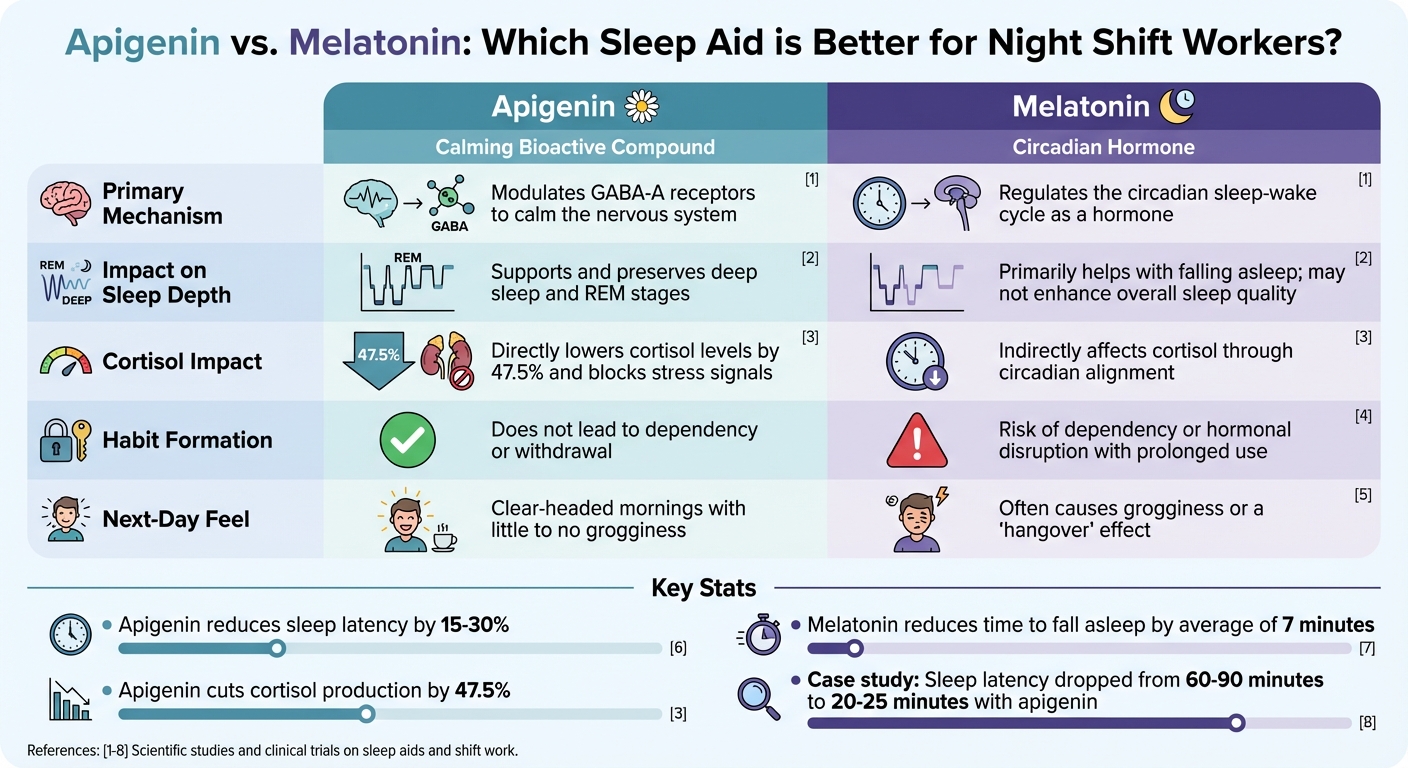
Apigenin vs Melatonin for Night Shift Workers Sleep Comparison
Apigenin doesn't just help improve sleep quality - it also plays a key role in how the body recovers after sleep. For night shift workers, this can be particularly important. Apigenin helps maintain the natural structure of sleep, preserving deep sleep and REM stages. These stages are essential for repairing tissues, consolidating memory, and clearing out metabolic waste. Unlike traditional sedatives, which can interfere with natural sleep patterns, apigenin works in harmony with the body's own calming processes to encourage restful sleep.
In addition to its calming properties, apigenin helps lower cortisol levels and reduces inflammation by targeting cytokines like IL-6 and TNF-α, which are known to disrupt sleep . It also aids cellular repair by inhibiting the CD38 enzyme, which helps boost NAD⁺ levels - an important factor for metabolism and recovery . Many users report waking up feeling refreshed and clear-headed, without the grogginess that often comes with other sleep aids. Night shift workers, in particular, notice fewer energy crashes during their shifts, thanks to better energy stabilization.
These combined benefits make apigenin a game-changer for those struggling with sleep and recovery, especially for individuals working non-traditional hours.
Research Results for Night Shift Workers
In early 2026, a night-shift software engineer shared their experience using apigenin. Over three weeks, they took 100 mg of apigenin 45–60 minutes before their 7:30 AM bedtime. By the second week, their sleep latency dropped from 60–90 minutes to just 20–25 minutes. They also experienced fewer 3 AM energy crashes and woke up feeling refreshed, avoiding the "melatonin fog" they had previously dealt with.
"Apigenin wasn't magic, but it was the missing piece that made my other habits work... it turned 'I hope I sleep' into a pretty reliable routine." – Night Shift Software Engineer, boscent.com
Clinical studies back up these anecdotal benefits. Trials using chamomile extract (standardized to roughly 1.2% apigenin) have shown reduced anxiety and improved daytime functioning in people with insomnia. Additionally, large-scale studies have found that diets higher in apigenin are linked to better overall sleep quality. With regular use, apigenin's anti-inflammatory and neuroprotective effects build up over time, helping to reduce neuroinflammation and stabilize mood.
These findings highlight why apigenin stands out when compared to more conventional sleep aids like melatonin.
Apigenin vs. Melatonin
Although both apigenin and melatonin can support sleep, they function in entirely different ways:
| Feature | Apigenin | Melatonin |
|---|---|---|
| Primary Mechanism | Modulates GABA-A receptors to calm the nervous system | Regulates the circadian sleep-wake cycle as a hormone |
| Impact on Sleep Depth | Supports and preserves deep sleep and REM stages | Primarily helps with falling asleep; may not enhance overall sleep quality |
| Cortisol Impact | Directly lowers cortisol levels and blocks stress signals | Indirectly affects cortisol through circadian alignment |
| Habit Formation | Does not lead to dependency or withdrawal | Risk of dependency or hormonal disruption with prolonged use |
| Next-Day Feel | Clear-headed mornings with little to no grogginess | Often causes grogginess or a "hangover" effect |
While melatonin can reduce the time it takes to fall asleep by an average of seven minutes compared to a placebo, apigenin tackles the root cause of sleep issues by calming the overactive nervous system. For shift workers who struggle with getting quality daytime rest, its ability to reduce cortisol and maintain healthy sleep patterns makes it a strong alternative.
"Through its interaction with the GABA-A receptor, its anti-anxiety effects and impact on sleep quality offer promise as a non-addictive, non-pharmacological sleep aid." – Matthew Lees, PhD
Conclusion
Night shift workers face unique challenges when it comes to getting the deep, restorative sleep their bodies need. Apigenin offers a natural way to tackle these issues by lowering cortisol levels, calming an overactive nervous system, and shortening the time it takes to fall asleep.
Through its effect on GABA-A receptors, apigenin supports healthy sleep cycles without the risks of dependency or grogginess the next day. For instance, one case study showed that apigenin helped reduce the time to fall asleep from 60–90 minutes to just 20–25 minutes.
To enhance these benefits, RST Sleep combines apigenin with glycine, phosphatidylserine, magnolia bark, and extended-release melatonin. This non-habit-forming formula is designed specifically for those with irregular sleep schedules, working in sync with the body’s natural rhythms to support better rest.
Pairing apigenin with good sleep habits can make a big difference. Using blackout curtains, wearing sunglasses during morning commutes, steering clear of caffeine 5–6 hours before bed, and taking the supplement 30–60 minutes before sleep can all help create a consistent and effective sleep routine. Together, these approaches empower night shift workers to achieve the restorative sleep they need, even with challenging schedules.
FAQs
Is apigenin safe to take every day?
Apigenin is widely regarded as safe for daily use when taken in proper amounts. This natural compound has been used for centuries and is backed by scientific studies highlighting its potential benefits for sleep support. However, it’s always a good idea to check with a healthcare professional before adding any new supplement to your routine to make sure it aligns with your personal health needs.
Can I take apigenin with melatonin or caffeine?
It’s usually safe to combine apigenin with melatonin, as both are natural compounds known to promote better sleep. That said, it’s always a good idea to check with a healthcare provider before using them together, especially if you’re taking other medications or supplements. On the flip side, caffeine should be avoided close to bedtime, as it can interfere with sleep quality, regardless of whether you’re taking apigenin or melatonin.
How long does apigenin take to start working for day sleep?
Apigenin usually takes about 45 to 60 minutes to take effect when used for daytime sleep. For instance, some people might take it around 7:30–8:00 AM, aiming for it to help them relax and fall asleep about an hour later.