
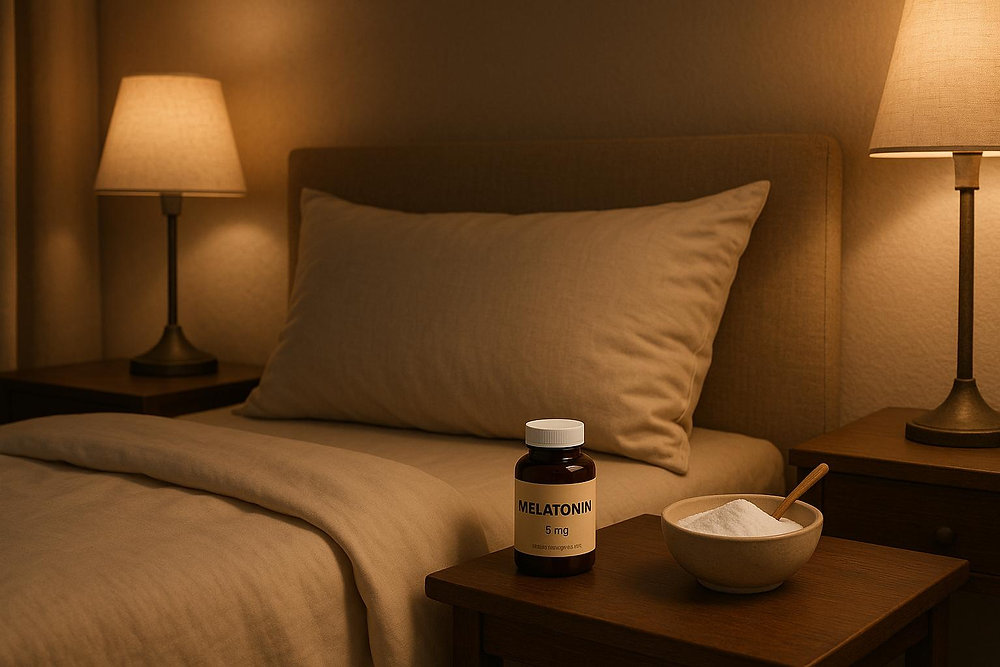
Struggling with sleep? Melatonin and glycine are two natural supplements that can help, but they work differently. Melatonin is best for fixing sleep timing issues like jet lag or shift work, while glycine focuses on improving sleep quality, helping you wake up feeling refreshed. Here’s a quick breakdown:
Melatonin: A hormone that regulates your sleep-wake cycle. Ideal for falling asleep faster and resetting your internal clock.
Glycine: An amino acid that lowers body temperature and promotes deeper, more restorative sleep. Great for waking up refreshed.
Quick Comparison:
Aspect | Melatonin | Glycine |
Best For | Sleep timing, jet lag, shift work | Sleep quality, feeling refreshed |
Primary Action | Regulates circadian rhythm | Lowers body temperature |
Side Effects | Possible grogginess, vivid dreams | Minimal |
Timing | 30-60 mins before bed | 30 mins–2 hours before bed |
If timing is your main issue, melatonin is the better choice. If quality is what you need, glycine may work better. For shift workers or complex sleep challenges, combining both could be effective.
Sleep Scientist Reveals the BEST Supplements for Sleep (and Which 2 to Avoid)
What Are Melatonin and Glycine?
Understanding how melatonin and glycine work can help you decide which might be better suited for your sleep concerns. Both are naturally produced in the body, but they play very different roles when it comes to supporting restful sleep.
Melatonin: The Sleep Hormone
Melatonin is a hormone made by the pineal gland that helps regulate your sleep-wake cycle. Its production is controlled by your internal clock, which is managed by the suprachiasmatic nuclei (SCN) in your hypothalamus. This is why exposure to bright screens or artificial light before bed can disrupt your sleep.
"Melatonin is a chemical messenger that tells your body it's time to relax and get ready to rest." (Cleveland Clinic)
Typically, your body begins releasing melatonin about one to three hours before you go to bed, with its effects peaking roughly two hours later. During daylight hours, melatonin levels remain low, but as darkness falls, your pineal gland ramps up production, signaling your body that it’s time to wind down.
Glycine: The Calming Amino Acid
Glycine is an amino acid - one of the basic building blocks of proteins - that your body produces naturally. It plays a role in improving sleep quality by lowering your core body temperature and influencing neurotransmitter activity in the brain, which helps calm your mind.
What makes glycine stand out is its subtle approach. Instead of directly making you feel sleepy, glycine creates the ideal conditions for your body to transition smoothly into deeper, more restorative phases of sleep. This unique mechanism makes it an interesting counterpart to melatonin.
Comparing Melatonin and Glycine as Sleep Aids
Both melatonin and glycine are natural, non-habit-forming sleep aids with generally safe profiles. Melatonin is particularly helpful when your internal clock is out of sync - whether from jet lag, shift work, or irregular schedules - because it works in alignment with your circadian rhythm. Glycine, on the other hand, may be better suited for improving sleep quality, especially if you wake up feeling unrefreshed despite falling asleep easily.
The dim light melatonin onset (DLMO) - the point when melatonin production begins under low-light conditions - is a reliable marker for circadian rhythm alignment. Glycine, being a natural component of many foods, is widely regarded as safe.
In short, melatonin helps reset your internal clock, while glycine promotes deeper, more restorative sleep. Each offers distinct benefits depending on your specific sleep challenges.
How They Work in Your Body
Melatonin and glycine support sleep in different ways, which makes them suitable for addressing distinct sleep-related issues.
How Melatonin Works
Melatonin acts as your body's internal clock, syncing your sleep-wake cycle with the natural rhythm of day and night. It’s produced in the pineal gland, and its release is controlled by the suprachiasmatic nucleus (SCN), often referred to as your body’s master clock. When it gets dark, the SCN signals the pineal gland to release melatonin, signaling that it’s time to sleep. Melatonin supplements enhance this process by activating G-protein coupled receptors, helping fine-tune your 24-hour sleep-wake cycle.
How Glycine Works
Glycine, an amino acid that also functions as a neurotransmitter, takes a different route to promote sleep. Rather than directly influencing your circadian rhythm, glycine helps by lowering your core body temperature, setting the stage for restful sleep. This happens through peripheral vasodilation, which increases blood flow to the skin and aids in heat loss. Glycine also interacts with NMDA receptors in the SCN, and animal studies suggest it could boost serotonin levels - another key player in regulating sleep. These mechanisms create an optimal environment for deeper, more restorative sleep.
Side-by-Side Mechanism Comparison
The main distinction between melatonin and glycine lies in how they address sleep issues. Melatonin is best for regulating your sleep schedule, especially after disruptions like jet lag. Glycine, on the other hand, focuses on improving sleep quality by creating the right physical conditions for rest.
Here’s a quick comparison of their mechanisms:
Aspect | Melatonin | Glycine |
Primary Action | Regulates circadian rhythms and sleep timing | Lowers core body temperature via vasodilation |
Brain Target | Activates melatonin receptors throughout the brain | Influences NMDA receptors in the SCN |
Best For | Resetting disrupted sleep schedules | Improving sleep quality and depth |
Effect Type | Direct hormonal signal to cue sleep onset | Indirectly creates favorable sleep conditions |
Choosing between melatonin and glycine depends on your specific sleep challenges. If your issue is falling asleep at the right time, melatonin may be the better option. But if you’re looking to enhance the depth and quality of your sleep, glycine might be more effective.
Which Works Better for Different Sleep Problems
When it comes to tackling sleep challenges, choosing the right supplement depends on the specific issue you're facing. Both melatonin and glycine offer unique benefits, making them suitable for different situations.
Falling Asleep and Fixing Sleep Schedules
Melatonin is highly effective at helping you fall asleep and resetting your internal clock. It works by signaling your brain that it's time to wind down, making it especially useful for adjusting to new sleep schedules or dealing with jet lag. If your main issue is falling asleep at the right time, melatonin is often the go-to option.
Glycine, on the other hand, helps by lowering your core body temperature, creating a more relaxed state that makes sleep feel natural. While it doesn't directly trigger sleep, its calming effect can ease the transition to rest, making it a gentler alternative for some.
For timing-related issues, such as falling asleep at a specific hour or adapting to a new routine, melatonin typically delivers quicker and more noticeable results.
Better Sleep Quality
When it comes to improving the quality of your sleep, glycine stands out. Research shows that glycine promotes deeper, more restorative sleep, leaving you feeling refreshed even if the total sleep duration isn't extended. If you're waking up tired or experiencing restless nights, glycine might be the better fit.
Melatonin’s primary role is to help you fall asleep, not necessarily to enhance the quality of your sleep. While some people do notice improved rest with melatonin, its main strength lies in sleep onset. For those who already fall asleep easily but struggle with feeling rested, glycine is often the better choice.
The temperature-lowering effect of glycine supports your body's natural sleep architecture, creating the conditions needed for truly restorative rest.
Best Options for Night Shift Workers
Night shift workers often face unique sleep challenges that require a thoughtful approach. Melatonin is essential for resetting the internal clock, helping shift workers sleep during daylight hours when their bodies naturally want to stay awake. Taking melatonin about 30 minutes before your desired sleep time can help align your body with an unconventional schedule.
Glycine complements melatonin by improving the quality of daytime sleep, which is often lighter and less restorative. Its ability to promote deep sleep phases becomes invaluable when fighting against your natural circadian rhythm.
For night shift workers, combining melatonin for timing and glycine for better sleep quality often provides the best results.
Safety and Side Effects
Glycine is considered extremely safe, with virtually no reported side effects at typical doses. Since it's an amino acid your body naturally produces, it’s well-tolerated and unlikely to cause morning grogginess or dependency issues.
Melatonin, however, requires more care with timing and dosage. Higher doses or immediate-release forms can sometimes lead to next-day drowsiness. Additionally, melatonin may interact with certain medications and affect other hormones. Overuse or poor timing can even disrupt your sleep cycle instead of helping it.
Extended-release melatonin formulations are often a better choice for those sensitive to side effects, as they mimic your body’s natural melatonin production more closely.
For individuals sensitive to supplements, glycine tends to be the gentler, more straightforward option.
Effectiveness Comparison Chart
Sleep Issue | Melatonin | Glycine | Best Choice |
Falling Asleep Faster | Excellent – signals sleep time directly | Good – promotes relaxation | Melatonin |
Sleep Schedule Reset | Excellent – regulates circadian rhythm | Limited – doesn’t affect timing | Melatonin |
Sleep Quality/Depth | Limited – focuses on onset | Excellent – promotes deeper sleep | Glycine |
Night Shift Work | Excellent for timing | Excellent for daytime sleep quality | Both recommended |
Jet Lag Recovery | Excellent – resets internal clock | Limited – doesn’t address timing | Melatonin |
Morning Grogginess Risk | Moderate – depends on dose and timing | Very low – rarely causes grogginess | Glycine |
Long-term Safety | Good with proper use | Excellent – minimal side effects | Glycine |
The best option depends on your primary sleep concern. If falling asleep is the issue, melatonin can help. If you’re struggling with feeling rested or experiencing light sleep, glycine might be the better choice. For more complex challenges like shift work, using both supplements together often provides the most balanced support.
How to Choose the Right Sleep Aid
Picking the right sleep aid starts with understanding your specific sleep challenges. Whether melatonin or glycine is the better choice depends on what's disrupting your rest, your schedule, and how your body reacts to these supplements. Let’s break it down.
Identify Your Sleep Problems
Start by tracking your sleep for at least a week. Write down when you go to bed, how long it takes to fall asleep, how often you wake up, and how refreshed you feel in the morning. This simple exercise can reveal patterns and guide your choice.
If you struggle to fall asleep within 30 minutes, melatonin might be your go-to. It’s designed to help with timing issues, making it easier to drift off.
If you fall asleep quickly but feel unrested or wake up frequently, glycine could be the better option. It works to improve the quality of your sleep, helping you wake up feeling more refreshed.
For those dealing with both timing and quality issues - like shift workers - melatonin can help establish a sleep schedule. Once that’s in place, glycine may further enhance sleep quality.
Dosing and Timing Guidelines
Once you’ve pinpointed your sleep issue, the next step is understanding how to use these supplements effectively.
Melatonin: In the U.S., doses typically range from 0.5 mg to 5 mg, taken 30-60 minutes before bed. Start with a low dose, such as 0.5-1 mg, especially if you’re using an extended-release version. Higher doses aren’t always better and may lead to grogginess the next day. For night shift workers, timing is key. Take melatonin 30 minutes before your planned daytime sleep - not right after work - to help align your body’s clock with your schedule.
Glycine: A typical dose is 3 grams, and its timing is more flexible. You can take it anywhere from 30 minutes to 2 hours before bed. Unlike melatonin, glycine promotes relaxation rather than directly influencing sleep hormones, giving you a wider window to take it.
Extended-release melatonin: This type often works better for most people because it mimics the body’s natural melatonin production. Immediate-release versions, on the other hand, can cause a quick spike that may leave you drowsy in the morning.
Adding Sleep Aids to Your Routine
To get the most out of melatonin or glycine, make them part of a consistent bedtime routine.
For night shift workers, timing is especially important. Plan your supplement and pre-sleep routine so you’re signaling to your body that it’s time to rest before you become overtired.
Create a wind-down routine: Whether you’re using melatonin or glycine, combine it with dimming lights, putting away screens, and prepping your sleep environment. These steps reinforce the signal your supplement provides.
Rotating shifts? Adjust melatonin timing as your schedule changes. For example, if you’re transitioning from day shifts to night shifts, start taking melatonin at your new bedtime 2-3 days before the change to help your body adapt gradually.
Glycine’s flexibility makes it a good fit for irregular schedules. Since it doesn’t affect your circadian rhythm, you can use it consistently without worrying about precise timing.
If you’re looking for a combined approach, some products, like RST Sleep, offer a blend of extended-release melatonin, glycine, and other supportive ingredients like phosphatidylserine and magnolia bark. These formulations can simplify your routine if you’re dealing with multiple sleep challenges.
Start with one supplement to see how it affects your sleep before adding another or trying a combination product. Use it consistently for at least a week to gauge its effectiveness and adjust as needed.
Final Recommendations
Building on the strategies discussed earlier, here are some key tips to help you fine-tune your sleep routine.
Main Points to Keep in Mind
Melatonin and glycine serve different purposes when it comes to sleep. Melatonin acts like your body's internal clock, guiding when you feel sleepy and when you wake up. It's especially helpful if you're struggling to fall asleep or need to shift your sleep schedule. On the other hand, glycine works to improve the overall quality of your sleep.
For sleep timing issues - like jet lag, shift work, or staying up too late - melatonin is often the better option. Extended-release versions can mimic your body's natural melatonin production, helping you stay asleep longer.
If falling asleep isn’t the problem but waking up feeling unrested is, glycine might be more effective. A dose of about 3 grams, taken 30 minutes to 2 hours before bed, offers some flexibility in timing compared to melatonin.
Night shift workers may benefit from combining both supplements. Melatonin can help regulate when you sleep, while glycine can enhance sleep quality once your schedule stabilizes. Keep in mind that consistency is key; your body usually needs about a week to adjust to any new sleep aid.
Finding Your Ideal Sleep Routine
Start by identifying your specific sleep challenges. Keep a sleep log for a week to track how long it takes you to fall asleep, how often you wake up during the night, and how refreshed you feel in the morning. This can help you pinpoint whether timing, quality, or both are issues.
Experiment with one supplement at a time. Test melatonin or glycine for a week before introducing the other. This makes it easier to understand how each one impacts your sleep. For instance, if timing is your main concern, start with melatonin. If quality remains an issue, add glycine to your routine.
Consult a healthcare provider before beginning any sleep supplements. This is especially important if you're on medication or have health conditions. Some medications can interact with melatonin, and your doctor can help ensure you're choosing the safest option. They can also rule out underlying sleep disorders that supplements alone can’t fix.
Consider combination products if managing multiple sleep challenges. These can simplify your routine by addressing both timing and quality in one step.
By tailoring your approach and staying consistent, you can make meaningful improvements to your sleep.
What's on the Horizon for Sleep Research
New studies are shedding light on personalized sleep solutions. Researchers are delving into how genetics and individual sleep patterns influence melatonin production and glycine metabolism. This could lead to more targeted supplement recommendations in the future.
Chronotypes are shaping the timing of supplements. Future guidelines may align sleep aids not only with specific challenges but also with your natural biological rhythms.
Combination therapies are gaining interest. Early research shows that pairing ingredients like melatonin and glycine could provide better results for complex sleep problems.
The focus is shifting toward optimizing sleep stages. Instead of just helping people fall asleep, scientists are exploring ways to enhance the different phases of sleep your body cycles through each night. This could lead to advanced natural sleep aids that target specific sleep stages rather than simply promoting drowsiness.
Supplements work best alongside good sleep habits. While melatonin and glycine can be helpful, they’re not a substitute for proper sleep hygiene. Pairing the right supplement with a consistent schedule, a relaxing bedtime routine, and lifestyle changes that minimize disruptions will give you the best results. Consistency remains the foundation of any successful sleep strategy.
FAQs
Is it safe to take melatonin and glycine together to improve sleep?
Yes, taking melatonin and glycine together is typically safe and may enhance both the timing and quality of your sleep. Studies indicate that these supplements complement each other: melatonin helps regulate your sleep-wake cycle, while glycine encourages relaxation and supports deeper, more restorative sleep.
This combination can be especially helpful for those dealing with specific sleep issues, like trouble falling asleep or managing an irregular sleep schedule. That said, it’s always wise to check with a healthcare provider before adding any new supplements to your routine, particularly if you have existing health conditions or are on other medications.
What side effects should I be aware of when using melatonin or glycine for better sleep?
Melatonin can sometimes lead to side effects, including headaches, dizziness, nausea, daytime sleepiness, or even unusually vivid dreams. It may also affect mood, causing irritability or mild depression. In some cases, people report feeling groggy or confused the following day.
Glycine is usually easy on the body, but taking too much might result in nausea, stomach discomfort, drowsiness, or skin flushing. In rare cases, excessive amounts could strain the kidneys or liver. To stay safe, it’s important to follow the recommended dosage and check in with a healthcare provider if you have any questions or concerns.
What is the best way to figure out the right dosage and timing for melatonin and glycine to improve my sleep?
Finding the right balance of melatonin and glycine largely depends on your personal needs and how your body reacts. For melatonin, it’s a good idea to start small - 1 to 3 milligrams about 30 minutes before bedtime. If you find that it’s not quite enough, you can gradually increase the dose to 5 milligrams, but starting low helps you gauge its effects without overdoing it.
When it comes to glycine, the typical recommendation is 3 to 5 grams, taken shortly before you go to bed. This amino acid is known to promote better sleep quality for many people. As with melatonin, make any adjustments gradually, paying close attention to how you feel. If you have any medical conditions or are taking medications, it’s wise to consult a healthcare professional before making changes. Trust your body’s signals and proceed cautiously to find what works best for you.
Related Blog Posts
0
0
0


